In a 50-square-foot room in Korail, Mosammat Lipi folds freshly washed clothes before heading out to clean apartments in Banani.
The Wi-Fi signal in her neighbourhood is now stronger than ever. But her room still floods during heavy rain, gas arrives past midnight, and half her income goes to rent. Connectivity may have reached Korail, but comfort has not.
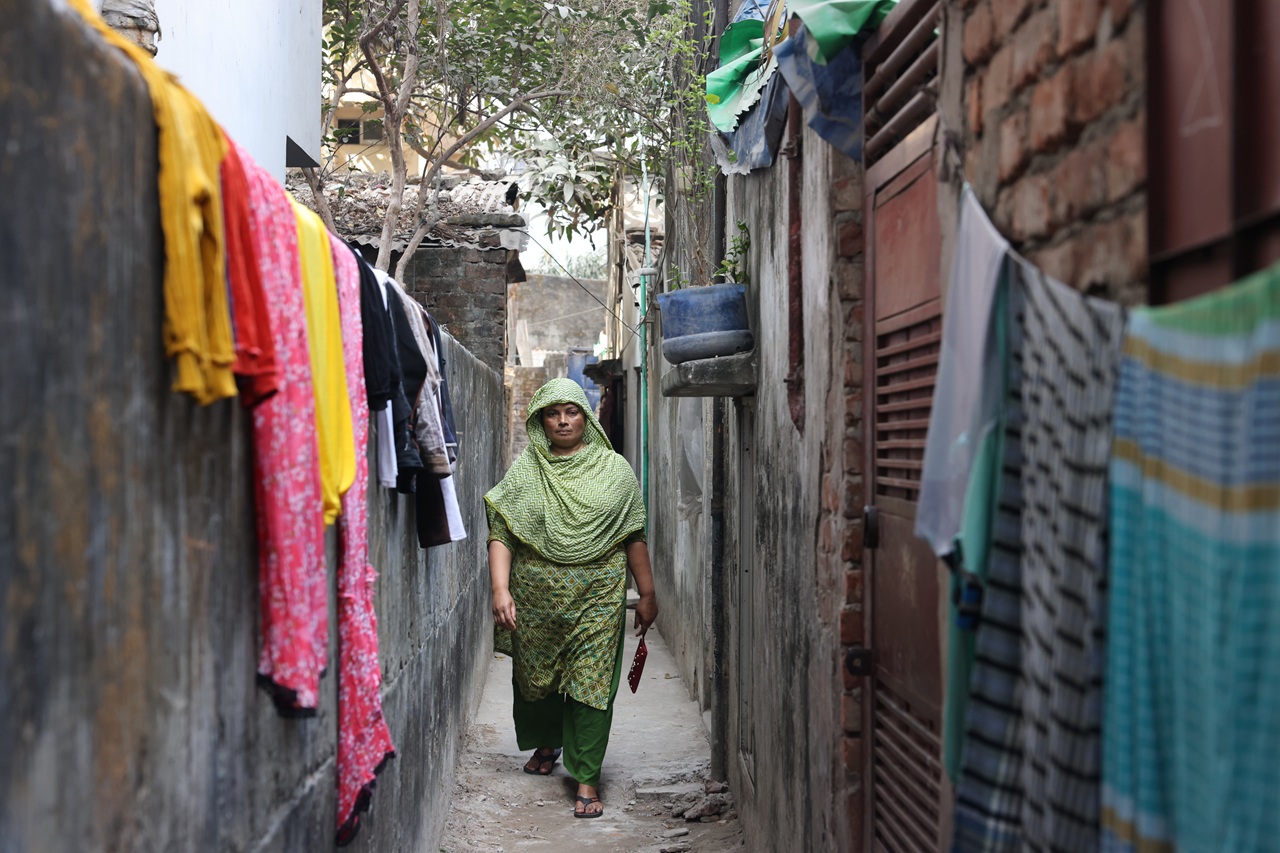
Lipi lives with her husband and a 16-year-old daughter in a space barely large enough to stretch out fully.
A narrow bed, a small shelf stacked with aluminium plates and steel glasses, a television discarded by one of her employers, and a cage holding a pet Shalik bird fill most of the room. During monsoon showers, water seeps in through the tin roofing and the floor turns slick.

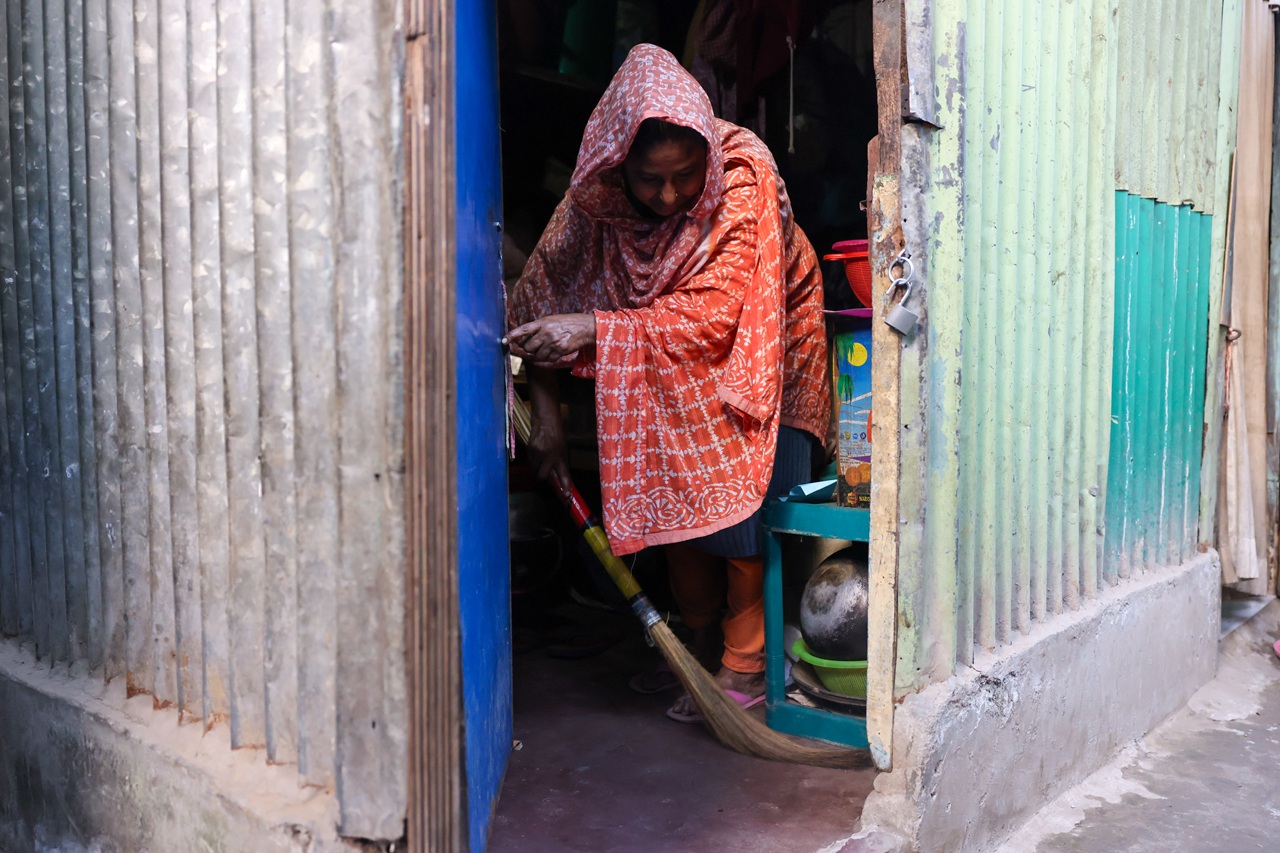
She works in two apartments in Banani, where a single bathroom often exceeds the size of her entire dwelling. Her husband, chronically ill, is currently unemployed. Lipi earns Tk 8,000 a month. Of that, Tk 4,500 goes toward rent, which includes electricity, waste management and cable television.
For families like hers, digital access may offer distraction or opportunity. But it does little to resolve the structural strain of living in one of Dhaka’s largest informal settlements.
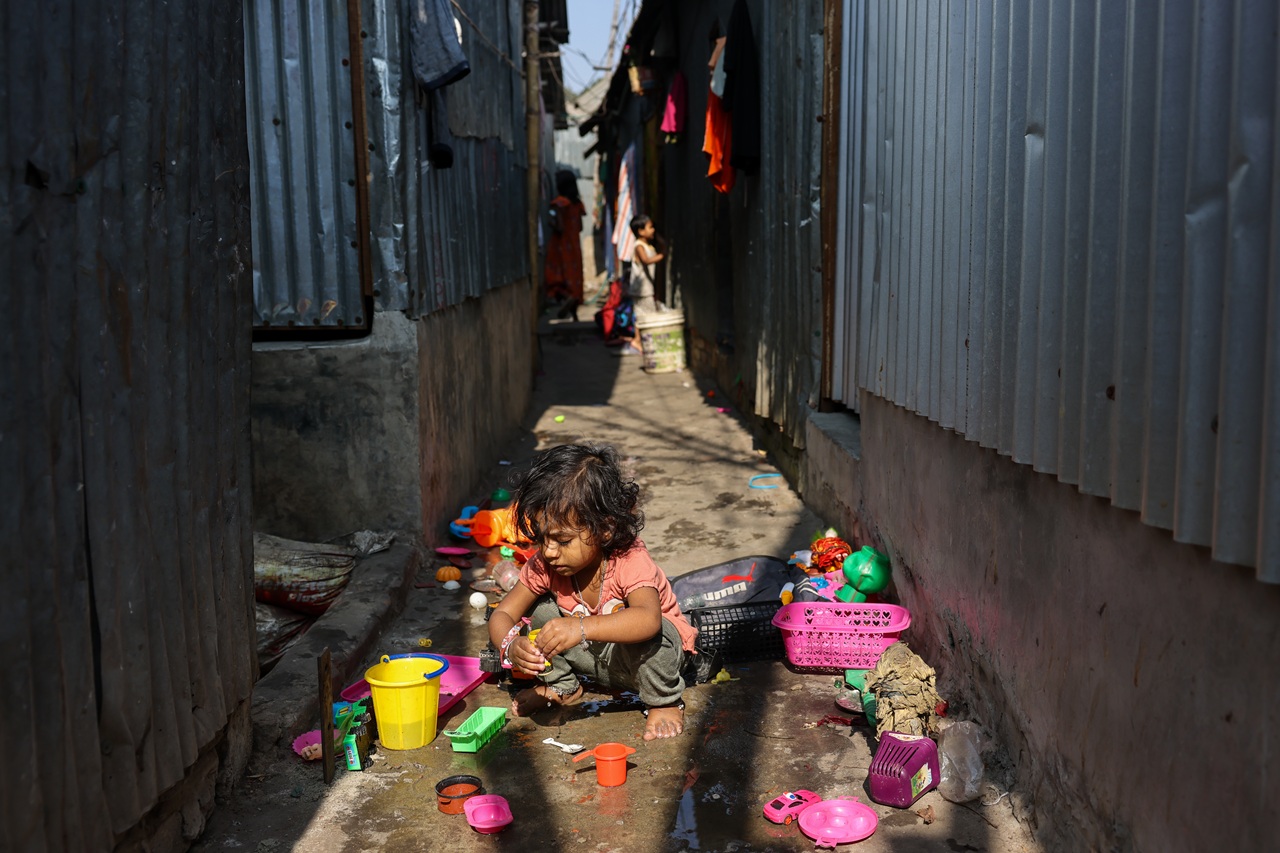
Minara, another resident of the slum, finds herself in an even more precarious situation. She lost her job three months ago after suffering from jaundice and has remained unemployed since.




Previously, she worked in two apartments in Amtoli, earning Tk 6,000 from each household. Now she lives with her husband and their three children in a similarly cramped dwelling. “People in Gulshan prefer permanent housemaids. It’s becoming difficult for me to find work,” Minara said.
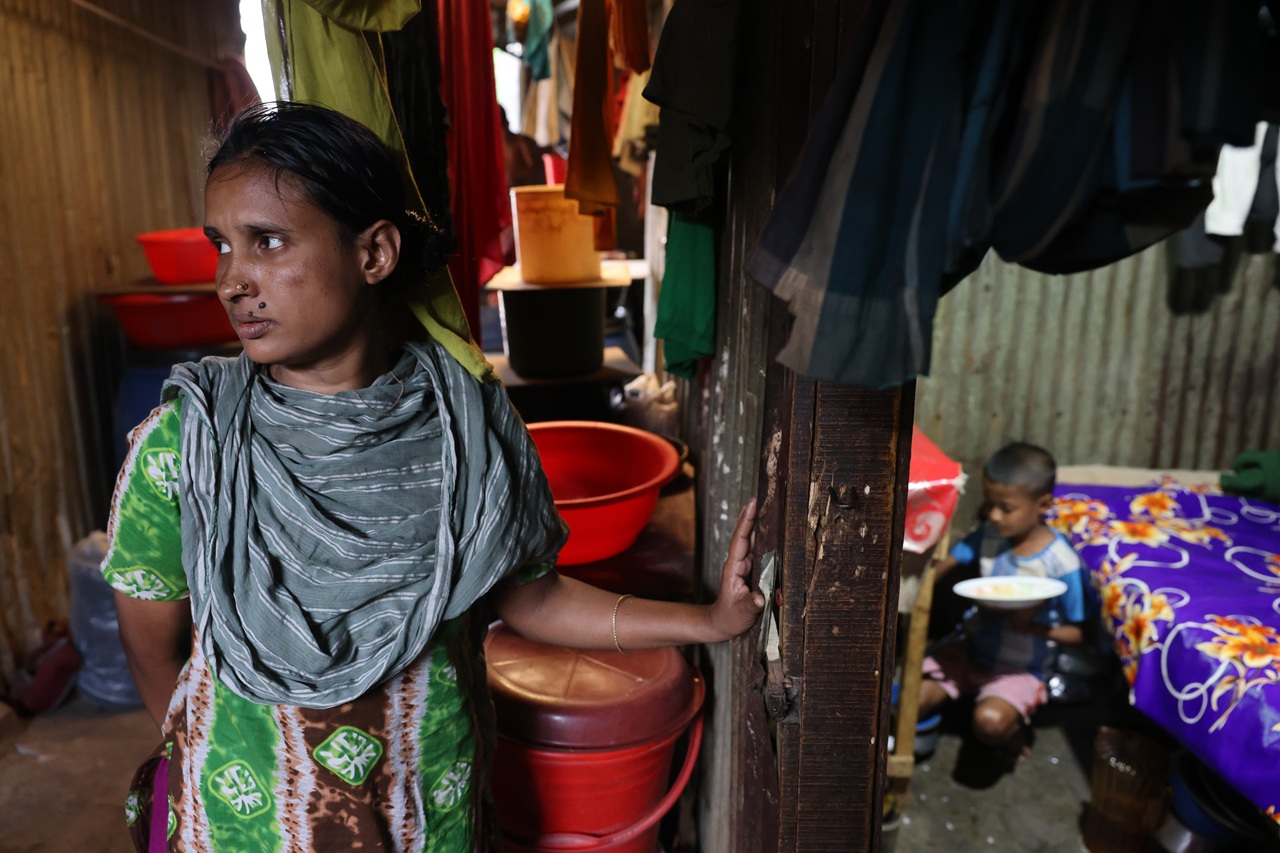
Kohinur, 50, lives alone. Her daughters are married, and she now supports herself working as a part-time domestic worker commonly known as a “chhuta bua.” Every day, she walks from her dwelling at Ittadi’r Mor slum (in Mohammadpur) to Dhanmondi 32 for work.
Kohinur earns around Tk 5,000 a month, of which Tk 3,500 goes toward paying rent for her roughly 35-square-foot room. The space holds a single chowki for sleeping and two wall shelves stacked with all her belongings – utensils, clothes, a few cosmetics, and a teddy bear gifted by one of her employers. She said she plans to turn the fluffy toy into a pillow.
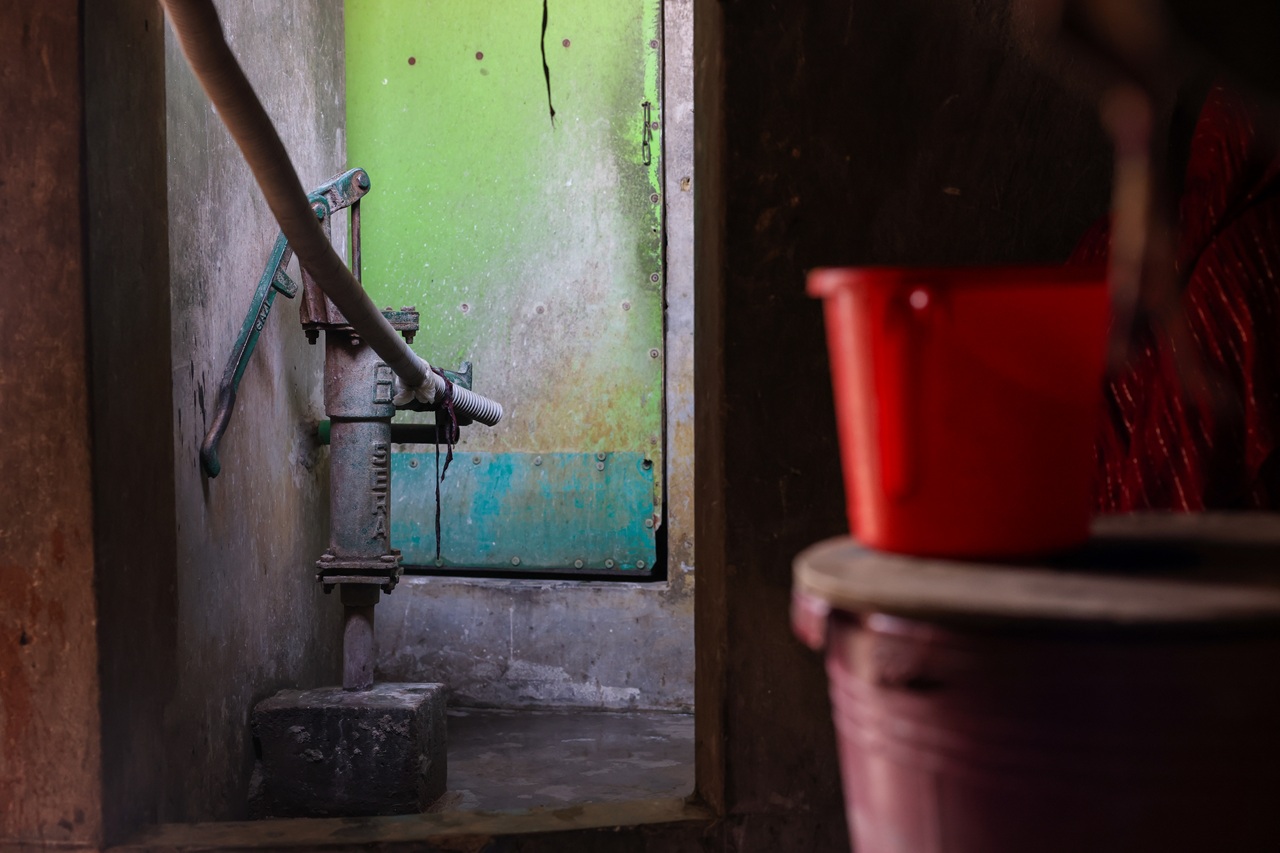
Her neighbour, Parul, lives a similar life in a near-identical setup. “Gas usually comes after midnight, so we end up eating around 2:00 am,” she said.
According to the landlord, this has been the pattern for the past three years. Gas flows again briefly at dawn before disappearing by 8:00 am. The water supply is equally erratic. There are only two bathrooms for multiple families; one often remains locked. Residents queue from 5:00 am, rushing to bathe and wash clothes before the taps run dry.
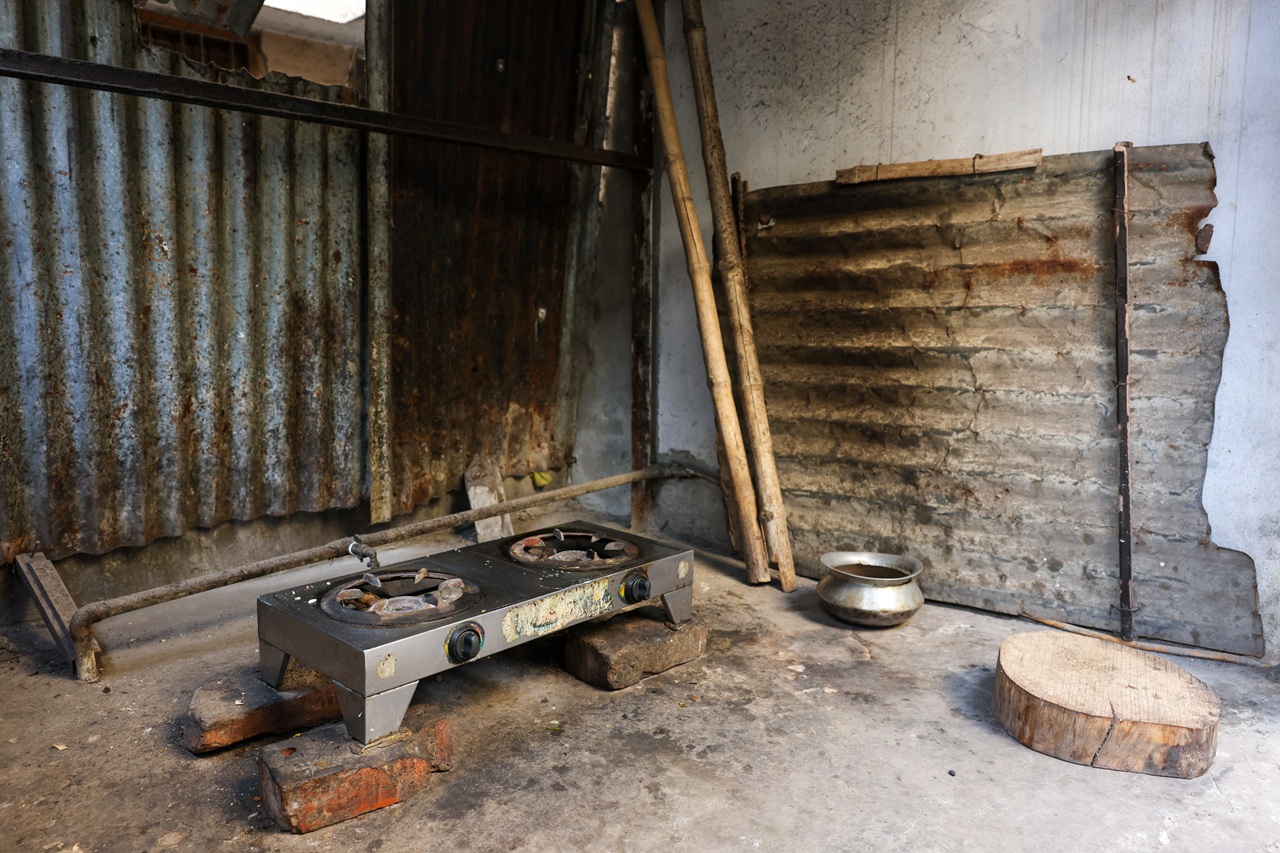
The women who scrub marble floors in Gulshan and polish glass tables in Dhanmondi return each evening to rooms where ventilation is scarce, privacy is nonexistent, and basic utilities are uncertain.
Even those earning around Tk 30,000 – an average entry- to mid-level corporate salary – often struggle to make ends meet as rent and utility costs consume the bulk of their income.
For these women, many of whom are primary breadwinners or single mothers, the gap is far more brutal. They possess the skills to prepare wholesome meals and maintain orderly households yet cannot afford the minimum facilities. It is time for the government to move beyond symbolic gestures and address these structural realities.