The government has declared BNP Chairperson and former three-time prime minister Khaleda Zia a “Very Very Important Person” (VVIP). She is currently in “critical condition” and undergoing treatment at Evercare Hospital in Dhaka.
The order was issued on Monday night under the Special Security Force Act 2021, amid growing public concern over Khaleda Zia’s deteriorating health and the large crowds gathered around the hospital.
Her designation has reignited public interest in the rules governing VVIP status in Bangladesh and the privileges it confers.
Who are VVIPs
The government grants VVIP status to people who hold the highest state positions or perform roles of national importance. These include the president, the prime minister, and individuals of equivalent rank. The government may also declare others as VVIPs through a gazette notification when necessary.
Section 2 of the Special Security Force Act 2021 defines a VVIP as the head of state or head of government of any foreign country visiting Bangladesh, as well as any other individual declared as such for the purposes of the Act.

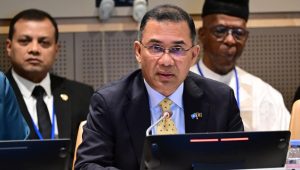
Recently, the Prime Minister of Bhutan was accorded VVIP status for three days during his state visit.
How does the government declare VVIP status
The Office of the Chief Adviser now issues VVIP notifications. Officials do not require a separate declaration for those who hold the status by virtue of their office.
For others, such as Khaleda Zia, the government publishes a formal gazette with immediate effect.


What benefits do VVIPs receive
The Special Security Force (SSF) provides full physical protection to all VVIPs. Under Section 8(2) of the Act, SSF officers are responsible for ensuring the personal security of the VVIP, collecting and assessing intelligence related to potential threats, and taking any necessary measures to prevent harm.
The force also holds exceptional legal authority while protecting a VVIP. Officers may arrest individuals without a warrant if they are deemed a threat and may use firearms if the situation demands. These powers extend across the entire country.
What does this mean for Khaleda Zia
The SSF will now assume full responsibility for Khaleda Zia’s personal security. She will receive the highest level of state protection. The force has already replaced the regular police team guarding the hospital. Access to her floor and surrounding areas is now tightly restricted, and movement around Evercare Hospital is being controlled.
The team will also coordinate with intelligence agencies as crowds continue to gather outside Evercare Hospital each day.
The SSF is legally empowered to take immediate action if it believes any threat is present. Officers may detain individuals without a warrant and may use necessary force to secure Khaleda Zia. Her family members will receive extended protection as well.
Why the decision matters
Khaleda’s condition has triggered intense national anxiety. She suffers from long-term heart disease, diabetes, arthritis, kidney issues, and advanced liver cirrhosis. Her condition worsened after she developed pneumonia in late November. Doctors moved her to intensive care and placed her on advanced life-support measures.
Conflicting late-night reports about her condition created panic, prompting BNP leaders to appeal for caution and rely only on official medical updates. The situation intensified further when international specialists from China arrived to support her treatment review.
Government officials said the decision to declare her a VVIP was taken after reviewing the situation surrounding her treatment environment and the rising gatherings at Evercare Hospital. The status ensures that her security, the safety of medical staff, and overall management of the hospital premises remain stable during this critical period.
It is only the second time in recent history that she has been granted VVIP protection outside public office. Bangladesh last saw such a declaration in 2008, when the military-backed caretaker government granted VVIP status to Khaleda Zia and Awami League President Sheikh Hasina for a short period before the general election.
A new Chinese medical team has joined local and foreign doctors to assess her treatment options, while BNP leaders have urged the public not to rely on unofficial updates.
Khaleda Zia, one of the country’s most influential political figures, has been at the centre of national attention for weeks. Her battle for life has prompted appeals from political leaders across the spectrum.
The VVIP declaration marks a rare intervention that underscores both the seriousness of her condition and her significance in Bangladesh’s political arena.