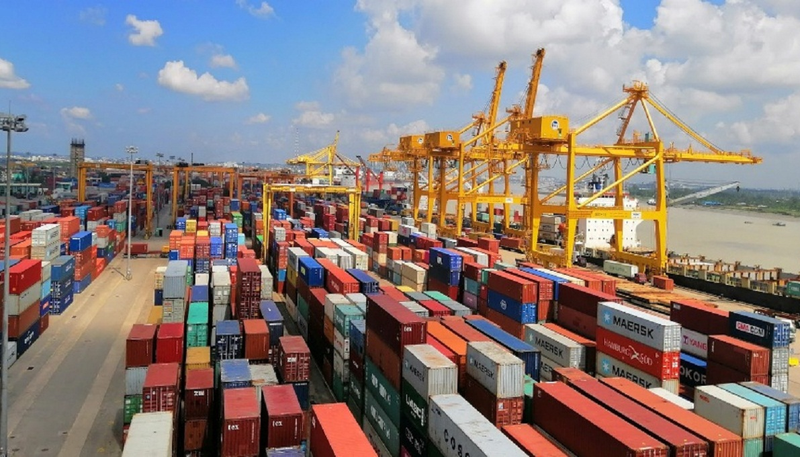



Container freight costs have risen by 20–40 per cent, adding $500 to $4,000 per container, as global energy shocks ripple through Bangladesh’s trade and production chain, said Dhaka Chamber of Commerce and Industry (DCCI) President Taskeen Ahmed at a roundtable in Dhaka on Thursday.
A $10 increase in global oil prices adds about $1 billion to Bangladesh’s annual expenditure. If prices exceed $120 per barrel, the additional cost rises to $4–5 billion, sharply pushing up production and living costs, he said.
The discussion on navigating the global energy shock and its impact on Bangladesh was organised by DCCI in collaboration with Bangladesh Sustainable and Renewable Energy Association (BSREA) and Infrastructure Development Company Limited (IDCOL) at the DCCI auditorium, according to a press release.
The impact is already visible across industries. Production capacity in the readymade garments sector has dropped nearly 50 per cent, while cement production costs have increased by Tk25-30 per bag.
Fuel shortages are also raising risks for transport, power generation and other sectors.
Bangladesh imports about 95 per cent of its energy, with nearly 90 per cent routed through the Strait of Hormuz, where around 20 per cent of global oil and more than 25 per cent of liquefied natural gas trade pass daily.

Geopolitical instability in the Middle East and the dollar crisis have intensified pressure, while reserves of diesel, octane and petrol are gradually declining.
Bangladesh’s energy capacity gaps have been exposed, requiring strong political will and both short-term and long-term measures, said DCCI President Taskeen Ahmed.
He called for expanding offshore and onshore gas exploration, diversifying energy import sources and encouraging local and foreign investment in renewable energy through lower duties, easier financing and reduced procedural delays.
Industries Ministry Secretary Md Obaidur Rahman said Bangladesh faces persistent energy shortages, now worsened by global instability, with a fertiliser shortfall of 4,00,000 metric tonnes against a requirement of 6,00,000 metric tonnes by June.




The government is working to reduce bureaucratic delays. A policy on electric vehicles is in its final stage, while current revenue policies need to be more consumer-friendly, he said.
The crisis is affecting livelihoods, requiring reliable data, higher energy storage capacity and removal of tariffs on renewable energy, said Federation of Bangladesh Chambers of Commerce and Industry Administrator Md Abdur Rahim Khan.
Renewable energy can help address the crisis, but expanding gas exploration remains essential for long-term security, said Bangladesh Energy Regulatory Commission Member for Power Brigadier General Md Shahid Sarwar (Retd).
Gaps in implementation persist and subsidy reforms are needed, said Commerce Ministry Additional Secretary Shibir Bicitro Barua.
He said proposals will be made to increase duties on electric vehicle imports to promote renewable energy use.
Political commitment is critical, alongside long-term, low-interest financing for small and medium entrepreneurs, said BSREA President Mostafa Al Mahmud.
Duties of 27–30 per cent on imported solar equipment remain a key barrier, and at least one year duty-free access for batteries is needed, said BSREA Senior Vice President Zahidul Alam.
A national taskforce and ministry-level committees are needed to ensure faster implementation, said IDCOL Chief Investment Officer Nazmul Haque.
Better coordination is needed as Bangladesh lags behind Europe in solar adoption and preparation for post-LDC graduation challenges, said BGMEA Vice President and Desh Garments Deputy Managing Director Vidiya Amrit Khan.
LPG shortages have forced many stations to shut down, requiring a long-term master plan, diversified import sources and removal of bureaucratic barriers, said Bangladesh LPG Autogas Station and Conversion Workshop Owners Association President Eng Md Serajul Mawla.
Subsidies reached nearly Tk63,000 crore in FY25 due to high production costs and may rise further if fuel prices increase, said Bangladesh Power Development Board Additional Chief Engineer for Commercial Operation Mohammed Nurul Absar.
Energy security is at a critical stage, requiring stronger regulatory capacity and stakeholder engagement, said Daffodil International University Dean of Information and Communication Engineering Professor M Shamsul Alam.
Better energy conservation could allow Bangladesh to purchase fuel at lower prices during global downturns, reducing subsidy pressure, said BUET Professor of Chemical Engineering Ijaz Hossain.
DCCI Senior Vice President Razeev H Chowdhury, Vice President Md Salem Sulaiman, board members, entrepreneurs and representatives from public and private sectors attended the roundtable.