


The United States and Japan have confirmed that they worked together last week to stabilise the Japanese yen after the currency fell to its weakest level in four decades.
It marks the first coordinated currency intervention by the two countries since 2011, when they acted together following the massive earthquake and tsunami that devastated eastern Japan, reports BBC.
Japanese authorities and US Treasury Secretary Scott Bessent have both indicated that similar joint action could be taken again if necessary.
The coordinated move reflects efforts by Tokyo and Washington to curb volatility in the yen and Japanese government bonds, amid concerns that instability could spill over into the global economy and potentially influence US borrowing costs.

“The United States agreed to participate in the coordinated intervention because it serves its national interests by offering the prospect of significant benefits at a low cost,” Shigeto Nagai, head of Japan economics at Oxford Economics told the BBC.
He added that the two governments are likely to continue intervening together from time to time. “Even if the actual amount of intervention is not particularly large, the prolonged sense of vigilance regarding intervention will be effective in deterring speculators.”
The yen has remained under pressure largely because Japan’s central bank maintains significantly lower interest rates than other major economies, including the United States. As a result, the Japanese currency has become less attractive to overseas investors.




In June, the Bank of Japan increased its benchmark interest rate to 1 per cent, the highest since September 1995.
By comparison, the US Federal Reserve’s benchmark rate stands between 3.50 per cent and 3.75 per cent.
Japan is also grappling with a shrinking working-age population, weak productivity and strong dependence on imported energy, much of which is priced in US dollars.
Japan’s finance ministry said on Monday that the intervention carried out with the US Treasury Department on Friday had “countered excessive volatility and disorderly movements in the Japanese yen in recent months”.
Bessent echoed that view in a social media post, saying, “The coordinated foreign exchange actions countered disorderly yen movements,”
He added, “We strongly support Japan’s decisive market and monetary steps to correct the substantial undervaluation of the yen,”
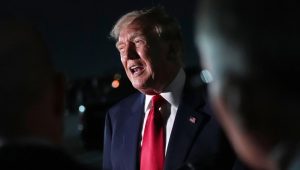
Speaking to reporters on Sunday, US President Donald Trump said, “They have a weakening yen, and they wanted a little bit of help. And we’re always there for Japan,”
Following Trump’s remarks, the US dollar slipped 0.2 per cent to 157.07 yen, well below last month’s 40-year peak of 164 yen, before recovering to 157.70 yen after the Japanese finance ministry released its statement.
Figures from the Bank of Japan suggested that Tokyo may have sold nearly $59 billion worth of US dollars to purchase yen during market operations in New York on Thursday, ahead of the confirmed joint intervention on Friday.
While US officials have not disclosed the size of Washington’s participation, a Reuters photograph taken during a cabinet meeting on Friday showed a note in front of Bessent reading, “To Do: Buy Japanese Yen $5-10 bil”.