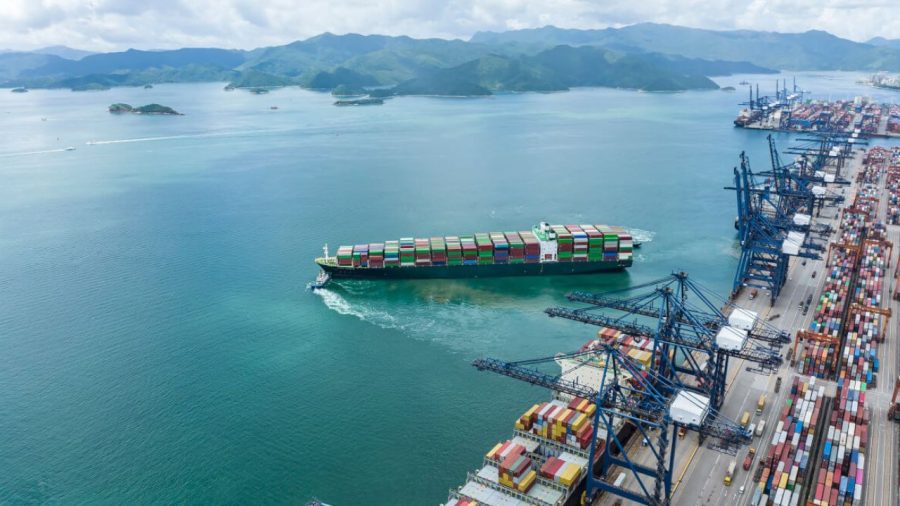



Situated on the Gulf of Aden near Bab el-Mandeb Strait, Berbera Port in Somaliland has re-emerged as a vital maritime chokepoint.
Carrying nearly 30 per cent of global maritime oil shipments alongside vast container freight, Bab el-Mandeb Strait connects Red Sea directly to Indian Ocean.
Attacks by Yemen’s Houthi movement (Ansar Allah) on commercial vessels bound for Israel have forced major shipping lines to bypass Suez Canal and reroute vessels around South Africa’s Cape of Good Hope.
This shipping crisis has highlighted Berbera’s potential as a prime alternative transshipment hub, sitting just 18 days’ sailing time from China.
The port serves as an indispensable trade corridor for landlocked Ethiopia, which lost direct maritime access following Eritrea’s independence in the early 1990s and currently pays neighbouring Djibouti nearly $2 billion annually in port access fees.
Colonial legacy and statehood aspirations
Administered from 1884 to 1960 as the British Somaliland Protectorate, Somaliland gained independence from Great Britain on 26 June 1960.
Five days later, it voluntarily united with former Italian Somaliland to form Somali Republic.

Following decades of political marginalisation and a brutal military campaign under Somali dictator Mohamed Siad Barre, which killed an estimated 200,000 members of the predominant Isaaq tribe between 1987 and 1989, Somaliland declared its 1960 unification null and void in 1991.
Despite operating its own constitution, currency, military, and democratic elections for six million citizens, Somaliland remained unrecognised internationally for over three decades.
It also faces border disputes with Puntland near Las Anod and remains excluded from global correspondent banking and trade finance.
Infrastructure growth and DP World’s stake
Berbera’s modern logistics expansion began in 2016 when Dubai-owned DP World acquired a 65 per cent controlling stake alongside the Somaliland government (35 per cent) and British International Investment.


A $450 million expansion boosted container capacity to 500,000 TEUs and bulk capacity to two million tonnes, employing 1,350 local workers and earning Berbera the ranking of sub-Saharan Africa’s most efficient port by the World Bank in 2023.
Under DP World Commercial Director Jama Mohamed Ahmed, the facility transitioned to digital systems. Though regional political friction keeps Berbera operating at roughly 30 per cent capacity, its commercial infrastructure remains fully operational.
Israel’s recognition and the ‘Berbera Axis’
On 26 December 2025, Israel became the first United Nations member state to officially recognise Somaliland. Driven by Prime Minister Benjamin Netanyahu’s “pivot to Africa” and “hexagon of alliances” strategy, the move aims to counter Iranian influence and Houthi threats along Red Sea shipping routes.
Israeli Foreign Minister Gideon Sa’ar visited Hargeisa in January 2026, while Minister of Diaspora Affairs Amichai Chikli hailed the alignment.
Somaliland President Abdirahman Mohamed Abdullahi (Cirro) welcomed the move, confirming readiness to join the Abraham Accords and consider granting Israeli firms port access.
This diplomatic breakthrough consolidated the “Berbera Axis” – comprising Israel, the United Arab Emirates (UAE), Ethiopia, and Somaliland.
The UAE has built a security footprint since 2017 by operating a military base at Berbera airport, deploying surface-to-air missile and radar sites, constructing a naval base, and funding a 250-kilometre highway from the Ethiopian border.
Ethiopia had signed a Memorandum of Understanding in January 2024 seeking a 50-year lease on coastline for naval and commercial access in exchange for eventual statehood recognition.
The counter-alliance: Somalia, Turkey, and the ‘Mogadishu Axis’
In response, Somalia, Turkey, Saudi Arabia, and Egypt formed the opposing “Mogadishu Axis”. Somali President Hassan Sheikh Mohamud denounced Israel’s recognition as an “existential threat”, while Foreign Minister Abdisalam Abdi Ali warned it endangered Red Sea security.
On 12 January 2026, Somalia cancelled all security and port contracts with the UAE after Saudi Arabia accused Abu Dhabi of evacuating Yemeni Southern Transitional Council (STC) leader Aidarous al-Zubaidi via Berbera. Somali Defence Minister Ahmed Moallim Fiqi cited sovereignty violations.
Turkey anchors the Mogadishu Axis, operating its TURKSOM military base in Mogadishu. Turkish President Recep Tayyip Erdogan termed Israel’s recognition “illegitimate and unacceptable”. Ankara extended its naval deployment mandate in Somali waters, deployed F-16 fighter jets and ALP-300G radars, accelerated construction of a military facility at Lasqoray, and saw Turkish Military Academy graduate Brigadier General Ibrahim Mohamed Mahmud appointed Somali National Army Commander.
Saudi Arabia signed a military agreement with Somalia in February 2026 to discuss establishing a naval facility at Lasqoray, while Egypt deployed 1,000 troops under the African Union Support and Stabilisation Mission in Somalia (AUSSOM) and Major General Ahmed Abdel Khalek led diplomatic missions.
Great powers and ‘calibrated ambiguity’
Somaliland established ties with Taiwan in 2020, signing a coast guard agreement in July 2025, drawing Beijing’s opposition under the One-China principle.
In Washington, President Donald Trump maintained the “One Somalia” policy, though Representative Scott Perry introduced the Republic of Somaliland Independence Act and Project 2025 recommended recognition.
Somaliland Minister of the Presidency Khadar Hussein Abdi offered the US access to minerals and military bases.
However, Houthi militants warned that any Israeli base would be a target, amid an emerging partnership between Houthis, Somali pirates, and Al-Shabaab. Consequently, analysts predict a phase of “calibrated ambiguity”.