Iran is ready to negotiate with the United States but remains “fully prepared” to respond if Washington launches fresh military attacks, Foreign Minister Abbas Araghchi said on Sunday, outlining a seven-day proposal that could see Tehran reopen the Strait of Hormuz.
“We are ready for diplomacy. We are ready for war at the same time,” Araghchi told NBC’s Meet the Press.
He said Iran had heard US President Donald Trump reject its latest proposal but was still awaiting an official response through mediators, reports Anadolu.
Under Tehran’s proposal, Iran would reopen the Strait of Hormuz if Washington first takes several steps, including ending the war, releasing frozen Iranian assets, lifting the blockade and allowing Iran to sell its oil.
“Our proposal is very clear. We are ready to open the strait if certain things are done by the US,” Araghchi said.

He said Washington could take the required steps within four or five days. Iran would then reopen the strait on the sixth day, followed by the resumption of negotiations on a final agreement on the seventh day.
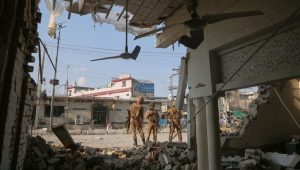
Iran effectively closed the Strait of Hormuz, a vital global shipping chokepoint, following US-Israeli attacks in February and a maritime blockade imposed on the country.
Distrust of US
Araghchi voiced deep distrust of negotiations with the Trump administration, accusing Washington of attacking Iran during talks in both 2025 and 2026 and violating an agreement shortly after it was signed.


“There is always hope for diplomacy,” he said. “But I am still trying diplomacy because I think we shouldn’t miss any chance for peace.”
Asked whether he trusted Trump, Araghchi replied, “We trust ourselves.”
He rejected claims that Iran had first violated the June memorandum of understanding with the US. If Washington believed Tehran had breached the interim deal, he said, it could have used its dispute-settlement mechanism instead of bombing Iran.
Asked about the possibility of further US strikes, Araghchi said Iran had learned from previous fighting and changed its military tactics.
“We are fully prepared for the time for the war to be resumed,” he said. “We stand firm in the face of any new aggression, even it comes to a doomsday war. But at the same time, we stand ready for diplomacy.”
He said the choice between renewed military action and negotiations rested with Trump.
Nuclear programme
Araghchi maintained that Iran’s nuclear programme serves “peaceful” purposes, including medical applications. He said Tehran had offered to negotiate over its 60 per cent -enriched nuclear material.
“We decided to put everything nuclear for the later stages and go for confidence building in this stage,” he said, explaining why the nuclear issue was excluded from the initial seven-day proposal.
He argued that concerns over Iran’s nuclear programme should be addressed through negotiations rather than military action.
Asked why Iran’s supreme leader had not appeared publicly on video since taking power in March, Araghchi cited security concerns, saying there were indications that the leader faced threats from the US.
“We receive his comments and orders and opinions,” Araghchi said.
He also rejected suggestions that Iran has competing centres of power, saying the Foreign Ministry coordinates with the government, the Islamic Revolutionary Guard Corps, the Supreme National Security Council and parliament.