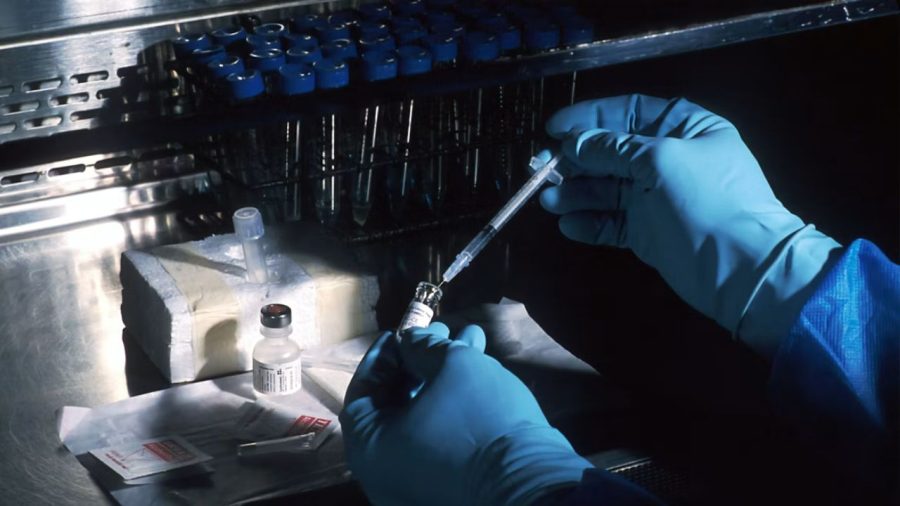



The United States administration under President Donald Trump is struggling to obtain clear answers from Russia regarding the death of a 28-year-old laboratory technician at a Siberian research facility dedicated to studying the plague.
The incident has raised immediate alarms across Washington, triggering a race to gather intelligence and formulate a potential public health response amid days of stonewalling by Russian officials, reports CNN.
In response to Moscow’s reluctance to share information, the US State Department formally issued a diplomatic communication, known as a démarche, late on Tuesday to request additional details.
A State Department spokesperson confirmed the official request and noted that Washington is also communicating with other governments globally to share information.
Several federal agencies are closely monitoring the fatal case of suspected pneumonic plague, while reminding Americans that travel to Russia remains advised against due to risks including wrongful detention and the ongoing war in Ukraine.
US Secretary of State Marco Rubio said it is incumbent upon Russia to share more information openly with the world, warning that it would be reckless at this stage to speculate given the limited data available.

Trump told reporters outside the White House on Tuesday afternoon that he had a telephone call scheduled with Russian leader Vladimir Putin “very soon” and expected US agencies to have further information on Wednesday.
Trump had earlier characterised the situation on Monday as a “big problem” for Russia and suggested the US might need to provide unspecified aid.
Official communication between US health experts and the Russian Foreign Ministry began as early as last Friday.



However, American officials remain deeply sceptical of Moscow’s transparency, with one official expressing certainty that Russia will act similarly to China during the early stages of the Covid pandemic.
Pathogen and biosafety concerns
The deceased technician was employed at the Irkutsk Research Anti-Plague Institute of Siberia in the city of Irkutsk. Staff at the institute study a range of dangerous pathogens, including cholera, anthrax, and brucellosis.
Critical questions remain unconfirmed as to whether the worker contracted pneumonic plague, a severe but treatable bacterial infection, or another unknown infectious disease.
Moreover, US officials are seeking details on whether the disease underwent genetic modification through gain-of-function research, which could dramatically alter international response strategies.
Compounding concerns in Washington is the Russian government’s outsized local response. According to the mayor of the Shelekhovsky district, the hospital where the worker was treated has been placed under quarantine, while regional media reported that nearly 200 people have been placed under observation.
Professor Lawrence Gostin, a global health law expert at Georgetown University who works closely with the World Health Organisation (WHO), stated that the facility was conducting extremely high-risk research with “shoddy biosafety measures,” arguing that independent accountability is essential.
Risk assessment and response capacity
Although US officials and health experts have publicly downplayed immediate threats to the American population due to the treatability of pneumonic plague with antibiotics and the institute’s remote location in eastern Russia, deep unease remains within the administration.
The limited transmissibility of pneumonic plague and the availability of effective treatments reduce the likelihood of a broader global crisis. Consequently, Washington is not currently introducing travel restrictions to Russia.
The cross-government effort to evaluate potential risks is being led by the National Security Council and the State Department, alongside federal health agencies including the US Centers for Disease Control and Prevention (CDC) and the Administration for Strategic Preparedness and Response (ASPR).
US officials have also backchanneled with the WHO, which confirmed it is seeking details from Russian authorities but has received minimal information.
While the US Health and Human Services Department maintains stockpiles for conventional pneumonic plague, experts expressed uncertainty over combating modified strains or the timeline required to develop new treatments.
Jennifer Nuzzo, epidemiology professor and director of the Pandemic Center at Brown University School of Public Health, warned that both global and American response capacities are severely diminished.
She highlighted a $600 million budget shortfall at the WHO following the US withdrawal, alongside existing strains on the US health system currently battling measles outbreaks.