


For more than a century, chemists have wrestled with a profound riddle at the heart of life itself.
Almost every molecule that matters in biology – the amino acids that build our proteins, the sugars that form our DNA – comes in two mirror-image forms, like a left and right hand. Yet living organisms use only one version.
How nature first achieved this strict one-handedness, known as homochirality, remained one of chemistry’s deepest mysteries.
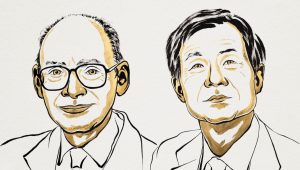
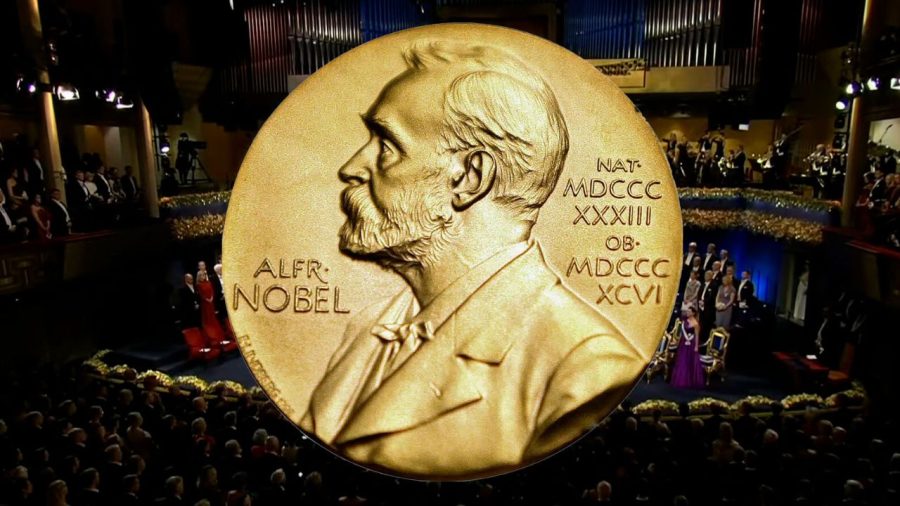
On Wednesday, The Royal Swedish Academy of Sciences announced its decision to award the Nobel Prize in Chemistry 2026 to to Henri B Kagan and Kenso Soai for finally cracking the mystery.
The problem is not merely academic. When chemists synthesise a new drug, they often produce both mirror images of the molecule. One may heal; the other can harm, as the thalidomide tragedy of the 1960s made devastatingly clear.
Creating reactions that favour just one “hand” has therefore been a holy grail of pharmaceutical chemistry.

In 1986, Henri Kagan of Université Paris-Sud overturned a long-held assumption. Chemists had believed that the proportion of mirror images in a catalyst would be transferred linearly to the product.
Kagan showed this was not true. By carefully studying how metal catalysts interact with pairs of chiral molecules, he discovered non-linear effects: a slight excess of one form in the catalyst could produce a dramatically larger excess in the final product.
His insight gave chemists a powerful new tool for sharpening the selectivity of their reactions and optimising the purity of drugs, fragrances and materials.

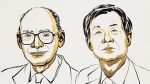

Kenso Soai of Tokyo University of Science took the next, even more spectacular step.
Building on Kagan’s work and on theoretical predictions made decades earlier by Charles Frank, he designed a reaction that was not only asymmetric but also autocatalytic – it created more of its own catalyst as it ran.
In 1995 he achieved a self-reinforcing process; by 2003 he had perfected it. Starting from an almost perfectly balanced, non-chiral mixture, a tiny random fluctuation was enough for one mirror image to take over completely.
After several cycles the preferred enantiomer could reach more than 99.5 per cent purity. For the first time since the origin of life itself, chemists had generated true homochirality from scratch in a test tube.
The Soai reaction is widely regarded as one of the most elegant experiments in the history of chemistry.
It does not mimic the exact chemistry of living cells, yet it proves that life’s one-handedness need not have required divine intervention or cosmic coincidence – it can arise spontaneously under the right chemical conditions.
Together, Kagan’s non-linear effects and Soai’s autocatalytic masterpiece have given researchers both practical tools and profound theoretical insight. Pharmaceutical companies now design cleaner, safer drugs with greater confidence.
Origin-of-life scientists are racing to adapt the principles to amino acids and sugars. And chemists everywhere have a sharper understanding of how asymmetry can amplify itself.
What began with Louis Pasteur sorting crystals of tartaric acid with tweezers in the 1840s has, 180 years later, received its ultimate recognition.
Thanks to Kagan and Soai, the mirror world of molecules is no longer quite so mysterious – and chemistry has gained one of its most beautiful and useful discoveries.
Last year, the chemistry award went to scientists Susumu Kitagawa, Richard Robson, and Omar Yaghi for developing metal–organic frameworks, molecular structures engineered to combat global challenges such as climate change and fresh water shortages.
In addition to international acclaim, Kagan and Soai will share a cash prize of 11 million Swedish kronor ($1.1 million).
King Carl XVI Gustaf of Sweden will present the laureates with their medals on 10 December, the anniversary of Alfred Nobel’s death, during a ceremony in Stockholm.