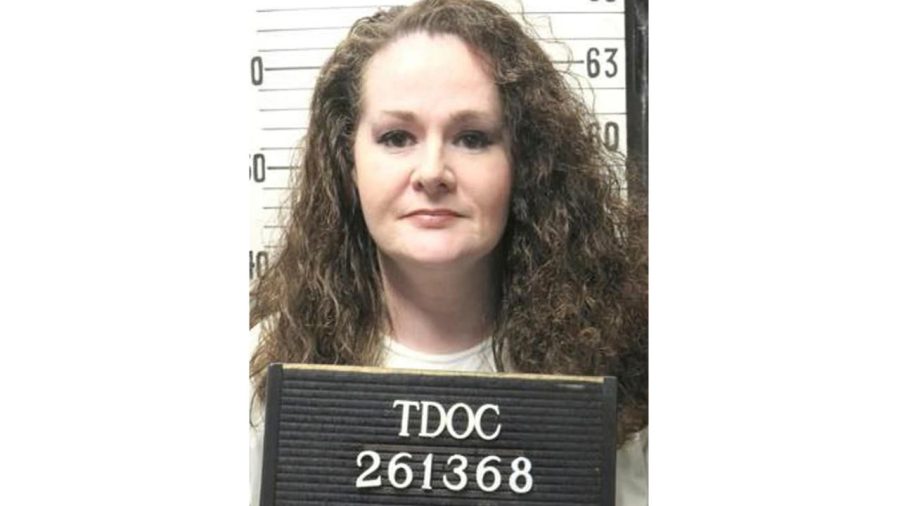



US death row inmate Christa Pike is now “conscious and speaking” after surviving a failed execution attempt in Tennessee last week, her lawyers said.
Pike, 50, remains in hospital receiving critical medical care while handcuffed, according to a statement issued by her attorneys on Tuesday, reports BBC.
Authorities attempted to execute Pike twice last Wednesday using lethal injection, but both attempts failed. She was taken to hospital and remained unconscious for several days while medical staff worked to clear the injected chemical from her body.
Pike was sentenced to death for the 1995 murder of Colleen Slemmer. Experts and her legal team say her apparent recovery is medically unprecedented, as she is believed to be the only person known to have survived a lethal injection.
Her lawyers described her progress as “medically unprecedented”. They said her prognosis remained uncertain and that “at a minimum, we expect a long recovery”.
Deborah Denno, a criminologist and professor at Fordham Law School, said she was “absolutely astonished” that Pike had regained consciousness and could speak.
Denno told the BBC that there had been seven other cases in which prisoners survived scheduled executions, but executioners in those cases failed to inject any substance into the inmates’ veins.

Pike “is the only person for whom some kind of toxin has been injected,” she said.
“They did everything they were supposed to do as part of the execution process, and it simply didn’t work,” Denno said. “This has never happened before.”
What happened during the failed execution?
Tennessee authorities have not said whether they will attempt to execute Pike again. They have also yet to explain why the execution failed after pentobarbital was injected.



Tennessee Governor Bill Lee suspended all executions in the state for the rest of the year. The state’s prisons chief also said over the weekend that he plans to resign.
Pike was 18 when she and her then-boyfriend, Tadaryl Shipp, beat, tortured and killed 19-year-old Slemmer. The two had met Slemmer at a job training camp for troubled teenagers.
Pike’s lawyers are due to appear in court in Nashville on Wednesday and plan to hold a news conference outside the court afterwards.
Joel Zivot, an anaesthesiologist advising Pike’s defence team, said on Tuesday that surviving a lethal injection was highly unlikely.
“Most people who get lethal injection die from it,” he told the BBC. “In fact, pretty well everyone, except Christa. So, the fact that she survived it … was unusual.”
However, Zivot said many questions remained unanswered, including how much pentobarbital entered Pike’s body, what concentration of the drug was present in her blood and how she would recover.
“I would not, in any way, say at this point that all the big risks are behind her,” he said.
Zivot had previously said that the two doses of pentobarbital administered to Pike would have been fatal if the drug had entered her bloodstream and circulated normally.
Instead, he said the drug may have spread through tissue beneath her skin rather than entering her bloodstream.
Zivot also said last week that Pike could have suffered a brain injury because of the delay in resuscitating her. He expected it would take about a week to properly assess her condition and conduct a neurological examination. Six days have now passed since the failed execution.
Pike’s lawyers had previously warned that her medical history and anatomy, including thrombocytosis, a blood-clotting condition, and small veins, created a risk of “unnecessary” pain and suffering during lethal injection.
They said on Tuesday that she had suffered “severe damage” to her arms.
More than a third of executions carried out in the US in 2022 were botched or highly problematic, according to the Death Penalty Information Center, which tracks such cases.
In lethal injection cases, problems have usually involved difficulties in securing reliable intravenous access to the veins, although the underlying causes have varied.
According to cases documented by the centre, all previous failures occurred before the lethal drugs could be administered. The most recent failed lethal injection it recorded took place earlier this year, also in Tennessee.
Tony Carruthers, who was convicted of kidnapping and murdering three people in 1994, was due to be executed in May. However, prison staff could not find a suitable vein for the lethal injection, prompting officials to postpone the execution. The governor later granted him a one-year reprieve.