


High schools across France have shut their doors for rest of the week after student-led protests turned violent. The movement began on 21 September as small classroom boycotts in poorer suburbs north of Paris, such as Saint-Denis, has quickly turned into a nationwide crisis.
Students at upper secondary schools (lycées), who are aged between 15 and 18, are protesting overcrowded classrooms with up to 35 pupils, severe teacher shortages, and exhausting daily schedules running from 8am to 6pm.
Deteriorating school facilities have also fuelled anger among pupils and teachers. Demonstrators report rodent-infested buildings, broken furniture, collapsing ceilings, non-functioning toilets, classroom flooding, and frequent power cuts.
These problems worsened during June heatwaves, which exposed a widespread lack of insulation and air conditioning in neglected schools.
Students also argue that state funding is unequal, leaving lower-income areas with fewer school nurses, psychologists, and supervisors than wealthier districts.
Protesters are demanding emergency state funds for building repairs, immediate hiring of missing teachers, extra university places, longer lunch breaks, and revised timetables.
How big are the demonstrations?
The protest has grown significantly over three consecutive weeks. During a National Day of Action on Tuesday, the student union L’Union Étudiante claimed 450,000 people protested nationwide, including 100,000 in Paris.

France’s Interior Ministry reported lower official figures of 250,000 demonstrators nationally, with 56,000 in Paris and 86,000 in provincial regions.
School closures have been widespread across the country. Student union representatives said up to 2,000 high schools were blockaded or closed, while official Ministry of Education figures noted that at least 589 schools experienced major disruptions.
Earlier in the movement, around 400 of France’s 3,700 lycées were affected. Protests, street blockades, and marches have taken place in major cities including Paris, Marseille, Lyon, Rennes, Strasbourg, Lille, Bordeaux, Nantes, and Arcachon.
What has led to violent clashes and severe injuries?
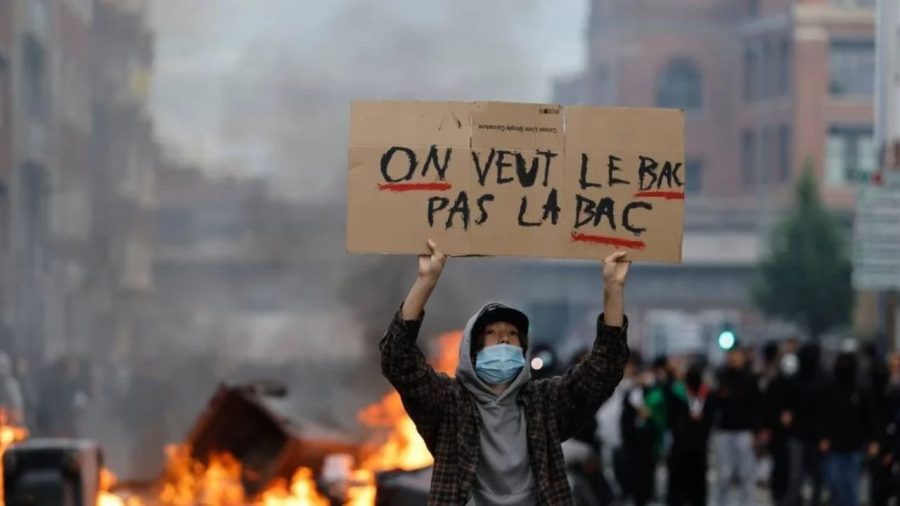
Rallies have repeatedly descended into violent clashes between demonstrators and security forces. Protesters built street barricades using rubbish bins, bicycles, and shopping trolleys, setting fires in Lyon, Rennes, and Lille.
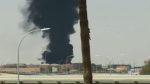



Police officers were targeted with stones, bottles, paving slabs, traffic cones, and fireworks mortars, along with seven reported incidents of hydrochloric acid being thrown.
Riot police responded with batons, tear gas, water cannon, and rubber bullet launchers.
The violence has caused serious casualties on both sides.
At least 215 students have been injured since the movement began. In Lens, a 15-year-old pupil lost his hand and part of his arm on Monday after a police grenade exploded during clashes, with prosecutors investigating whether he picked it up or if it landed near him.
In Saint-Ouen-l’Aumône near Paris, 14-year-old student Eden suffered a double jaw fracture on 28 September when he was struck by a tear gas grenade, requiring major surgery.
Official figures confirm that 715 police officers and 78 teaching staff members have been injured, while 24 school buildings have been burned or ransacked.
How have authorities and human rights groups responded?
Law enforcement agencies have carried out mass detentions, with Interior Ministry data showing 6,547 arrests or stops since 28 September, including 488 on Tuesday alone.
The Ministry of Justice confirmed that more than 1,800 individuals face legal prosecution, including 1,483 minors.
The Pontoise prosecutor announced that the police officer who fired the projectile launcher that severely injured 14-year-old Eden has been formally charged.
Rights organisations, including Amnesty International, have urged police restraint towards minors and warned against excessive use of force.
Prime Minister Sébastien Lecornu ordered the suspension of high school classes nationwide for the remainder of the week to allow time for internal dialogue between staff, headteachers, and pupils.
Lecornu instructed ministers to submit action plans addressing student demands by late October while firmly rejecting claims of police repression, saying that “burning down a high school does not improve the state of high school buildings.”
President Emmanuel Macron also convened an emergency cabinet meeting at the Élysée Palace with key ministers.
What is the broader political and economic impact?
The student movement has joined wider public sector strikes by teachers, energy workers, and firefighters opposing proposed budget cuts for 2027.
The government aims to save €54 billion ($61.3 billion) to reduce the national deficit, including a €2 billion ($2.27 billion) freeze on public sector salaries.
The unrest has also triggered political arguments, with left-wing leader Jean-Luc Mélenchon accusing the government of violent repression, while far-right leader Marine Le Pen unveiled a shadow budget.
Additionally, US President Donald Trump claimed on Truth Social without evidence that the protests were linked to migration and Islam.