
What started at the University of Dhaka with a simple but powerful idea 25 years ago has grown into something remarkable. UNYSAB is based on the idea that real leadership is not about holding onto power; rather, it is about empowering the next generation and knowing when to step aside.
What makes UNYSAB different is how naturally it develops leaders. Instead of formal training programs, as several other youth organizations in Bangladesh have done, it creates spaces where young people can come together, coordinate efforts, and collaborate on meaningful community initiatives.
Through organizing conferences, hosting dialogues, running committees, and building partnerships, students dive headfirst into the messy, rewarding work of bringing people together, solving problems, and finding common ground.
Surely, UNYSAB is more than a leadership incubator—it’s fundamentally an intellectual movement. It champions thoughtful debate, solid research, and decisions based on evidence rather than emotion.
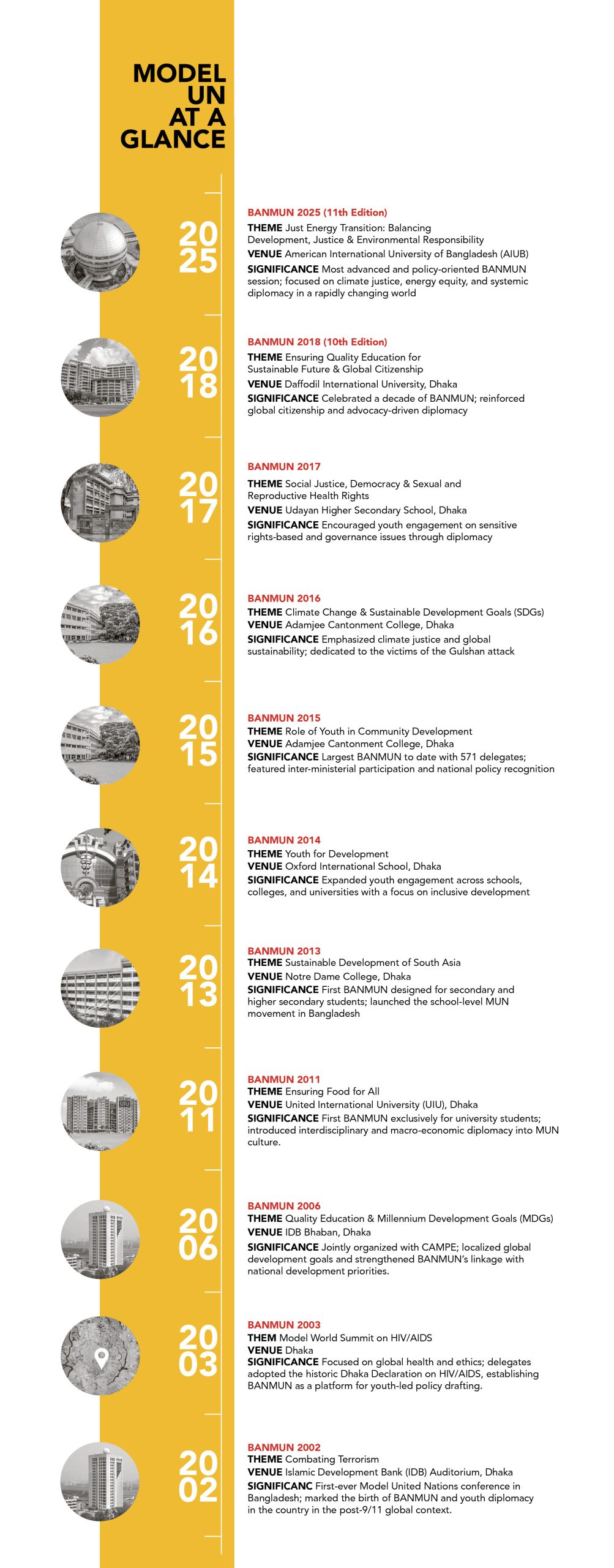
UNYSAB also holds a special place in Bangladesh’s youth intellectual landscape as the pioneer and leading advocate of the Model United Nations (MUN) movement.

From organizing the country’s very first national level MUN conference to seeing the concept spread across institutions nationwide, UNYSAB has championed what MUN is really about—making allies, not adversaries.
It also prides itself on participating in international MUNs regularly including the Harvard MUN, Asia Pacific MUN, the Asian International MUN, and the World MUN in Geneva.


In today’s world, where everything seems polarized and “leadership” has become just another product to sell, UNYSAB offers something genuinely different. It’s a volunteer-powered, intellectually serious, and principled platform where young people learn by rolling up their sleeves and lead by serving others.
The goal is to nurture true global citizens. This means creating a culture where international solidarity, mutual respect, and genuine understanding are not just nice-sounding words but actual ways of living and working together. UNYSAB deliberately exposes participants to different perspectives and global challenges, encouraging them to approach disagreements with open minds and humility.
Here’s where UNYSAB really stands apart: in a world where many youth organizations have turned their programs into products—selling trainings, charging for certifications, running education as a business—UNYSAB has consciously chosen a different path.
It remains proudly non-profit, by young people and for young people. This isn’t just about finances; it’s about protecting what matters most: accessibility and integrity. In the process, building lifelong bonding and friendship among the peers and across generations of UNYSAB alumni.
This choice reflects a core belief: developing leaders and engaging citizens should not be a transaction. It should be open, community-focused, and driven by mission, not profit margins.
By staying away from commercial pressures, UNYSAB could focus on creating lasting public value rather than chasing quick revenue. It created a family of like-minded youths.
At the same time, UNYSAB hasn’t isolated itself in the name of independence. It actively partners with UN agencies, NGOs, universities, and even corporations—but always on its own terms, with one clear priority: what’s best for the youth it serves.
This balance shows real maturity and youth empowerment. Partnerships are welcome when they strengthen the mission, not when they compromise it. Independence means UNYSAB can set its own standards, maintain volunteer-led governance, and stay accountable to students rather than sponsors.
UNYSAB’s legacy is not just about spreading MUN culture across Bangladesh, though that is certainly impressive. It is about steadily shaping young citizens who value working together over making a splash, who choose collaboration over cutthroat competition, and who put the common good ahead of personal gain. That is the leadership that lasts.
The author is an Associate Professor at National University of Singapore, and Co-Chair, Trustees Board, UNYSAB.