


Prime Minister’s Adviser on Education and Primary and Mass Education, Mahdi Amin on Friday called on universities to introduce on-campus part-time jobs and establish career centres to help students gain practical experience and improve their employment prospects.
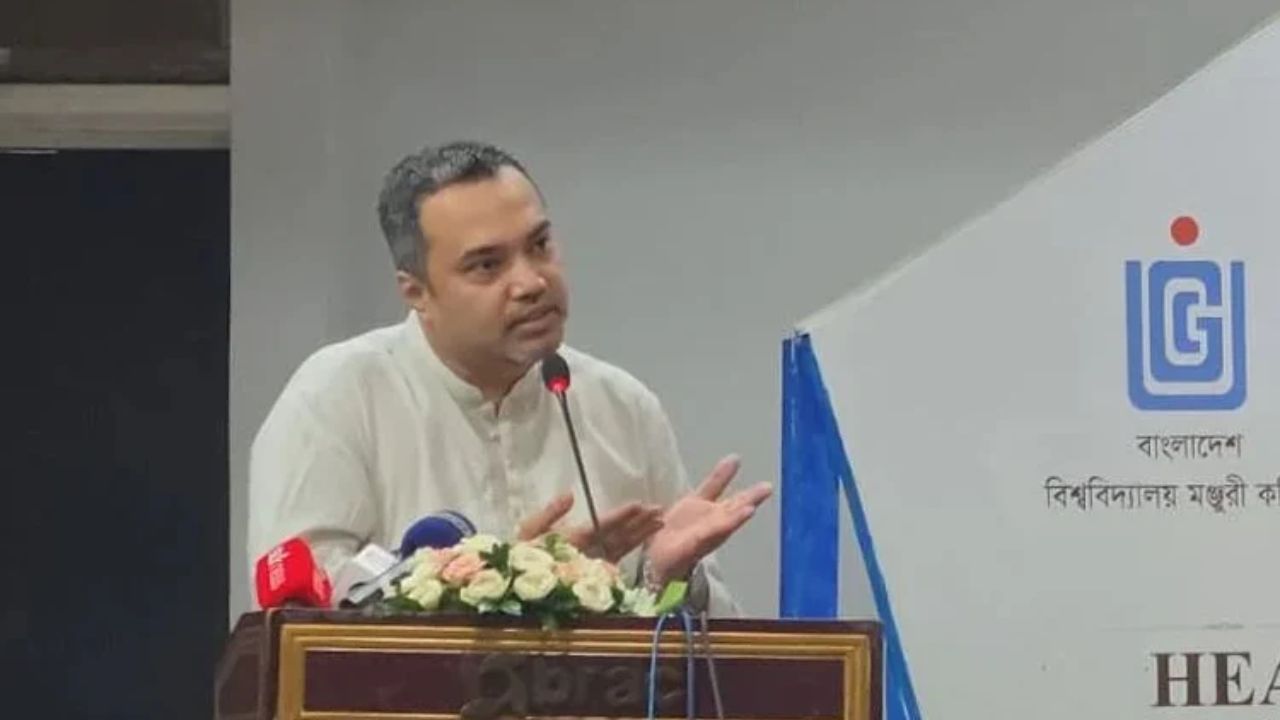
He made the call at a two-day national policy dialogue organised by the University Grants Commission (UGC) in Savar on Friday.
Speaking at the event, titled “Vice Chancellors’ dialogue: Shaping the future of higher education,” Mahdi Amin said Bangladesh should explore creating part-time employment opportunities on university campuses, following practices in universities abroad.
He said every university should have an effective career centre to help students prepare CVs, develop interview skills and receive career guidance.
“Job fairs can also be organised regularly on campuses,” he said, adding that many reputed local and national companies are willing to participate in such fairs without charging universities.
“Creating opportunities for students-from CV preparation and interview training to employment—is also part of the modern responsibility of universities,” he said.
Around 60 vice-chancellors from public and private universities, along with policymakers, senior government officials, academics, experts and representatives of the UGC and the Higher Education Acceleration and Transformation (HEAT) project, attended the dialogue.
Focus on skills and employability
Mahdi Amin said a record allocation had been made to the education ministry in the current budget to reform and modernise the education system and equip young people with practical skills.

The allocation is aimed at strengthening capacity, creating jobs, promoting entrepreneurship and empowering young people, he said.
He said the government was working to improve the global ranking and standing of Bangladeshi universities, while giving greater importance to the quality of education than to the number of institutions.
“The education ministry will provide policy support and ensure the necessary empowerment based on the individual capacity of each university,” he said.
He identified two key priorities for the education system: developing responsible citizens with strong values and ethics, and equipping students with the skills required for domestic and international employment.
He said the education system would be restructured so that graduates could compete on an equal footing in both the public and private sectors and create jobs through entrepreneurship.




Plan to turn brain drain into ‘brain circulation’
Mahdi Amin said the government wants to turn brain drain into “brain circulation” by engaging Bangladeshi researchers, academics and former students working abroad with local universities.
Under the proposed initiative, expatriate Bangladeshi academics and researchers could return for several months each year as guest teachers or research fellows, he said.
The government also plans to strengthen international partnerships to address shortages in laboratories, academic journals and research support and improve the global impact of Bangladeshi research.
Plans are also being considered to introduce summer schools, modernise distance learning and make credit transfers between Bangladeshi and foreign universities easier, he said.
Micro-courses, foreign language centres planned
The adviser also called for introducing short-term micro-courses and gradually establishing third-language learning centres at universities.
Students should be able to take three-month optional courses in areas such as digital literacy, freelancing and computer skills alongside their regular studies, he said.
Such courses would allow students to develop practical skills and explore self-employment opportunities before completing their degrees.
Mahdi Amin also urged universities to expand foreign-language learning opportunities, saying language skills would be increasingly important for higher education abroad, international trade and the BPO sector.
The government plans to gradually introduce opportunities to learn at least two to three foreign languages over the next five years, he said.
Stresses on skills, values in education reform
Mahdi Amin said the education system would be restructured to help graduates compete in the public and private sectors and create jobs through entrepreneurship.
“Education should not be limited to academic certificates. It must combine ethical values with practical skills,” he said.
Mahdi Amin also pledged to build a non-discriminatory and merit-based Bangladesh in line with the aspirations of the July mass uprising and the long anti-fascist movement.
He said the government’s education reforms would be guided by three principles: neutrality, equality and justice.
Call for stronger extracurricular activities
Mahdi Amin stressed the need for closer coordination between the education, cultural affairs, and youth and sports ministries.
He urged universities and educational institutions to organise year-round academic, cultural and sporting competitions, along with activities such as debate, science clubs, BNCC, Scouts and Girl Guides.
Such programmes would allow students from remote areas to compete alongside students from leading institutions in Dhaka, he said.
Recalling the role of young people in the July uprising, Mahdi Amin described Bangladesh’s demographic dividend as one of the country’s greatest strengths.
He said universities would be the most important platform for developing young people into skilled workers, entrepreneurs and productive citizens.
“The future of our democracy and the country’s progress will depend largely on how we develop our young people,” he said.
Finance and Planning Minister Amir Khosru Mahmud Chowdhury, UGC Chairman Professor Mamun Ahmed and others also addressed the event.