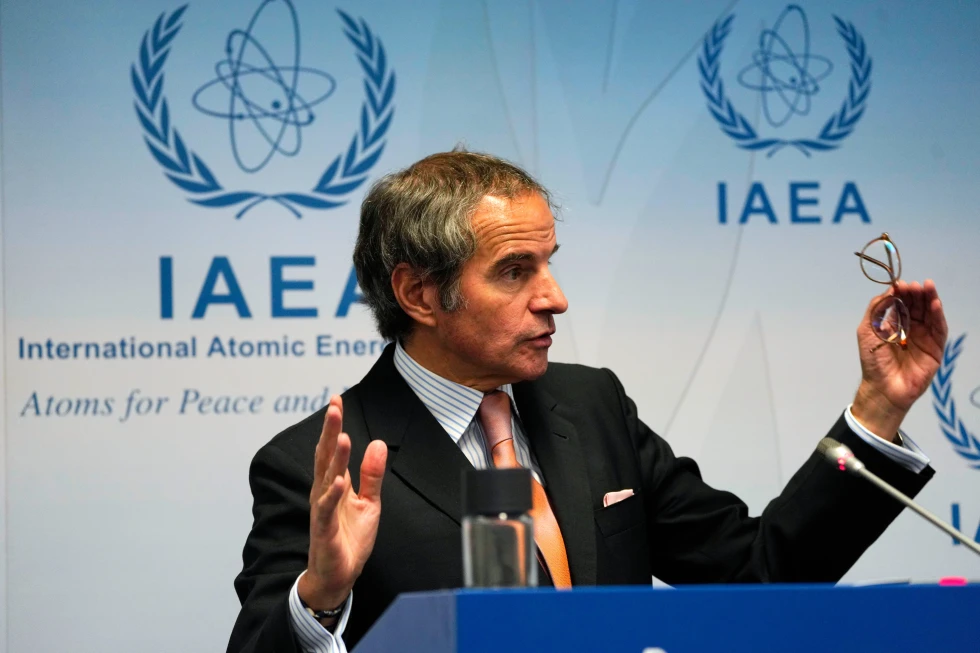



Rafael Grossi, the director general of the IAEA UN nuclear inspectorate, warned Monday at the start of the IAEA’s quarterly board meeting that if civil nuclear power plants are attacked and there is a radiological leak, it may be necessary to evacuate cities throughout the Middle East in large numbers, according to The Guardian.
He admitted to “a strong sense of frustration” that an agreement between the United States and Iran over Tehran’s nuclear programme had eluded the parties in their recent negotiations. Grossi attended the talks, providing technical assistance.
Opening the board meeting, he said diplomacy “is hard, but never impossible. The use of force has been present in international relations since time immemorial. This is a reality, but it is always the least preferred option.”

Turning to the impact of the current fighting across the Middle East, he warned: “We cannot rule out a possible radiological release with serious consequences, including the need to evacuate areas as large as, or larger than, major cities.”




“Let me underline that the situation today is very concerning. Iran and many other countries in the region that have been subject to military attacks host operational nuclear power plants and research reactors, as well as associated fuel storage sites, increasing the threat to nuclear safety.”
He added: “The United Arab Emirates has four operating nuclear reactors. Jordan and Syria have operational nuclear research reactors. Bahrain, Iraq, Kuwait, Oman, Qatar, and Saudi Arabia have also been attacked. These countries all use nuclear applications of one kind or another. We therefore urge the utmost restraint in all military operations.”
Discussing Iran’s nuclear installations, he said: “We have no indication that any of the nuclear facilities – including the Bushehr nuclear power plant, the Tehran research reactor, or other fuel-cycle facilities – have been damaged or hit. Efforts to contact Iran’s nuclear regulatory authorities are continuing, but there has been no response so far.”