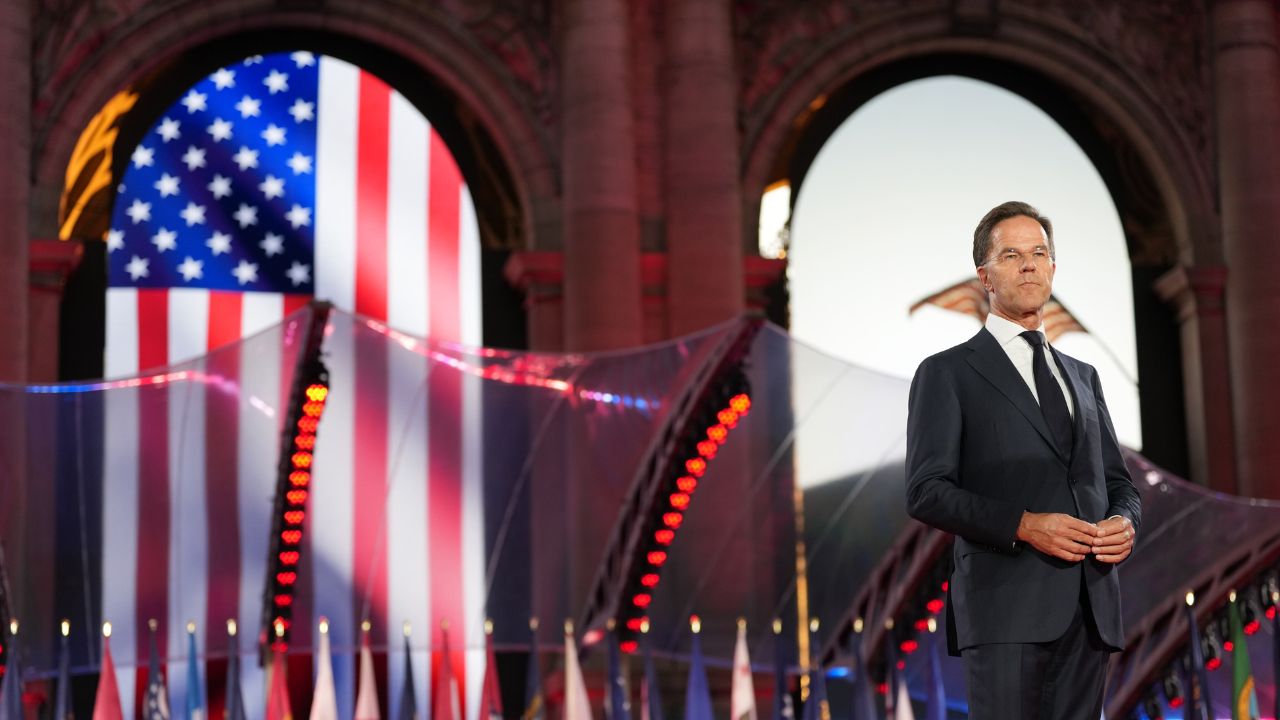

NATO Secretary-General Mark Rutte heads into this week’s alliance summit in Turkey facing a fresh challenge as US President Donald Trump shifts his focus from defence spending to demanding greater political loyalty from allies.
Although NATO members have pledged to increase military investment, Trump has signalled that financial commitments alone are no longer enough, raising new uncertainty over the gathering hosted by Turkish President Recep Tayyip Erdogan, according to AP.
The summit comes as European allies seek to strengthen the alliance against growing concerns over Russia while trying to keep the United States firmly committed to NATO. Rutte has spent much of his tenure working to preserve Washington’s engagement with the 32-member alliance, relying on diplomacy and repeated praise for Trump, but recent remarks by the US president suggest the task has become increasingly difficult.
For years, Trump has criticised NATO members for failing to devote enough of their national wealth to defence. That issue appeared to ease after last year’s summit in The Hague, where allies committed to spending a share of gross domestic product on defence comparable to that of the United States.
Attention has since shifted from funding to military readiness, as European governments work to convert higher defence budgets into practical capabilities amid fears of a possible Russian attack.

Seeking to reinforce the alliance’s message, Rutte visited the White House last month carrying a chart titled “The Trump Trillion”, printed in gold lettering, highlighting $1.2 trillion in defence spending by European allies and Canada since 2017.
The presentation was intended to demonstrate that NATO partners had responded to Trump’s long-standing complaints over burden-sharing. However, Trump appeared unconvinced, expressing frustration that several allies had declined to take part in the conflict with Iran, which he launched alongside Israel without consulting them.
“We don’t need their money — we don’t need anything,” Trump said. “I just want loyalty.” Trump also suggested he might not have attended the summit had it not been hosted by Erdogan, underlining the importance of both the Turkish president and Rutte in keeping the meeting on course.




Traditionally, NATO’s secretary-general — always a European rather than an American — is responsible for forging consensus among member states and representing the alliance, whose decisions require unanimous agreement.
During both of Trump’s presidencies, however, that role has increasingly involved preventing a rupture in relations with Washington. Rutte’s predecessor, Jens Stoltenberg, also devoted considerable effort to maintaining US commitment to the alliance.
Trump has repeatedly questioned NATO’s future, threatened to withdraw the United States from the alliance, floated reducing American military deployments in Europe and even spoken of taking control of Greenland, the semi-autonomous Danish territory.
He has also cast doubt on whether the US would defend allies that fail to spend enough on defence, unsettling confidence in NATO’s collective security guarantees.
Rutte’s diplomatic strategy has relied heavily on praise for Trump. During last month’s carefully staged Oval Office meeting, accompanied by charts featuring American patriotic imagery, he highlighted tens of thousands of US jobs linked to defence production and a backlog of $300 billion in European military equipment orders, crediting the achievements to the “leader of the free world”.
He also gently challenged Trump’s criticism over Iran, noting that up to 5,000 US aircraft had departed from European bases before an April ceasefire.
Meanwhile, NATO allies were surprised last month when the Pentagon announced plans to reduce the number of US troops, warships, aircraft and drones it would make available if an alliance member came under attack. Trump has also delivered conflicting signals over whether overall US troop numbers in Europe would rise or fall.
The uncertainty has come as Russia continues testing Europe’s defences through drone flights near military installations in several countries, according to a study released on Thursday.
NATO summits are designed to reaffirm the alliance’s core principle of collective defence under Article 5, which has been invoked only once — after the September 11 attacks, when allies came to the United States’ assistance.
Rutte has argued that increased European defence spending would allow Washington to focus more heavily on security challenges posed by China while Europe shoulders greater responsibility for supporting Ukraine.
Whether that argument will satisfy Trump remains uncertain. As Stoltenberg wrote in his memoir recalling the turbulent 2018 NATO summit: “If an American president says he no longer wishes to defend the other allies and leaves a NATO summit in protest, then the NATO treaty and its security guarantee aren’t worth very much.”