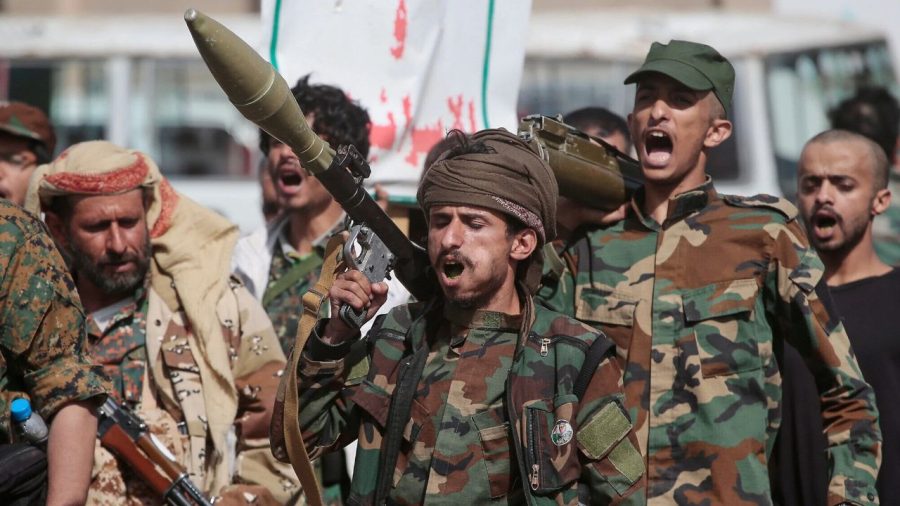

Nearly 50,000 civilians have fled their homes in western Yemen this week after Houthi forces launched a rapid offensive along the Red Sea coast, aid workers said on Friday, reigniting fears of a return to full-scale civil war in one of the world’s poorest nations, reports AP.
The Iran-backed militants seized a string of towns from forces backed by Saudi Arabia and the United States in a matter of days, with hundreds reportedly killed, as the fighting threatens to turn a decade-long conflict into what analysts warn could become a “forever war” over control of a vital global shipping route.
The UN International Organization for Migration (IOM) said 46,000 people had been displaced across the governorates of Taiz and Hodeidah, a region where mountainous terrain gives way to arid coastal plains. For many families, it was the second or third time they had been uprooted since Yemen’s conflict began.

Roads have been cut off by fighting and phone networks disrupted in parts of the affected areas, complicating relief efforts. IOM Middle East and North Africa spokesman Joe Lowry, speaking from Cairo, said the situation was deteriorating quickly and that displaced families were arriving at makeshift camps with almost nothing, having fled suddenly under shelling. Emergency shelter, cash, food, water, healthcare and protection services were now the most pressing needs, he added.
Aid organisations have had to repeatedly change their plans as access shifts with the fighting, according to Lowry, who described conditions as “a highly fluid and uncertain situation” marked by rapid territorial gains and growing fear of wider escalation.




Among the towns to fall was the port city of Mocha, historically linked to the origins of the global coffee trade. A 46-year-old resident named Mohamed, who left in the middle of the night, described an atmosphere of panic in the city as residents scrambled to escape. Another man, Mujahid Tahami, who headed for the government-held southern city of Aden, said some families were targeted by looters as they tried to leave. Others managed to escape on motorbikes, though relatives left behind remain trapped.
The offensive gives the Houthis a stronger foothold near the Bab al-Mandab strait, a narrow but strategically vital passage — its name loosely translating as “the gate of tears” — linking Asia and Europe via the Red Sea. Any Houthi move to block the route could force vessels to divert around southern Africa, adding thousands of nautical miles to shipping journeys. Oil prices have already climbed above $100 a barrel, up from around $80 in previous weeks, partly reflecting the unrest.
The violence marks the most serious escalation since a UN-brokered truce took hold in 2022 and comes against a backdrop of heightened regional tension linked to the wider US-Israeli confrontation with Iran. UN special envoy for Yemen Hans Grundberg told an emergency Security Council session on Thursday that the country had entered “a new and more dangerous phase of war,” warning it risked dragging Yemen back into prolonged conflict with global consequences.
Years of war have left Yemen, a nation of roughly 40 million people, grappling with one of the world’s most severe humanitarian emergencies. A UN report issued last month found that about half the population was facing acute food insecurity, citing displacement, economic collapse and shrinking international funding as compounding factors.
For those who escaped the latest fighting, the toll is immediate and personal. Mohammed Khudairi, who fled to a displacement camp near Khokha, said the situation remained dire, with people still trying to escape ongoing attacks while others were left behind.
With frontlines shifting daily and humanitarian access increasingly constrained, aid agencies warn the crisis is likely to deepen in the weeks ahead.