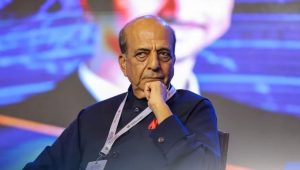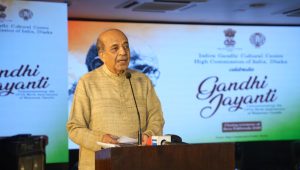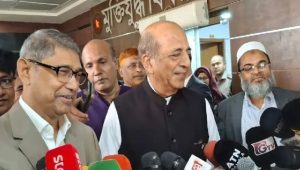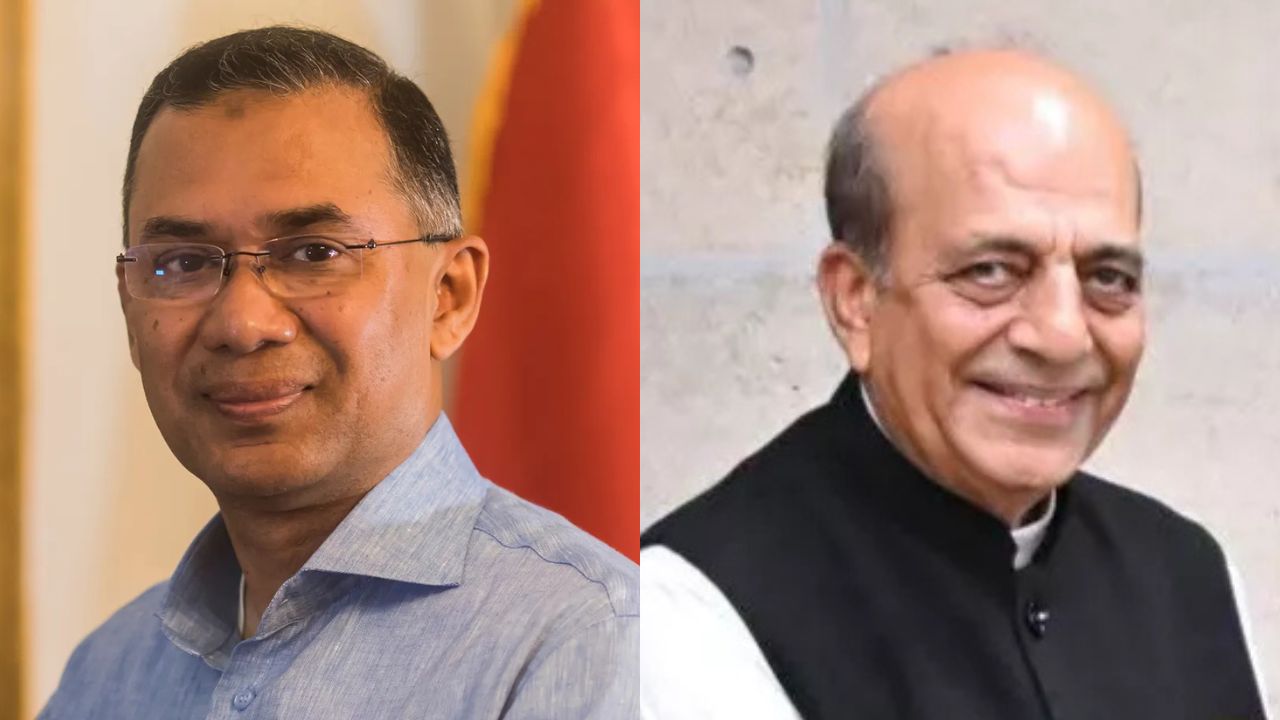



Indian High Commissioner Dinesh Trivedi is scheduled to call on Prime Minister Tarique Rahman on Monday morning, as Dhaka seeks to keep diplomatic channels with New Delhi open amid tensions over the 5 August media event involving ousted prime minister Sheikh Hasina.
The meeting comes a day after Trivedi called on Foreign Minister Md Khalilur Rahman on Sunday, when the two sides discussed recent developments and the Indian envoy conveyed New Delhi’s position following Bangladesh’s strong reaction to the event.
The back-to-back meetings signal Dhaka’s willingness to maintain engagement with New Delhi despite recent irritants in bilateral relations and could create an opening for renewed high-level political contact between the two countries.
Sources at the Indian High Commission said New Delhi would welcome engagement with Bangladesh in both bilateral and multilateral formats. They noted that the two countries cooperate across a wide range of areas and stressed that dialogue at the highest political level is needed to provide direction for advancing bilateral relations.
Diplomatic sources believe that a positive meeting between the prime minister and the Indian high commissioner could generate momentum for higher-level engagement between the two sides in the near future.

The possible opening for renewed engagement comes despite growing political sensitivity surrounding Sheikh Hasina’s activities from Indian soil. Bangladesh strongly reacted to her virtual participation in the 5 August event in New Delhi, where she made remarks critical of Bangladesh and the BNP-led government.
The Ministry of Foreign Affairs subsequently issued a strongly worded statement expressing serious concern over the development.
Against this backdrop, the prime minister’s meeting with the Indian envoy is being closely watched as a potential opportunity to move the relationship beyond immediate irritants and towards broader political and diplomatic engagement.




Diplomatic analysts say the initiative creates space for further dialogue and provides an opportunity for India to reciprocate.
The meetings come amid strong public reaction in Bangladesh to India’s decision to allow Sheikh Hasina, who has been convicted in Bangladesh, to participate virtually in an event in New Delhi, where she made remarks critical of Bangladesh and the BNP-led government.
The Ministry of Foreign Affairs subsequently issued a strongly worded statement expressing “serious concern” over the development.
A test for engagement
Analysts say Dhaka’s continued engagement with Indian authorities reflects a pragmatic approach to managing a difficult relationship.
During the interim government period, New Delhi repeatedly said it would engage with any democratically elected government in Dhaka. Following the February general election, India sent its parliamentary speaker to attend the swearing-in ceremony of the BNP-led government, a move widely viewed in Dhaka as a positive signal.
However, subsequent developments, including tensions along the border, allegations of push-ins and India’s decision to allow Sheikh Hasina to participate virtually in a public event from Indian territory, have complicated the political environment between the two countries.
Since taking office in February, the Bangladesh government has avoided sending messages or taking actions that could be interpreted as deliberately undermining bilateral relations, according to diplomatic observers.
Both countries recognise that dialogue remains the only viable way to manage differences, regardless of the depth of disagreement on individual issues.
The immediate challenge is to translate that recognition into meaningful political engagement.
While New Delhi’s public messaging has generally remained constructive, actions perceived in Dhaka as inconsistent with those messages could deepen mistrust and make it harder to rebuild confidence.
The prime minister’s meeting with the Indian high commissioner is therefore being viewed as an opportunity to maintain communication at the highest political level and create a pathway for addressing the broader range of issues between the two neighbours.
For Dhaka, the message appears clear: despite serious disagreements, it remains willing to engage. The next step, analysts say, is for New Delhi to demonstrate a similar willingness.