


Indigenous leaders have called for the security of land rights, constitutional recognition, and the reinstatement of a 5 per cent quota for indigenous communities in education and government jobs.
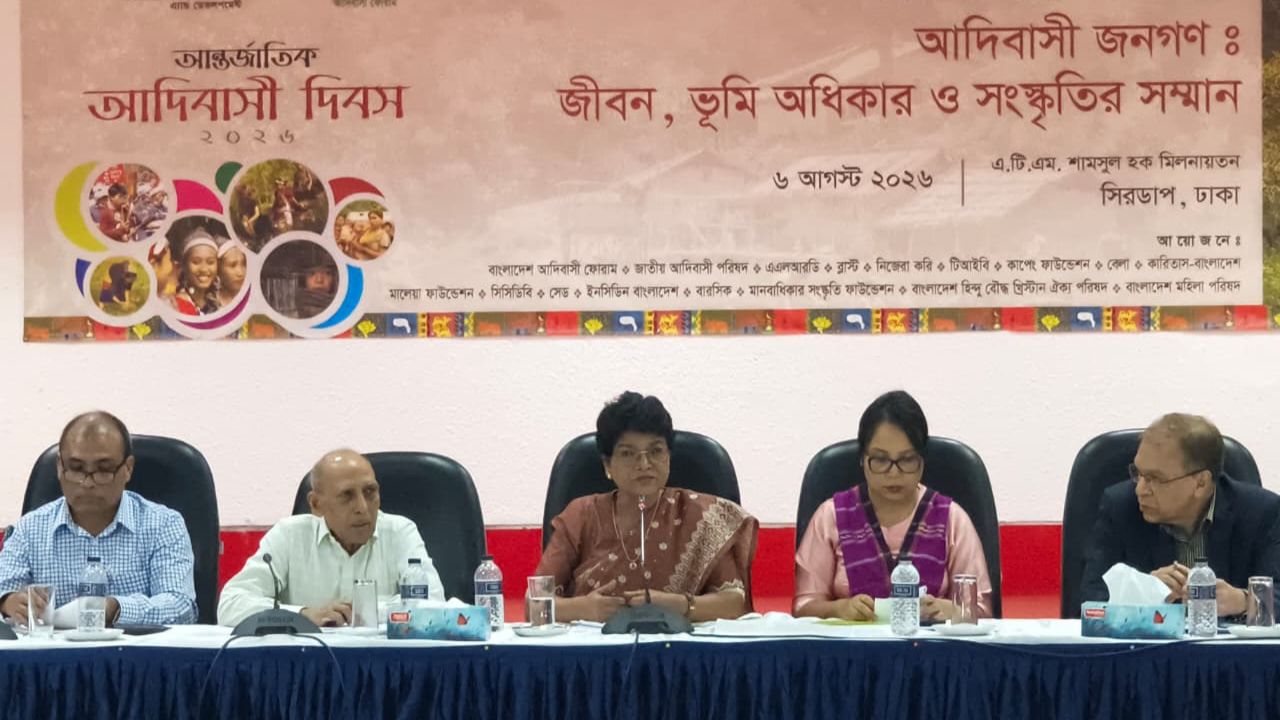
Addressing a seminar marking International Indigenous Peoples Day, they also presented an eight-point charter of recommendations aimed at protecting the rights and cultural diversity of indigenous peoples.
The seminar, titled “Indigenous People: Life, Land Rights and Cultural Respect,” was held on Thursday at the ATM Shamsul Huq Auditorium of CIRDAP in Dhaka.
Addressing the event, speakers emphasised that the relationship between indigenous life, culture, and identity is deeply rooted in the land, stressing the urgent need for effective initiatives to recognise traditional and customary land rights.
Advocate Madhabi Marma, Member of Parliament from a reserved women’s seat, spoke regarding the traditional leadership systems in the Chittagong Hill Tracts (CHT), stating that the Karbari, Headman, and Raja systems are essential to their existence and must be preserved.

She noted that traditional leaders should become more educated and aware to perform their duties effectively.
Regarding land transfers, she highlighted the importance of Headman certificates but expressed concern over reports of multiple certificates being issued for the same land, which leads to disputes.
On the topic of Jhum cultivation, Advocate Marma argued that it is a traditional agricultural practice and that the notion of it being solely responsible for deforestation is not always accurate; instead, she called for the modernisation of the practice and support for Jhum-dependent communities.



She also highlighted the importance of mother-tongue education as the foundation of a child’s learning, urging for increased practice of indigenous languages within families, society, and institutions to prevent cultural loss.
Anna Minj MP, also from a reserved women’s seat, stressed the importance of strengthening unity among indigenous groups to claim their rights.
She urged the community to focus on socio-economic development and employment opportunities while presenting major demands to the government.
She noted that while there is much deprivation, strategic progress is possible with state support and internal unity, particularly on core issues like land and education. She further suggested that indigenous opinions on how they should be identified in constitutional reforms must be presented in an organised manner.
Human rights activist Ilira Dewan presented the keynote paper, which noted that land and culture are inextricably linked to the existence of indigenous peoples.
The paper highlighted that the loss of traditional land rights, crises in language and culture, and displacement due to development projects remain significant challenges. While some progress has been made, the paper stated that land issues, lack of cultural recognition, and policy limitations persist.
The eight-point charter of recommendations presented at the seminar called for the state-level celebration of International Indigenous Peoples Day and the amendment of Article 23(A) of the Constitution to replace terms such as “Upajati” and “Nri-goshthi” with acceptable terminology.
Further demands included making the CHT Land Dispute Resolution Commission effective, forming a separate land commission for indigenous people in the plains, and establishing a national-level cell to protect their rights.
The recommendations also proposed the formulation of a specific tourism policy for indigenous-inhabited areas, ensuring local community participation in healthcare services, and the reinstatement of the 5 per cent quota for indigenous people in education and government employment.
Dr Iftekharuzzaman, executive director of Transparency International Bangladesh (TIB); Barrister Sara Hossain, honorary executive director of BLAST; Sanjib Drong, general secretary of the Bangladesh Adivasi Forum; researcher Dr Ishita Dustider; and Dr Fauzia Moslem, president of Bangladesh Mahila Parishad, attended the event alongside other human rights activists and indigenous leaders.