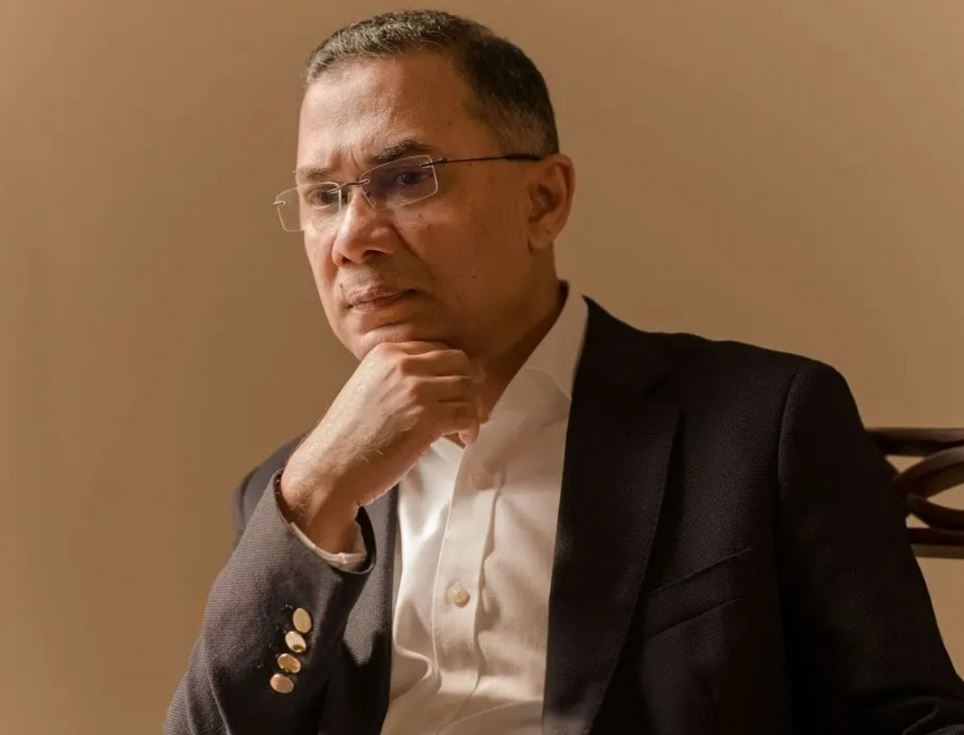

An interview published there is never routine; it carries layered signals and international implications. In this instance, an unusually long, detailed, and intellectually rigorous interview with the Chairperson of the BNP has been featured – one that traverses history, diagnoses the present, and gestures clearly toward the future.
Predictably, detractors have responded by extracting one or two isolated words, at best a single sentence, and weaponising them for short-term political play. What they avoid is the full context, the deeper historical narrative, and the uncomfortable truths embedded within it. Many do not know, or choose not to acknowledge, the real history behind the so-called ‘pillar’ metaphor, nor the fact that there was no substantive link between that narrative and Mr. Tarique’s persistent insinuations.
Beyond the interview itself lies a long and complex political journey. Over the years, Tareq Rahman has been widely portrayed by his supporters as a victim of systematic political conspiracy,first under an elected but increasingly authoritarian government, and later during the army-backed caretaker administration that advanced the controversial ‘Minus Two’ formula.
That formula, now part of Bangladesh’s political lexicon, aimed to forcibly remove the two major political families from leadership, reshaping politics through extra-democratic means. In this process, Tarique Rahman became a central target, politically isolated, legally encircled, and ultimately pushed into exile. His supporters argue that the objective was not justice or reform, but political engineering.

This period marked a turning point. Removed from frontline politics, he entered what many now interpret as a phase of forced political incubation – a time of reflection, learning, and recalibration rather than disappearance.
In political discourse today, Tarique Rahman is increasingly described, by allies and observers alike, as a ‘prodigal son’ figure. Not in the sense of reckless return, but as someone who left under pressure, absorbed hard lessons abroad, and is now re-emerging with a transformed outlook.
Studied Western democratic governance models, including institutional checks and balances, observed how mature democracies manage civil-military relations, judicial independence, and electoral credibility, built relationships with policy thinkers, legal experts, economists, and communication strategists, engaged with the Bangladeshi diaspora, absorbing critiques as well as aspirations, shifted focus from personality-driven politics to institutional reform and political systems-building.




This distance from the immediacy of power, supporters argue, reshaped his political philosophy – moving it toward reform, reconciliation, and long-term national rebuilding.
The subtext of the Time interview, and the broader messaging around it, suggests a future-oriented leadership framework centred on reformation rather than restoration. Key pillars of this vision include: reinstitutionalising democracy by restoring electoral credibility, judicial independence, and parliamentary authority, ending politics of vengeance, replacing it with transitional justice and national healing, empowering educated young politicians, trained in economics, technology, diplomacy, and public administration, integrating global best practices from Western governance while adapting them to Bangladesh’s social realities, strategic international communication, rebuilding Bangladesh’s image as a responsible democratic partner.
Central to this vision is the belief that Bangladesh cannot move forward by recycling old political reflexes. It requires new political language, new leadership culture, and new rules of engagement.
The July movement, along with other civic and political mobilisations, occupies a symbolic place in this future narrative. It represents resistance to authoritarian drift, the assertion of citizen agency, and the demand for dignity, fairness, and accountable governance.
That spirit, peaceful yet firm, youthful yet principled, is increasingly positioned as the moral foundation of the next phase of politics. It aligns closely with a leadership model that values participation over coercion and institutions over individuals.
Seen in full, this interview is not merely about one leader or one party. It is about Bangladesh standing at a crossroads, between stagnation and renewal, between control and consent, between isolation and credible global engagement.
Reducing this moment to selective quotes misses the larger arc; a political figure shaped by conspiracy and exile, reframed through learning and restraint, and now positioned – rightly or wrongly – as a potential architect of national reformation.
The story is still unfolding. And the deeper layers, historical, political, and personal, are yet to fully surface.
The writer is a Sr. Journalist, Former Digital Editor, Voice of America