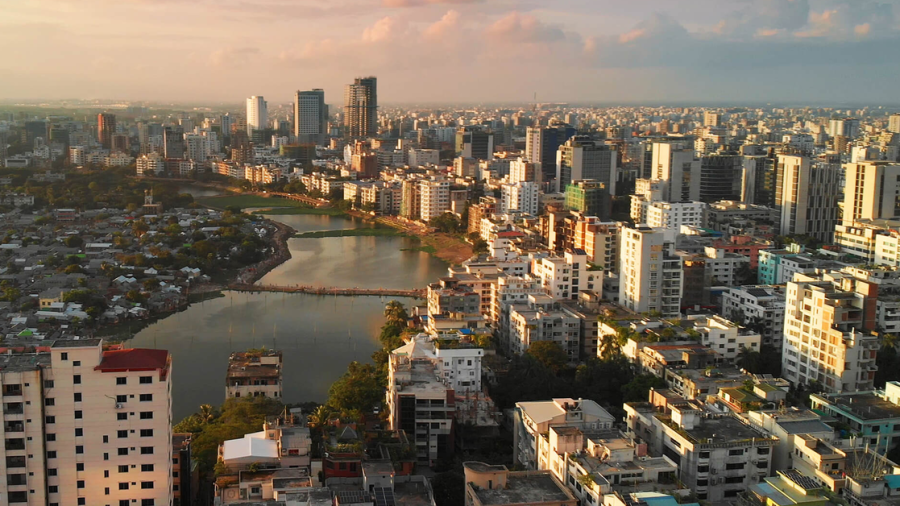

Recently, while passing through an affluent area of Uttara in Dhaka at night, I witnessed two very different faces of Bangladesh. One side of the road was brilliantly illuminated for a wedding celebration. Nearby, however, an impoverished man sat beside the road, while a mother and her young daughter lay on the pavement. The mother was asking for money because they needed food for the night.
I do not present this contrast to condemn a wealthy family, a wedding celebration or prosperity itself. Prosperity is not a crime. Indeed, a successful Bangladesh should create opportunities for everyone to prosper. But these photographs raised a larger question: Can a country be truly successful when spectacular prosperity and extreme deprivation exist side by side without a strong social bridge between them?
In 1971, our people fought for independence with enormous sacrifice. Independence was not simply about a flag, a map or a new state. It carried a promise of dignity, justice, equality, freedom and the opportunity to live as respected citizens. Yet for decades, many ordinary citizens continued to experience poverty, inequality, corruption, institutional weakness and political instability. The expectation of a better Bangladesh remained unfinished.
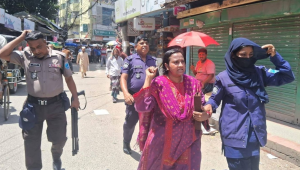
Then came 2024. The student-led and broader public uprising once again placed rights, accountability, dignity and democratic governance at the centre of national life. Students and ordinary citizens sacrificed their lives, and families lost loved ones. Therefore, 2024 should not be understood merely as a change of government. It should be understood as another historic demand that the state must serve the citizen.

Bangladesh’s reform journey cannot end with elections, Parliament or political speeches. Democracy is much more than voting every few years. It requires credible elections, independent institutions, judicial independence, freedom of expression, accountable law enforcement, transparent public procurement, effective local government and parliamentary oversight. The referendum on the July National Charter in February 2026 created a public mandate for reform. The challenge now is to translate that mandate faithfully and transparently into meaningful institutional and constitutional change. Political disagreement is natural in a democracy. But reform must not become another political battlefield. Constructive criticism should not be treated as hostility.
I sincerely hope the present government and every democratic political force will place the national interest above partisan advantage. No single party can build the new Bangladesh alone. For an ordinary citizen, democracy is often judged not by constitutional theory but by daily experience.
If a businessman must pay unofficial money for a lawful government service, democracy feels distant. If a young person believes political connections matter more than competence, democracy feels distant. If justice appears dependent on money or influence, democracy feels distant.




Reform must therefore produce measurable change: stronger enforcement against corruption, transparent public services, accountable administration, independent investigation, effective asset disclosure and speedy justice. The objective should not be to replace one group of beneficiaries with another. The objective must be to build institutions that make corruption and abuse of power increasingly difficult for anyone.
Bangladesh now needs a development model that measures not only infrastructure and economic output, but also human capability. Education should become a national productivity strategy. Digital literacy, practical skills, technology, entrepreneurship, communication and social responsibility should become integral parts of education.
I want to see a Bangladesh where a child does not have to beg beside a wedding light; where a mother does not have to sleep on a pavement while luxury celebrations continue nearby; where a young person does not need political connections to obtain a job; and where a businessman does not need unofficial payments for legitimate government services. I want to see a Bangladesh where the police serve the law, judges can deliver justice without fear or favour, Parliament can scrutinise government, and citizens do not fear whoever happens to hold power. Most importantly, I want a Bangladesh where a poor citizen can stand before the state with the same dignity as a wealthy citizen.
That is the Bangladesh I believe our people dreamed of in 1971 – and renewed their demand for in 2024. The question is not simply who won the revolution or which political party will rule Bangladesh. The real question is: What kind of Bangladesh will we leave to the next generation?
Governments will change. Leaders will change. Parties will rise and fall. But the state and the nation will remain. The light of Bangladesh is not only in the decorative bulbs above our streets. It is in our young people, workers, entrepreneurs, teachers, farmers, honest public servants and every citizen who still believes this country can be better.
Let us keep the light – but let us also carry it to those who are still living in darkness. Bangladesh must not lose hope. Bangladesh must complete its unfinished journey.
The views expressed in this article are solely those of the author
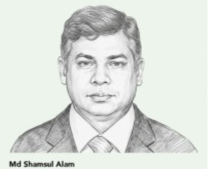
The writer is a Marketing Director, Tsubasa Works-Tanaz