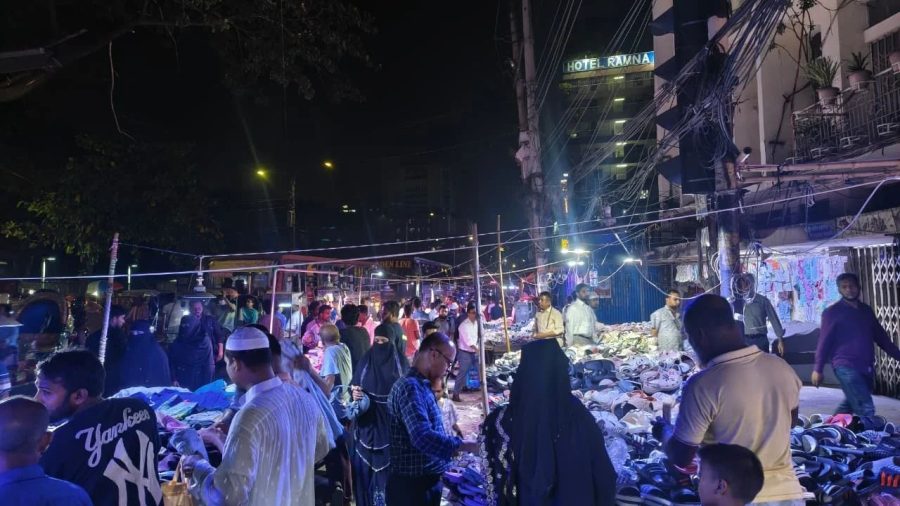



No sooner do the municipal eviction teams depart than the hawkers return. Within hours of being driven off Dhaka’s pavements, street vendors are back with their makeshift stalls, trapped in a relentless tug-of-war between their need to earn a living and the authorities’ determination to keep roads free from encroachment.
Despite repeated clearance operations by the Dhaka South City Corporation (DSCC), footpaths and carriageways across key commercial hubs remain heavily occupied. The persistent blockage forces pedestrians into the paths of moving vehicles, raising urgent questions about the long-term efficacy of these municipal drives.
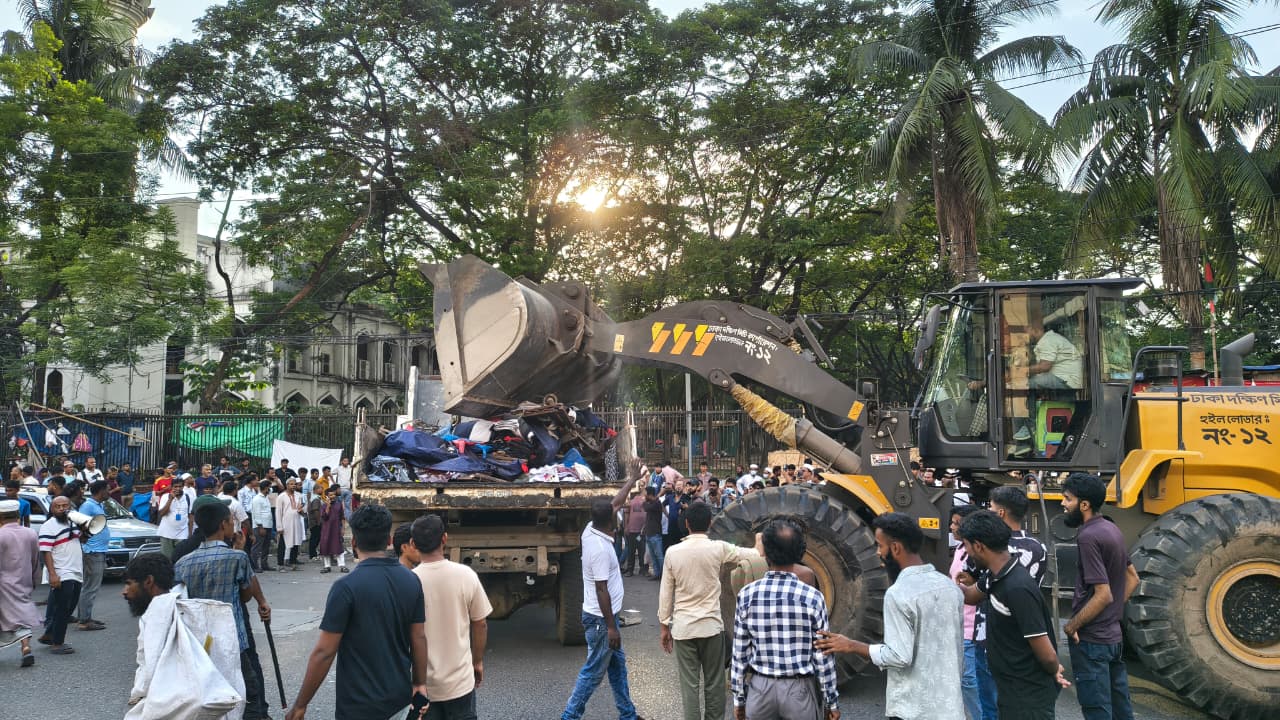
The city corporation regularly conducts sweeps to remove hawkers, confiscate inventory, and dismantle temporary structures. However, without designated vending zones or formal rehabilitation arrangements, vendors insist they have little choice but to return to the exact same spots.
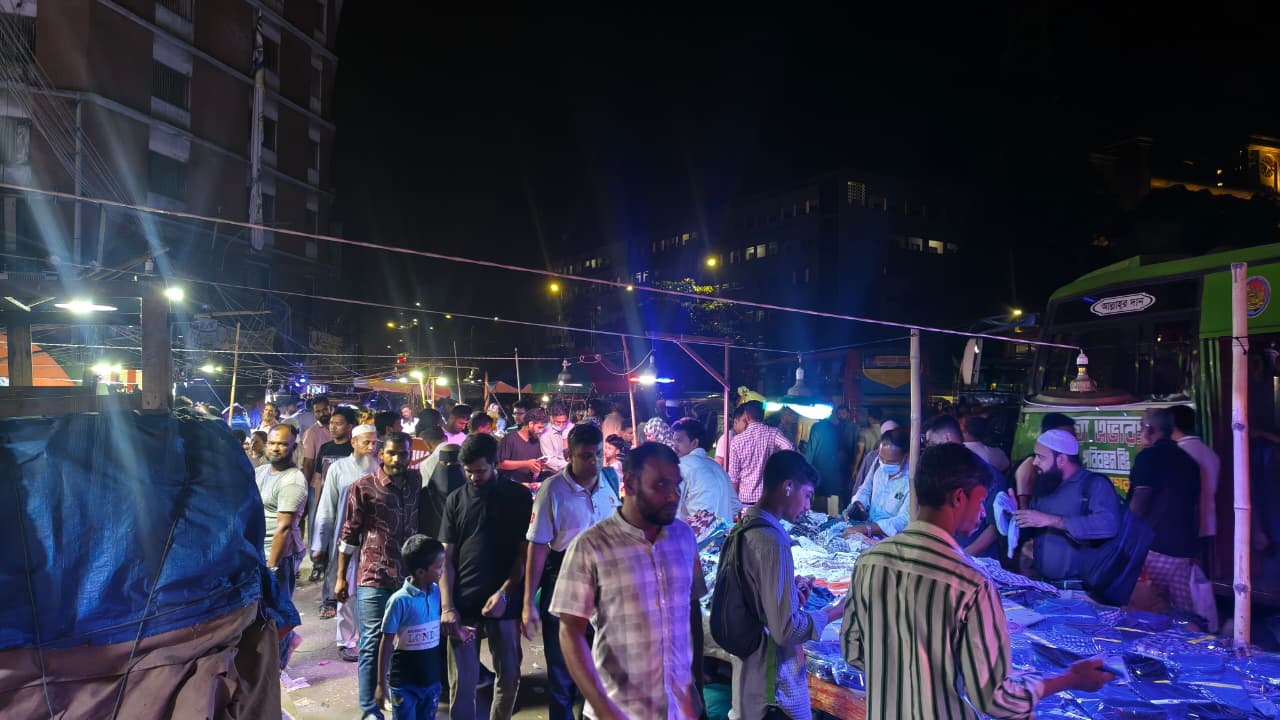
The systemic issue was on full display on Thursday across Fulbaria, Gulistan, and Zero Point, where hawkers commandeered not only the footpaths but also significant portions of the primary roads. Clothes, shoes, belts, fruit, and household items were displayed on tarpaulins, wooden crates, and wheeled trolleys. In several stretches, stalls covered the entire pavement, leaving commuters with no option but to navigate alongside live traffic.
For hawkers, the struggle is one of basic survival; for pedestrians, it is a matter of physical safety.

‘Evict us, but give us somewhere to go’
Street vendors emphasise that continuous eviction drives threaten their households with immediate ruin, particularly when no alternative trading areas exist.
“Remove us from here if you must, but at least designate a place where we can be rehabilitated,” pleaded Tofayel Hasan, whose business was upended during a recent drive.
Children’s clothing seller Md Rashed, garment vendor Amin Hoque, and shoe seller Jahar Ali voiced identical concerns. They explained that renting commercial shopfronts is financially impossible and that they depend entirely on pavement trading to feed their families. Even if relocated, they face deep uncertainty over whether they could attract enough customers to survive.




Returning after an eviction carries severe risks, including asset confiscation, property destruction, and criminal prosecution, yet vendors consistently return, driven by the immediate threat of losing their daily income.
Pedestrians forced into live traffic
Regular commuters report that the swift return of hawkers has rendered walking through the capital’s commercial heart increasingly hazardous.
Ariful Islam called for a comprehensive solution that ensures safe pedestrian passage while tackling the root causes of vendor return. “Keeping roads and pavements free from encroachment is essential for public safety,” he noted. “But we must also consider why hawkers return immediately after being evicted. If property seizures cannot prevent encroachment, this cycle will simply repeat.”
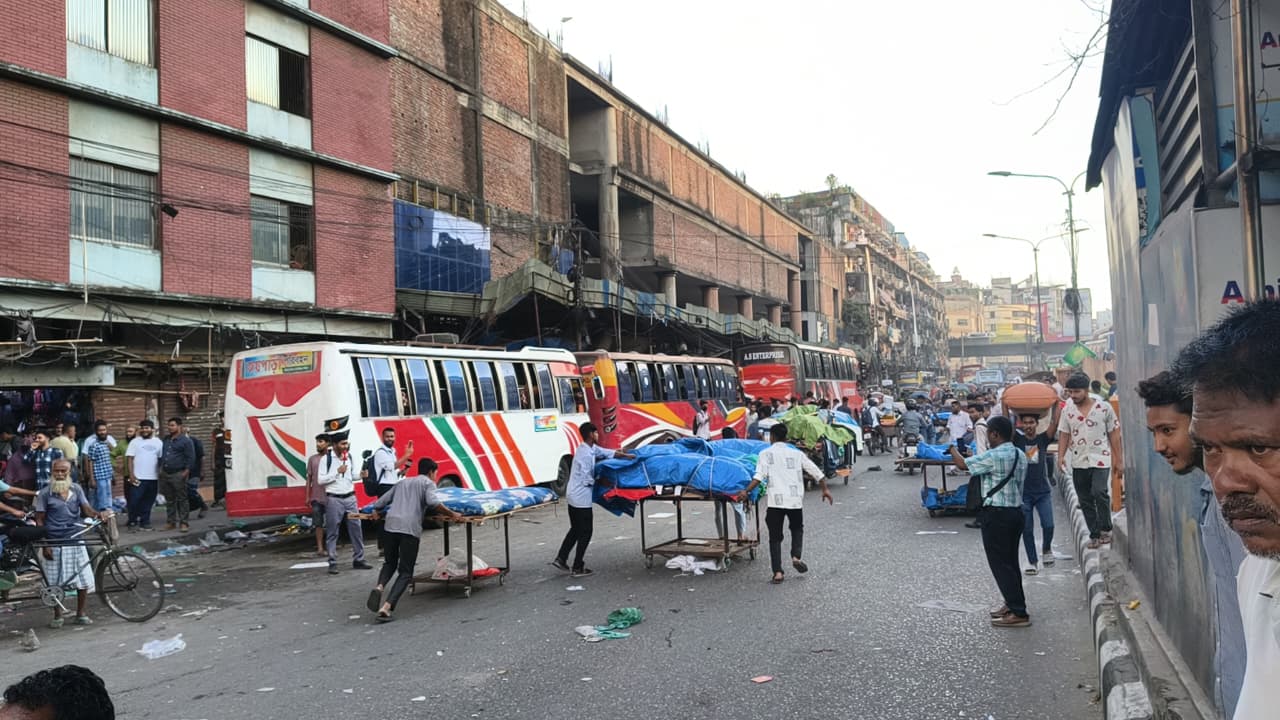
Towhid Hasan, a daily commuter, pointed out the disparity between official policy and reality. “On paper, these are strictly hawker-free zones. But as soon as an operation ends, there is no room left to walk on the pavement, and we are forced to walk dangerously close to buses.”
Another pedestrian, Abdul Majid, described how vendors briefly scatter whenever enforcement vehicles arrive, only to set up shop again minutes after officials drive away, questioning whether temporary sweeps can achieve lasting results without continuous oversight.

Stalls rebuilt within two hours
The futility of the current approach was starkly demonstrated on Wednesday. During a DSCC raid, officials confiscated merchandise and demolished several makeshift wooden stalls. However, within ninety minutes to two hours of the team leaving, hawkers were already reconstructing their platforms and laying out fresh stock.
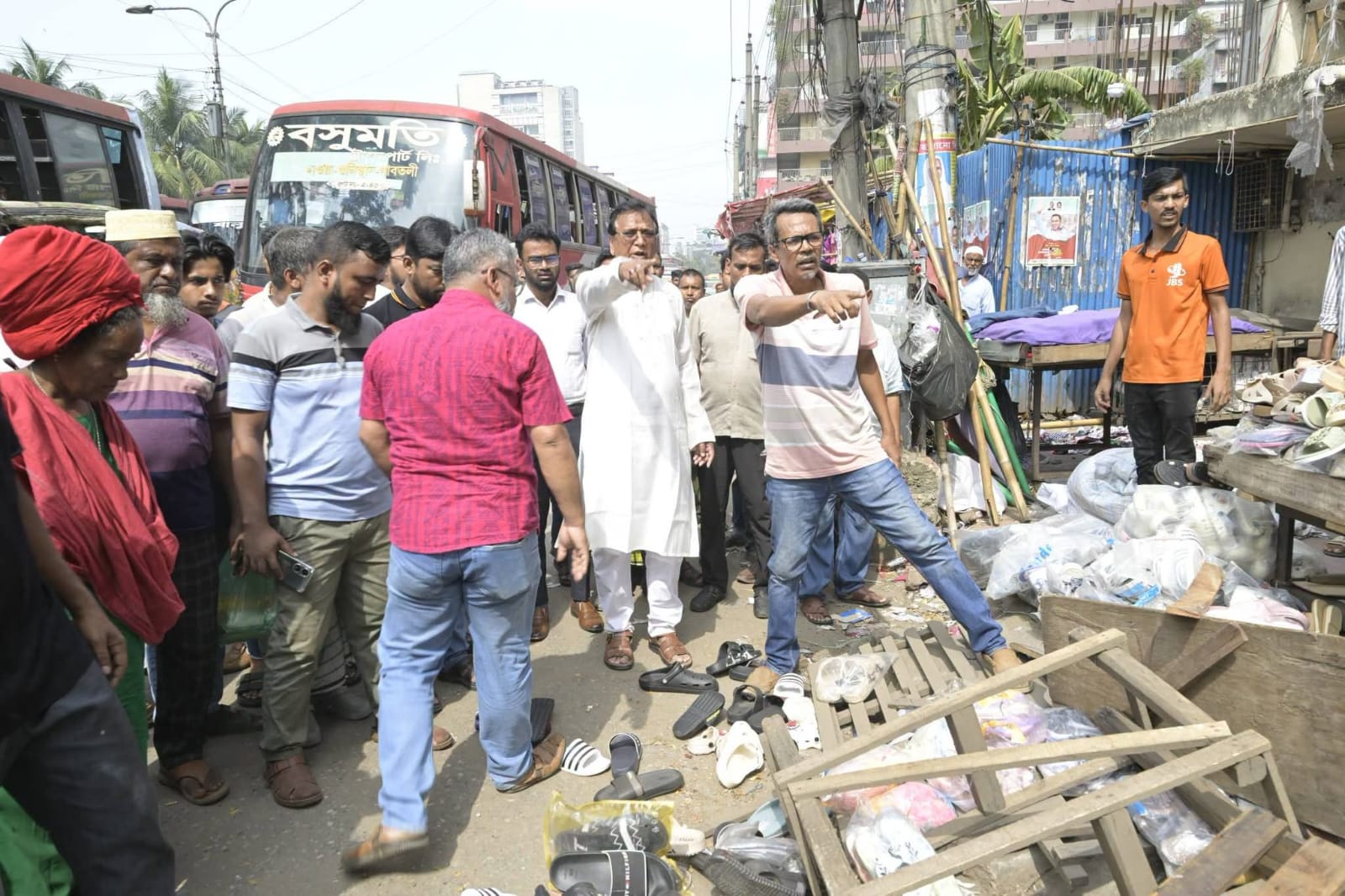
On Thursday, the DSCC conducted another drive spanning from Zero Point to the Dhaka Trade Centre. DSCC Administrator Md Abdus Salam personally led the operation, removing temporary stalls and seizing goods, which cleared the area, if only temporarily.
When pressed on the lack of a rehabilitation framework, Salam took an uncompromising stance. “No matter how many arguments or excuses are presented in favour of illegal pavement occupation, hawkers will not be allowed to occupy roads and footpaths under any circumstances,” he stated. “Every time there is illegal encroachment, we will execute eviction drives in the public interest.”
Salam urged the press not to frame questions in ways that might embolden illegal occupiers, adding that the DSCC cannot shoulder the burden of economic migrants from across the country. He suggested that whilst a limited number of hawkers might eventually be permitted to trade in designated areas without obstructing pedestrian traffic, others must return to their home districts. “We must save Dhaka; there is no alternative,” he warned, threatening repeat offenders with arrest and asset confiscation.
However, with no concrete plans outlined regarding vendor quotas, location allocation, or alternative livelihoods, the deadlock remains unresolved, leaving footpaths destined to refill the moment the enforcement teams leave.