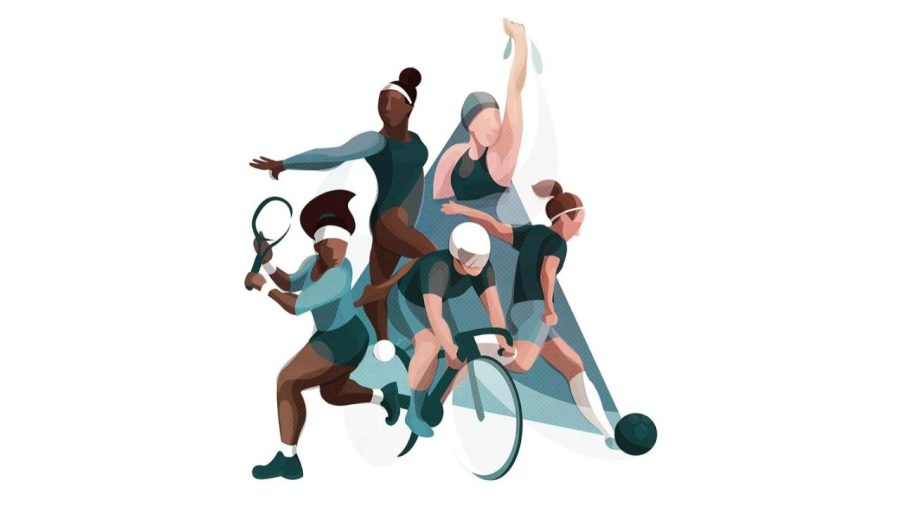



Outside cricket and football, women’s sport in Bangladesh remains a secondary concern for the public. Female athletes compete internationally across a wide range of disciplines, with a handful enjoying access to decent training facilities.
While at the regional level, there have been notable laurels, major triumphs at signature events like the Olympics, Asian Games or The Commonwealth Games are rare with the country’s sportswomen struggling to turn commendable participation into consistent results.
Since 2016, Bangladesh have won 217 medals at the South Asian (SA) Games. In that same period, Bangladesh athletes won 5 medals at the Asian Games and Commonwealth games. Amidst these, only two were won by women; Bronze in cricket at the 2022/23 Asian Games and Bronze in Wushu at 2026 Asian Games.
Jinnat Akter’s bronze at this year’s Asian Games sits within that thin record, illustrating the struggle behind the numbers. A wushu athlete serving in the Bangladesh Army, she won bronze in the women’s 52kg sanda category, Bangladesh’s only medal of the event.
It ended a 40-year wait for an individual medal at the Games, since boxer Mosharraf Hossain won bronze in Seoul in 1986. In SA and Asian Games, Bangladeshi women have won medals in kabaddi, weightlifting, archery, cricket and wushu.
The vexed question is why does that talent not translate into steady, improving results?
Athletes, a table tennis legend, a former badminton champion and a federation president offered TIMES a consistent answer: fewer matches, lack of continuity in training, fitness gap, and social barriers which start at home snowball to create an almost insurmountable impediment.
Afra Khandaker, a national boxer and former Bangladesh Krira Shikkha Protishtan (BKSP) student, says the problem begins with the journey athletes take to reach the big stage.
A strong foundation, she argues, is essential for success at the highest level, comparing India’s route with Bangladesh’s.
“In India, before big events, boxers play many district and school tournaments. By participating in many tournaments, they reach a stage and then take part in the Commonwealth or the Asians. In our case, we play the nationals directly, do a three-month camp and then go to the Asian Games. If we perform like that, we will never get a result there.”

“Girls get very few matches. Apart from football and cricket, in boxing and the other events we hardly play at all. If we played more, our girls could go much further”, she maintained.
Jinnat’s own experience shows how narrow the road can be, and how much depends on institutional backing.
She credits the Bangladesh Army for her progress, bemoaning that athletes outside such structures are often struggling to find basic training amenities.
“We don’t have our own venue. I work for the Bangladesh Army, and they (Army) are always by my side, providing the necessary facilities; unfortunately, the general Wushu players, need their own venue.”
Like Afra, Jinnat stressed the need to train all year round, pointing to the two sports that already do.
“In football there are year-round camps, with practice twice a day, morning and evening, throughout the year. Cricket also has round the year practice. If we had our own venue, we could prepare ourselves much better.”
Veterans share the same concern.




Zobera Rahman Linu, a legendary table tennis player, Swadhinata Padak winner, and Guinness World Record holder, points to the lack of sustained preparation.
“When coaching camps happen nationally, it runs for a few days and then stops. We have no continuity in our coaching.”
Linu, who also spent many years as a sports administrator, places part of the responsibility on the players.
Many, she says, treat a tournament as a deadline, “They come, practice for two months before a game, and then go into a break until the next tournament.”
Fitness, Linu believes, is another major shortfall. Her generation had no gyms and trained by walking and running.
Scarcity of venues or playing facilities were highlighted by another legend of female sport, Kamrun Nahar Dana. The former badminton champion and former General Secretary of Bangladesh Women Sports Federation, feels the lack of proper facilities hampers the players greatly.
Stating that swimming pools in districts are left unused, she observed: “high maintenance cost of the pools is the main reason.”
The celebrated shuttler believes that existing facilities must be made available to players with new ones added.
Pointing at the presence of social stigma attached to women in sports, Afra adds, “Girls from remote areas often hear ‘no’ at home, although some families in urban district towns now give permission.”
The negative reaction of neighbours weigh on female athletes and players, she deplored.
Kazi Rajib Uddin Ahmed Chapol, president of the Bangladesh Archery Federation and World Archery Asia, speaks for a sport that shows what steady work can produce.
Bangladesh’s archers won all ten gold medals at the 2019 South Asian Games, and the women’s teams took silver and bronze at the 2021 Islamic Solidarity Games.
Asked what holds women back across Bangladeshi sport, he pointed to safety and training.
“To keep women healthy in sport, we must focus on security, social security and their training. Training and more training. There is no alternative to training.”

Chapol agrees that family discouragement sits at the heart of the problem.
Beyond stigma, parents often discourage their children from sport to protect school and study time. The archery federation has responded by hiring house tutors for its athletes and contacting their schools to allow uninterrupted training, he said.
At the national level, Chapol wants a single system to identify and fund talent; district talent, he feels, fades for want of a clear route forward.
A digital database and a dedicated fund for women athletes at the grassroots level would be a game-changer, states Chapol.
Dana highlights the lack of proper nutrition, absence of year-long training due to financial constraints plus organizational limitations.
“Players must be developed through academies. There is no other option. We are barely making any progress even at the SAFF championship, so Asian or Olympic levels are completely out of the question.”
Linu also cautions against sudden attention plus stardom.
“Many players rise from humble backgrounds, and the hype after a single good result can be counter-productive, breeding complacency.”
She wants federations to prepare players mentally, so a first success does not become a finishing line.
“When players do well, our praise becomes effusive – a situation that many athletes fail to handle with poise,” says Linu.
Her message to athletes is simple: federations must supply the facilities, but no federation can do the daily work for them.
“The athlete must have the fire, discipline, and dedication to wake up at dawn and train when no one is watching. That internal drive is non-negotiable”, reminds the TT star.
Ending on an optimistic note, Linu acknowledged that Bangladeshi athletes are performing better than before, saying, “For that to last, a change in the minds of the community as a whole is needed.”
Urging society to celebrate female athletes on billboards and in classrooms, the table tennis star observed, “When a young girl sees her hero on television and hears her name spoken with respect, true change will begin.”