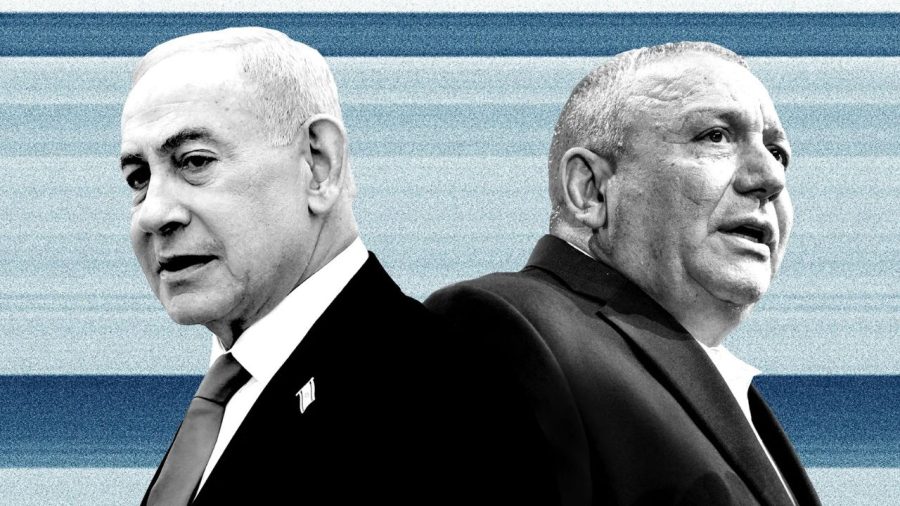



Israel faces weeks of political negotiations after an inconclusive general election left Prime Minister Benjamin Netanyahu and opposition leader Gadi Eisenkot without a clear path to securing a parliamentary majority. Israelis voted on 27 October and, with more than 90 per cent of the vote counted, there is still no clear winner.
Preliminary results show Netanyahu’s right-wing bloc with 53 seats, Eisenkot’s opposition bloc with 48 and Arab-led parties with 19 in the 120-member Knesset. A minimum of 61 seats is required to form a majority government, according to Al Jazeera. The next government will have to be a coalition.
The outcome leaves Arab-led parties in a potentially decisive position, while raising the prospect of a broad unity government or another election if negotiations fail.
One possible route to power for Eisenkot would be to form a government with his existing allies and secure support from the two Arab-led parties, Ra’am and the Joint List.
Together, Eisenkot’s bloc and the Arab parties could command 67 seats based on the preliminary figures. Their support could allow an opposition-led government to take office without necessarily giving Arab parties cabinet positions.
However, the arrangement faces significant political obstacles. Eisenkot has pledged not to form a government with Arab parties, while opposition figures remain divided over whether to accept their support.

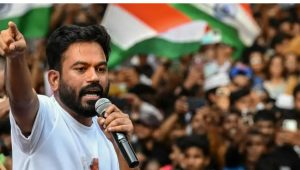
Yair Golan, leader of the centre-left Democrats, has publicly advocated cooperation with the Arab parties as a way to remove Netanyahu from power. Both Ra’am and the Joint List have signalled their willingness to cooperate with the opposition, Reuters reported.
A formal coalition involving Arab parties would face additional resistance from sections of the Israeli electorate, particularly amid heightened political and security tensions following the Hamas-led attack of 7 October 2023 and the ensuing wars.
A second possibility is a broad unity government bringing together parties from opposing political camps.




A coalition combining Netanyahu’s Likud with centrist and right-wing opposition parties could secure 66 seats, giving it a parliamentary majority.
Such an arrangement, however, would require major political compromises. Netanyahu could face pressure to abandon his far-right and ultra-Orthodox allies, while opposition parties would have to reconsider their election pledges to remove him from office.
A unity government could become more attractive if prolonged negotiations leave both camps unable to form a stable administration. Renewed regional conflict could also encourage political rivals to seek a broader governing arrangement, Reuters reported.
Netanyahu could alternatively attempt to rebuild a right-wing majority by persuading lawmakers from opposition parties to defect, although the success of such a strategy remains uncertain.
If coalition negotiations fail, Israel could face another general election.
President Isaac Herzog is expected to begin consultations with political factions after receiving the final election results. He will then designate the candidate he considers most likely to form a government.
Under Israel’s coalition-formation process, the designated candidate generally receives 28 days to assemble a government, with a possible 14-day extension. Further attempts may follow if the initial effort fails, potentially leading to another election if no government can be formed within the applicable legal process.

Herzog has urged political parties to approach negotiations with an open mind and do everything possible to avoid another vote.
The immediate challenge for both Netanyahu and Eisenkot is, therefore, not simply winning political support but assembling a coalition capable of surviving parliamentary confidence votes.
The political deadlock has drawn international attention because the next government’s composition could influence Israel’s domestic policies, relations with Palestinians and approach to regional security.
Netanyahu’s electoral setback does not automatically mean the end of his premiership. He remains caretaker prime minister while the process of forming a new government proceeds.
For the opposition, the result presents a difficult choice between negotiating with Arab-led parties, considering an arrangement with political rivals or risking another election.
The final outcome will depend on whether party leaders are willing to abandon campaign red lines and negotiate compromises in a deeply divided political landscape.