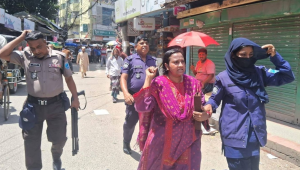


In recent years, South Asia has witnessed a recurring sequence of events. Students leave classrooms for the streets. Roads fill with placards, slogans, and rhetoric-filled meme posters. Universities become centres of civic mobilisation, questioning every instrument of the state. Governments initially resist. Political actors trade accusations. Security forces confront demonstrators. Only after prolonged public pressure do meaningful political or administrative responses begin to emerge.
The Aragalaya protests in Sri Lanka from 2022 to 2024 emerged from severe economic collapse -shortages of fuel, medicine, and food – which ultimately led President Gotabaya Rajapaksa and other members of the powerful Rajapaksa political dynasty to flee the country and resign amid unprecedented public pressure. Yet while political leadership changed, institutional reform proved considerably difficult. Many analysts have noted that while the long-term legacy was upended, translating the street mobilisation into durable institutional reform proved far more difficult in reality.
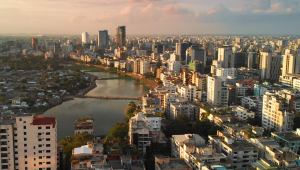
The July 2024 movement in Bangladesh began around the quota issue but evolved into a broader national crisis over governance, accountability, and state response. The protests escalated dramatically after violent confrontations, leading to hundreds of deaths according to multiple estimates before a major political change followed. The institutions were unable to respond appropriately, which eventually led to the crumbling of state control, infuriating the already existing public grievances.
When the rapper turned Prime Minister Balen Shah was elected head of state after an election forced into the national emergency, fueled by a similar kind of Gen Z protest, the world watched and compared- Bangladesh with Nepal wondering how the pattern has evolved over the years, the silent dissent youths are carrying.

From Bangladesh’s July 2024 student movement to Sri Lanka’s Aragalaya, to Nepal’s youth-led mobilisations, and most recently India’s student protests over examination irregularities, the sequence seems to appear strikingly familiar. The immediate causes differ. The institutional patterns do not.
The recent protests around the alleged National Eligibility-cum-Entrance Test (NEET) examination paper leak illustrate another variation of the same pattern. What began as outrage over examination integrity expanded into broader concerns over accountability, youth opportunity and institutional trust. Sustained demonstrations eventually resulted in the resignation of the Education Minister Dharmendra Pradhan and commitments to reforms. The unemployed, lazy, ‘cockroach’ Gen Z youths, as termed by India’s top judge, Chief Justice Surya Kant of the Supreme Court, almost brought the country together. What followed was a five-week (about 35 to 36 days) protest, 23 million Instagram followers on the Cockroach Janata Party page in a few days, and millions on the streets. And then a selfie video of Narendra Modi, the most headstrong Prime Minister India has ever witnessed, reassuring that the youths ‘will be listened to ’, and then occurred the resignation of the Education Minister, Dharmendra Pradhan.
History has repeatedly shown that peaceful public mobilisation has expanded rights, corrected injustice, and strengthened accountability. Be it against their local oppressors or against colonial powers, the Indian subcontinent was also able to bring the British Empire to its knees and forced it to grant independence to a colony that was considered the ‘Jewel in the Crown’ through the strategy of non-violent, collective protests.




The concern is not that such recurring, similar protests, especially initiated and fueled by youths, are taking place; it is the fact that the state instruments are ‘only listening’ after they have taken place. It is the painful truth that the protesters are the young people of the nations, the vulnerable ones, the ones who dare to believe in a utopian land where their fierce pulses and carefree dreams co-exist. They are later joined by citizens who place upon their shoulders the burden of their long-deferred hopes.
Have we ever systematically examined the lasting harm inflicted on young people by the recurring cycle of institutional neglect, protest, repression, and political uncertainty? Imagine a generation that gradually internalises the belief that only dissidence earns attention. How will they interact with everyday relationships? What kind of professionals, public servants, parents, and citizens emerge from such civic education? Most importantly, if all you do is remain in a constant state of panic on autopilot, you slowly start to believe that nothing changes, until something breaks financially, institutionally, socially, emotionally, and sometimes in human lives. That is a dangerous place to be.
This challenge is further complicated by the digital age. Unlike previous generations, today’s protest movements no longer rely solely on physical organisation. Encrypted messaging platforms, short-form videos, memes, livestreams and algorithm-driven networks compress mobilisation, generate (un)wanted consequences within minutes, and produce cathartic decisions within seconds. Information and misinformation move with unprecedented speed, often reshaping public perception before institutions have even begun to respond in a systematic way. A 5-second video becomes more powerful than a war cry.
While peaceful protests remain an indispensable democratic right, it should never become the primary administrative mechanism through which governments discover what citizens have been saying all along.
Democracies should aspire to be something more than this: institutions capable of hearing citizens before the streets become their loudest advisers. If every generation concludes that governments respond only after classrooms/homes/offices empty into protest grounds, then the region faces a deeper challenge than political disagreement. It faces the gradual normalisation of a governance that moves only after societies pass through crisis.
The bravery, enthusiasm, and innovative initiatives of young people are commendable in all aspects of national and international phenomena, but they should not be spontaneously invested in trying to fix things which are responsibilities of other designated state actors. As Daron Acemoglu and James A. Robinson write in Why Nations Fail, “Nations fail today because their extractive economic institutions do not create the incentives needed for people to save, invest, and innovate.”
Therefore, the true characteristic of a democratic nation is not how power responds to dissent, but how institutions listen to its citizens without them needing to struggle simply to be heard.
The views expressed in this article are solely those of the author
The writer is a development professional. E-mail: [email protected]