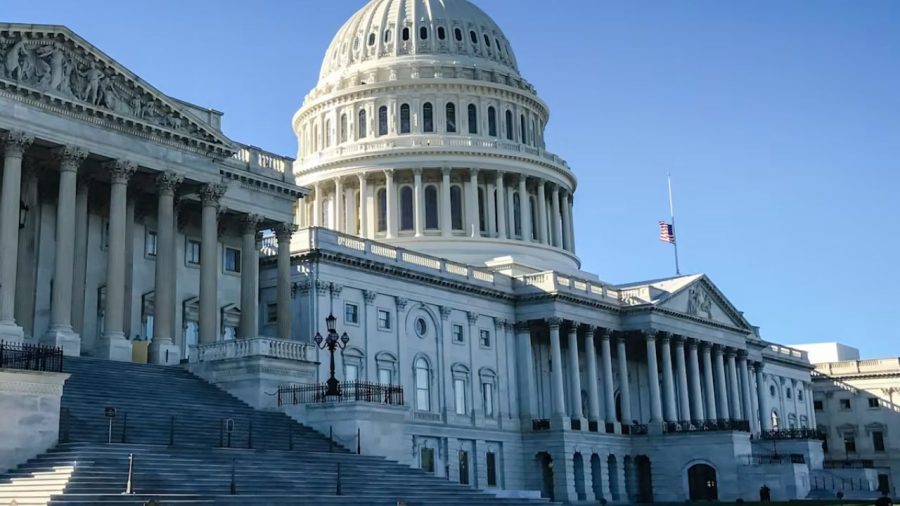



With just a few days remaining until the 2026 United States midterm elections on November 3, national attention is focused squarely on the high-stakes struggle for control of the US Congress.
Driven by pervasive voter dissatisfaction over economic pressures and political ethics, national polling indicates a distinct advantage for Democrats.
According to RealClearPolling tracking averages, Democrats maintain an 8.2 percentage point lead over Republicans nationally, polling at 51.4 percent compared to 43.2 percent for Republicans.
This shift comes amid waning public standing for President Donald Trump, whose job approval rating has dropped to 37–38 per cent, with disapproval reaching 60 to 61 per cent, reports Al Jazeera.

The contest for legislative power is centered on narrow margins in both chambers.
In the House of Representatives, where all 435 seats are on the ballot, Democrats require a net gain of just three seats to seize the majority from Republicans, who currently hold 219 seats against 214 Democratic seats.
Meanwhile, the 100-member Senate sees 35 seats up for election, with Democrats needing four net gains to reach the 51-seat threshold.




Crucial battleground states have become central battlefields; in Texas, Democratic challenger James Talarico leads Republican incumbent Ken Paxton 49 to 43 per cent in recent CNN polling, while Democrat Abdul El-Sayed holds a 49 to 42 per cent lead over Republican Mike Rogers in Michigan.
Voter priorities are overwhelmingly dominated by economic anxiety and institutional distrust.
A national Harris poll reveals that the rising cost of living remains the primary concern for 36 per cent of likely voters, reflecting widespread frustration as 42 per cent of citizens report being financially worse off than a year ago.
Government corruption has surged as the second most urgent issue at 12 per cent, outranking immigration at 9 per cent, healthcare at 7 per cent, and taxes at 5 per cent.
A striking 76 per cent of voters believe elected officials prioritize self-enrichment over public welfare, with 40 per cent viewing Republicans as having a larger corruption problem compared to 21 per cent who point to Democrats.

These voter concerns unfold against an unprecedented financial backdrop, as midterm campaign ad spending has reached a record $11.2 b.
In the final campaign push, candidates and surrogates are executing aggressive blitzes across key states. President Trump cancelled scheduled in-person rallies in Kansas and Iowa to initiate a 72-hour tele-rally push targeting nearly 20 states.
Concurrently, prominent Democratic figures including Barack Obama and Kamala Harris have mobilized voters in swing states like Georgia.
Adding further uncertainty, a legal dispute in Alaska involving two candidates with identical names could delay the final determination of Senate control.