Israeli Prime Minister Benjamin Netanyahu’s Likud party has accused Arab-led parties of stealing general election without providing specific evidence, as projected results confirm his bloc has lost its parliamentary majority in the 120-seat Knesset.
The claim comes amid an inconclusive election outcome where local media projections show Netanyahu’s bloc securing 53 seats, falling short of the 61-seat threshold needed to govern, reports AP.
Opposition parties hold 48 seats, whilst Arab-led parties have won 19 seats, placing Arab-led political groups in a position to exert decisive influence over the next legislature.
Claims of irregularities and foreign interference
Despite receiving the most votes, Likud petitioned the Central Elections Committee to investigate its claims of election theft, though election officials noted that reported irregularities during the vote were low.
Tensions escalated further when the chief of Central Elections Committee requested Shin Bet intelligence service to investigate allegations of foreign interference.

The request followed a letter alleging funding by “foreign entities against the Israeli interest” without supplying specific details or identifying who made the allegations. Results must be certified by 4 November under Israeli law, ahead of parliament’s swearing-in scheduled for 10 November.
Netanyahu seizes on investigation as rivals cry foul
Netanyahu seized upon Shin Bet investigation request to assert that no political faction should cooperate with Arab-led parties, despite the election committee’s letter making no reference to Arab political groups.
Opponents swiftly condemned Netanyahu’s manoeuvres and rhetoric. Yair Golan, head of the Democrats party, accused the prime minister of pursuing an “ugly delegitimization campaign directed against the will of the public, and against the Arab public in particular”. Sami Abu Shehadeh, chair of a party within Arab-led Joint List, described the allegations as a new phase of “incitement” against Arab-led groups.



Former military chief Gadi Eisenkot, leader of the Yashar (“Straight”) party, warned political figures against exploiting the security investigation to manipulate the timing of parliament’s swearing-in. Eisenkot’s party noted he had been briefed directly by the chief of the Shin Bet.
Herzog calls for calm amid coalition manoeuvres
President Isaac Herzog described the aftermath as a “sensitive moment” and supported a full investigation into foreign interference claims, whilst warning that “we must not tarnish an entire community that sought to exercise its right to vote and take an active part in democracy”.
Herzog also signalled a clear desire to avoid triggering another general election early next year.
Netanyahu remains prime minister in charge of the interim government while approximately 500,000 absentee ballots, cast by military personnel, diplomats, hospital patients, and prisoners, are tallied. Officials do not expect the absentee vote to alter the seat distribution dramatically.
Emerging power of Arab-led parties
Arab citizens account for 20 per cent of Israel’s population, and the election saw strong turnout alongside support from some Jewish voters. Brosli Elias, a resident of Nazareth, expressed hope that the election would secure equal rights within government.
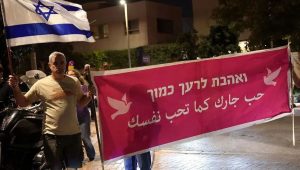
Demonstrations took place overnight in Tel Aviv and conservative Jerusalem supporting a coalition that incorporates Arab-led parties. Even without joining a governing coalition, Arab-led parties could wield substantial power by cooperating with Netanyahu’s opponents to elect a new Knesset speaker.
Ahmad Tibi, second on the Joint List, confirmed contact with the opposition bloc and said his party would vote for the opposition’s candidate for speaker, a move that would yield control over the legislative agenda before a government is formed.

Eisenkot has indicated open-mindedness, under specific conditions, toward teaming up with Arab-led parties.
National crises and strategic uncertainties
The political gridlock highlights severe domestic fractures, including debate over whether the fast-growing ultra-Orthodox population should remain exempt from compulsory military service after three years of inconclusive wars.
Netanyahu, Israel’s longest-serving prime minister, remains deeply polarising amidst standing corruption charges and criticism over his handling of war in Gaza and hostage negotiations.
Internationally, Israel faces scrutiny over its military conduct in Gaza, rising West Bank settler violence, and Netanyahu’s refusal to launch a public inquiry into security failures surrounding the 7 October 2023 Hamas-led attack.
Looming US military strikes against Iran following the American midterm elections on 3 November add further volatility, with analysts noting Netanyahu could use an escalated conflict to press for an emergency unity government under his control.