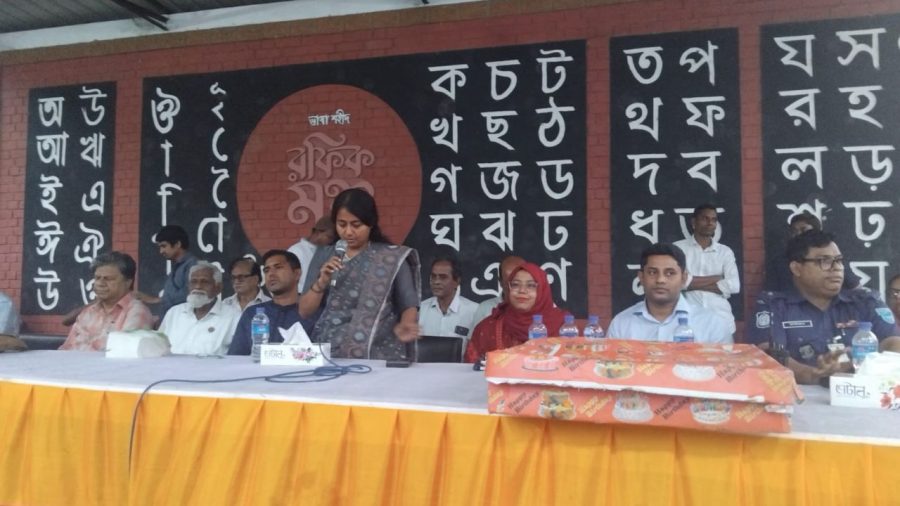



The birth centenary of Rafiq Uddin Ahmed, regarded as the first martyr of the 1952 Language Movement, was marked in his ancestral village in Singair upazila of Manikganj on Friday with discussions, cultural performances and a cake-cutting ceremony.
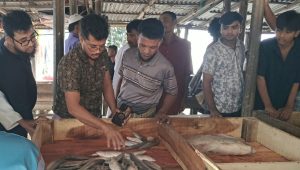
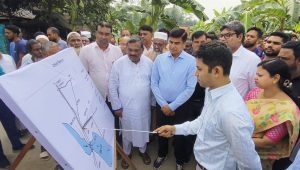
Organised by the Bhasha Shaheed Rafiq Smriti Parishad, the programme was held at Rafiq Mancha in Rafiqnagar, Baldhara union, around 3 pm. A three-day fair and other activities began on 28 October.
Manikganj Deputy Commissioner Nazmun Ara Sultana attended as chief guest. Rafiq’s younger brother, freedom fighter Khorshed Alam, chaired the discussion, moderated by lecturer Jagadish Chandra Malo.
Speakers included Additional Superintendent of Police Mohorom Ali, Singair Upazila Nirbahi Officer Khairunnahar, Officer-in-Charge Mazharul Islam and Ekushey Padak recipient Kawsar Chowdhury.

Teachers, students and local dignitaries also attended. The deputy commissioner later cut a cake to mark the centenary.
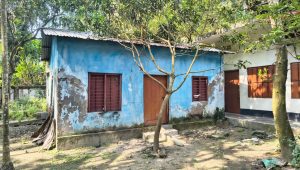
Born on 30 October 1926 in Paril Baldhara village, now known as Rafiqnagar, Rafiq was the eldest of five brothers and two sisters. His parents were Abdul Latif and Rafiza Khatun.
An accounting student at Jagannath College, he joined demonstrations demanding recognition of Bangla as a state language on 21 February 1952.
He was killed by police gunfire during protests near Dhaka Medical College Hospital as demonstrators defied Section 144, which prohibited public gatherings.
Photographs of his bullet-riddled body subsequently became enduring records of the Language Movement.
Amanul Haque, then a photographer at Dhaka Medical College, evaded police surveillance to photograph Rafiq’s body in a room behind the hospital.

An attempt to publish the photograph in the daily Azad was thwarted when police seized printed copies.
Mizanur Rahman, a photographer for the weekly Ittefaq, also photographed the body, but censorship prevented its publication in 1952. The photograph appeared in a special Ekushey edition the following year.
Despite the local commemorations, no information was available about any state-level programme marking Rafiq’s birth centenary.