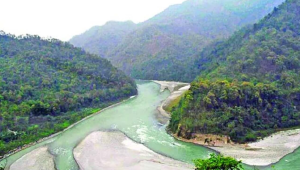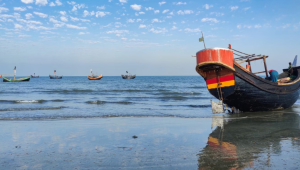

The shift from an anthropocentric to an ecocentric perspective in environmental legal philosophy is considered one of the greatest milestones in contemporary legal thought. The most practical and far-reaching example of this theoretical evolution is the Halda River, a natural resource in the southeastern region of our country. Originating from the Ramgarh hills of Khagrachhari and merging with the Karnaphuli at Kalurghat, this 98-kilometer waterway is not just an ordinary river; it is the world’s only tidal freshwater river where major Indian carp species like Rui, Katla, Mrigel, and Kalibaus spawn completely naturally. Breaking free from the colonial and weak protection of the ‘Protection and Conservation of Fish Act’ of 1950, the declaration of the river as ‘Bangabandhu Fisheries Heritage’ in 2020 and the landmark Supreme Court judgment in 2019 granting legal personality to all rivers in the country as ‘living entities’ brought an unprecedented revolution to our environmental legal history. However, it is now crucial to examine whether this legal grandeur has been able to stop the brutal realities on the ground, or if this paper armor has succumbed to state apathy, leaving the river facing a profound crisis.
The High Court Division of the Supreme Court of Bangladesh, in the case of Human Rights and Peace for Bangladesh v. Government of Bangladesh (2019), set a unique precedent by declaring the Turag River and all other rivers in the country as ‘legal persons’ and ‘living entities’. The core philosophy of this verdict was that a river is not an inanimate object or property; like humans, it has its own right to survive and develop. Following the court’s parens patriae (parental guardianship of the state) jurisdiction, the Ministry of Fisheries and Livestock, through a historic gazette on December 22, 2020, declared the entire Halda corridor and 23,422 acres of its surrounding land as ‘Bangabandhu Fisheries Heritage’. This declaration completely banned the construction of rubber dams, concrete embankments, and any activities damaging the Kums (deep natural underwater sanctuaries) that alter the river’s natural form. This dedication of the heritage site essentially elevated the cause of river conservation above bureaucratic structures into a higher national and political commitment. Yet, this towering monument of theoretical legal protection repeatedly stumbles when faced with ground realities.
The egg production of carp in the Halda River, which was nearly 4,500 kilograms in the 1980s, has alarmingly declined to below 300 kilograms in recent decades. Although egg production temporarily increased to 424 kilograms in 2020 after the heritage declaration, it suffered a catastrophic 73% decline the very next year in 2021, crashing to just 105 kilograms. Not only egg production, but Halda’s unique biodiversity is also in extreme crisis. The presence of 65 fish species in the past has now dropped to only 50-52, and nearly 26 species are on the verge of local extinction. An even greater tragedy is the grim fate of the Ganges River Dolphin (Shushuk), a critically endangered species on the IUCN Red List. At the beginning of 2000, there were over a hundred dolphins roaming freely in the Halda, but according to a 2022 survey, that number has dwindled to just 30. The mutilated carcasses of these dolphins are frequently seen floating in the river after being struck by the engines and propellers of mechanized dredgers, vividly reflecting our environmental bankruptcy.

At the root of this crisis lies a complex ‘jurisdiction maze’ and extreme lack of coordination among various government agencies. The National River Protection Commission, the Heritage Monitoring Committee, the Department of Environment (DoE), the District Administration, the Department of Fisheries, and the River Police are all involved in Halda River management; yet, when taking action against specific offenses, no single institution wants to take sole responsibility. For instance, the Department of Fisheries has only 12 field-level workers to guard the entire Halda corridor, and they lack night-patrolling capabilities or modern high-speed watercraft. On the other hand, although the DoE mandates that factories in the Hathazari and Kalurghat industrial areas must operate Effluent Treatment Plants (ETPs), studies show that less than half of these factories run them regularly. Consequently, toxic chemical waste from these factories flows directly into the heart of Halda’s spawning grounds through five major canals, ruining the natural quality of the water. Furthermore, the maximum penalty of BDT 50,000 for illegal sand mining under the
Balumahal and Soil Management Act, 2010 is less than what a dredger syndicate earns in a single hour, failing to serve as an effective deterrent against crime.



The Halda River cannot be preserved as a ‘legal person’ merely through court verdicts or gazette pages unless proper enforcement and governance are ensured on the ground. For the sustainable protection of this invaluable ecosystem, it is urgent to dismantle the failing multi-agency framework and establish an independent, unified ‘Halda River Protection Authority’ (HRPA), which will hold the sole power over environmental impact assessments and immediate legal enforcement. At the same time, installing 24/7 CCTV cameras across the 17 major spawning areas, strict nocturnal surveillance using drones, and launching a ‘smart monitoring system’ with solar-powered real-time sensors to test water quality are demands of the time. Amending the nominal fines of the old 1950 fisheries law, environmental crimes must be penalized with multi-million taka financial fines and long-term imprisonment, and a specialized Environmental Court must be set up in Chattogram to ensure swift justice.
the conservation of the Halda River cannot succeed if we ignore traditional knowledge and local stakeholders. A ‘Community Co-management’ framework must be created to protect the lives and livelihoods of the 400 to 600 traditional egg-harvesting families who have lived along the banks of the Halda for generations. To provide these marginalized families with proper financial incentives during the fishing ban periods, a dedicated ‘Halda Conservation Fund’ can be formed using environmental clearance fees from industries and revenues from sand quarry leases. Laws only come alive when they protect the rights of the governed. The Halda River, which has nourished our fisheries and natural economy for centuries, cannot be allowed to fade away due to bureaucratic complexities and the greed of a few dredger syndicates. It is now the final time to translate the grandeur of landmark legal theories into uncompromising reality through strict enforcement on the ground.
Views expressed in the article are his own and do not reflect those of any organisation.