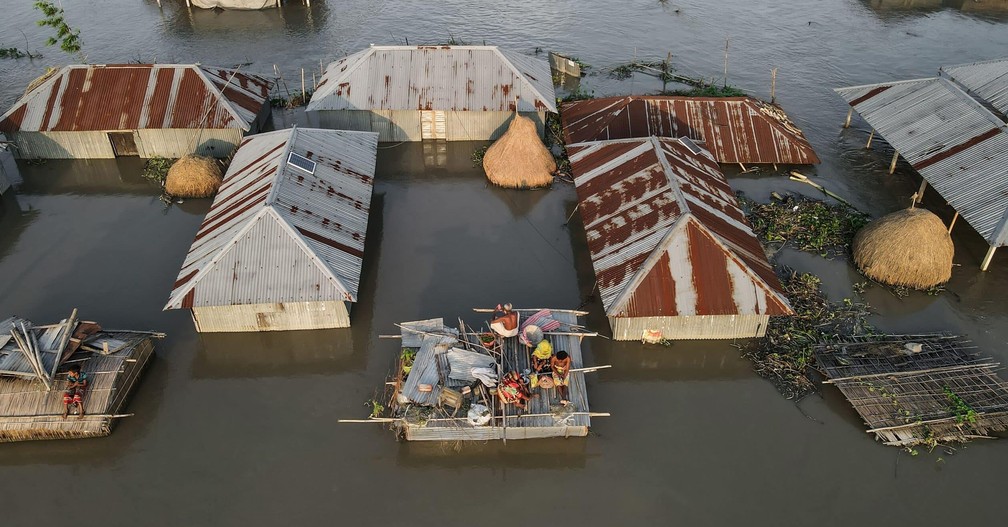

Monsoon flooding is part of Bangladesh’s geography. But the scale of destruction seen in recent years is not inevitable. What should be a manageable seasonal challenge has become a recurring national emergency. The result is painfully familiar: homes are washed away, crops are destroyed, roads collapse, businesses shut down, and millions of people are pushed deeper into hardship. The central truth is unavoidable: Bangladesh’s flood crisis is not caused by nature alone. It is being made far worse by human failure.
Climate change plays a crucial role in the monsoon changes. Higher temperatures mean more rainfall; hastened glacier melt in the Himalayas and bigger and faster water flow into Bangladesh. Scientists warned for years about growing frequencies and intensities of extreme weather events. Those warnings show up in every flood season.
Bangladesh lacks drainage capacity, disaster preparedness, and physical barriers against the new weather pattern. But climate change doesn’t explain everything. Waterlogging in Bangladesh is one of the clearest signs of state failure. In towns and cities, heavy downpours – even for a few hours – have led to floods. Drains are silted up, too narrow, or just left to neglect. Canals have become private properties, waterlogged fields have been filled up, and natural water paths blocked by buildings, roads or illegal business sites. It is a part of long-term planning failure that has increased rapid and uncontrolled urban development, leading to flooding on rainy days.
Water simply gets stuck when it has nowhere to go, turning normal lives into suffering for days, weeks for most. In border towns, such releases come without warning and at a huge risk. Many here hold inadequate and late releases from Indian dams and, thus, poor communication from upstream, responsible. It is not difficult to understand the anger from downstream when river levels surge up without early information. Floods should be handled through science, engineering and safety-first principles – not with a mindset based on politics. Infrastructure planning usually involves politics on their needs; while works like dredging are deferred, embankments are unmaintained, funds mismanaged or diverted.

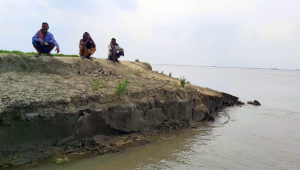
Some local leaders allowed encroachment of rivers, canals and wetlands through using their influence or through some form of bribery, not just ignoring but active decision and inaction. These are not mistakes or lapses – decisions and inaction by leaders result directly in people drowning and the lives of many becoming hellish while the environment is plundered or ignored as politics prevails.
Flood prevention requires year-round planning, not emergency speeches after the water has already risen. Embankments must be inspected regularly, sluice gates maintained, drainage canals cleared, and rivers dredged where necessary. None of this can be done effectively through ad hoc responses. Yet coordination among government agencies remains weak. Water development bodies, local authorities, municipal corporations, disaster management offices, and environmental regulators often work in isolation instead of under a unified flood strategy. Bangladesh already has access to modern tools such as satellite monitoring, advanced forecasting, automated warning systems, and real-time hydrological data. The problem is not the absence of technology. The problem is the failure to use it decisively and consistently.




The financial losses equal billions of takas every year. This is a recurring drain on national development. The human cost behind every flood statistic is a family in distress. People lose their homes overnight. Children miss school for months. Farmers lose an entire season’s harvest. Daily wage earners lose their income the moment the water rises. The burden falls hardest on women, children, elderly citizens, and people with disabilities, who often have the fewest resources and the least mobility during disasters. For many rural families, repeated flooding destroys savings, deepens poverty, and makes recovery harder each year. The cycle is brutal and relentless. Disaster management must be judged by how well it protects people, not by how many press releases are issued after the damage is done.
Bangladesh cannot stop the rain, but it can stop floods from becoming national catastrophes. Restore drainage and protect natural water channels immediately. Clear canals, drains, wetlands, and retention ponds in major cities and flood-prone towns, and remove illegal encroachments without delay. This is technically feasible if city corporations, district administrations, and the Ministry of Local Government act together under firm political backing. Inspect, repair, and reinforce embankments, maintain sluice gates, and carry out scientific dredging only where hydrological studies justify it. These are routine but urgent tasks for the Bangladesh Water Development Board, the Ministry of Water Resources, and the River Research Institute, and they are highly feasible if funded and monitored on time.
Expand real-time flood monitoring, automated gauges, and SMS-based alerts, and integrate evacuation planning, shelter management, and medical preparedness. This can be implemented quickly through the Flood Forecasting and Warning Centre, the Bangladesh Meteorological Department, the Ministry of Disaster Management and Relief, local governments, and health authorities. Seek real-time data sharing, joint basin coordination, and better monsoon communication with India through existing bilateral mechanisms. This is diplomatically sensitive but essential, and responsibility lies with the Ministry of Foreign Affairs and the Ministry of Water Resources. Protect wetlands and floodplains in land-use decisions, require flood-risk screening for major projects, and expand community-based preparedness and volunteer networks. These reforms are feasible through the Planning Commission, the Department of Environment, RAJUK, local administrations, and organisations such as the Cyclone Preparedness Programme and the Red Crescent.
These are not optional reforms. They are the minimum required to protect lives, livelihoods, and national stability.
Bangladesh’s flood crisis is not simply the result of heavy rain. It is the product of climate change amplified by human failure. Poor drainage, illegal encroachment, weak institutions, political interference, environmental destruction, and inadequate river coordination have turned a natural hazard into a recurring national emergency. The lesson is unavoidable: floods may be natural, but mass devastation is not.
If Bangladesh continues to treat flood management as a seasonal reaction instead of a permanent national priority, the losses will only grow worse. What is needed now is not more blame or rhetoric, but decisive action: evidence-based policymaking, stronger institutions, environmental restoration, regional cooperation, and accountable leadership. Bangladesh can live with floods. It cannot afford to keep living with failure.
The views expressed in this article are solely based on the author
The writer is a columnist and political analyst