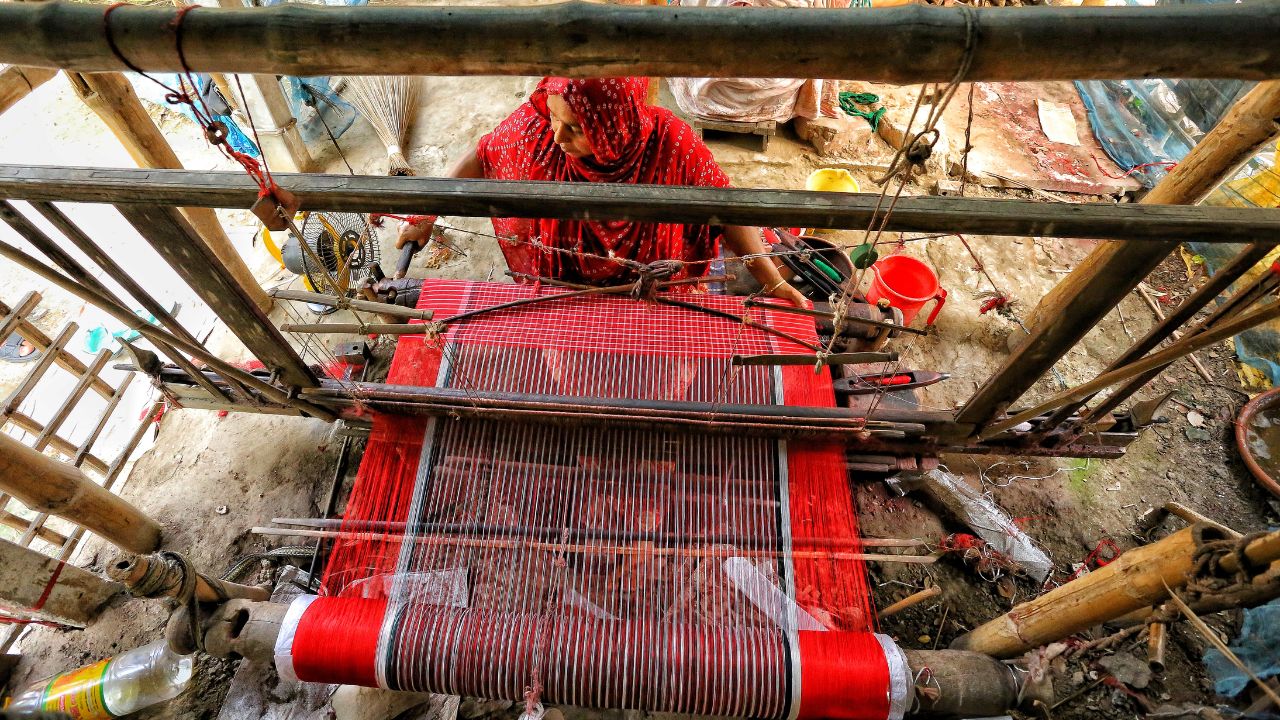

Bangladesh’s rich heritage has long been woven into the fabric of its traditional handlooms. Yet, across the rural heartlands, age-old artisan crafts are struggling for survival against modern mechanisation, soaring material costs, and changing market dynamics.
A poignant reflection of this crisis is unfolding in Phultala Upazila under the Khulna district, where the historic gamchha (traditional cotton towel) handloom industry is currently teetering on the brink of total extinction.
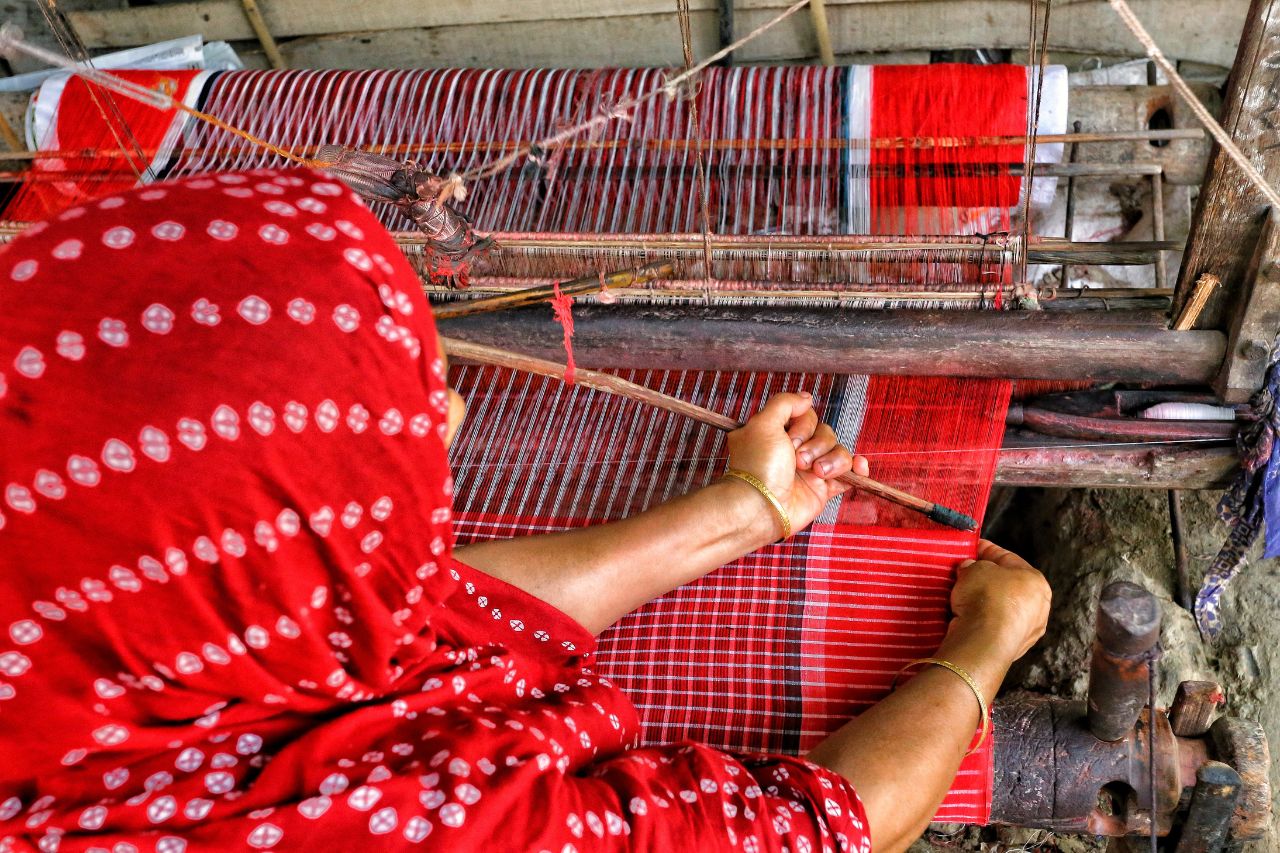
For generations, the rhythmic khot-khot clatter of wooden handlooms was the pulse of Phultala’s artisan villages. Crafting a single piece of gamchha is an intricate, highly labour-intensive process that spans far beyond the loom itself.

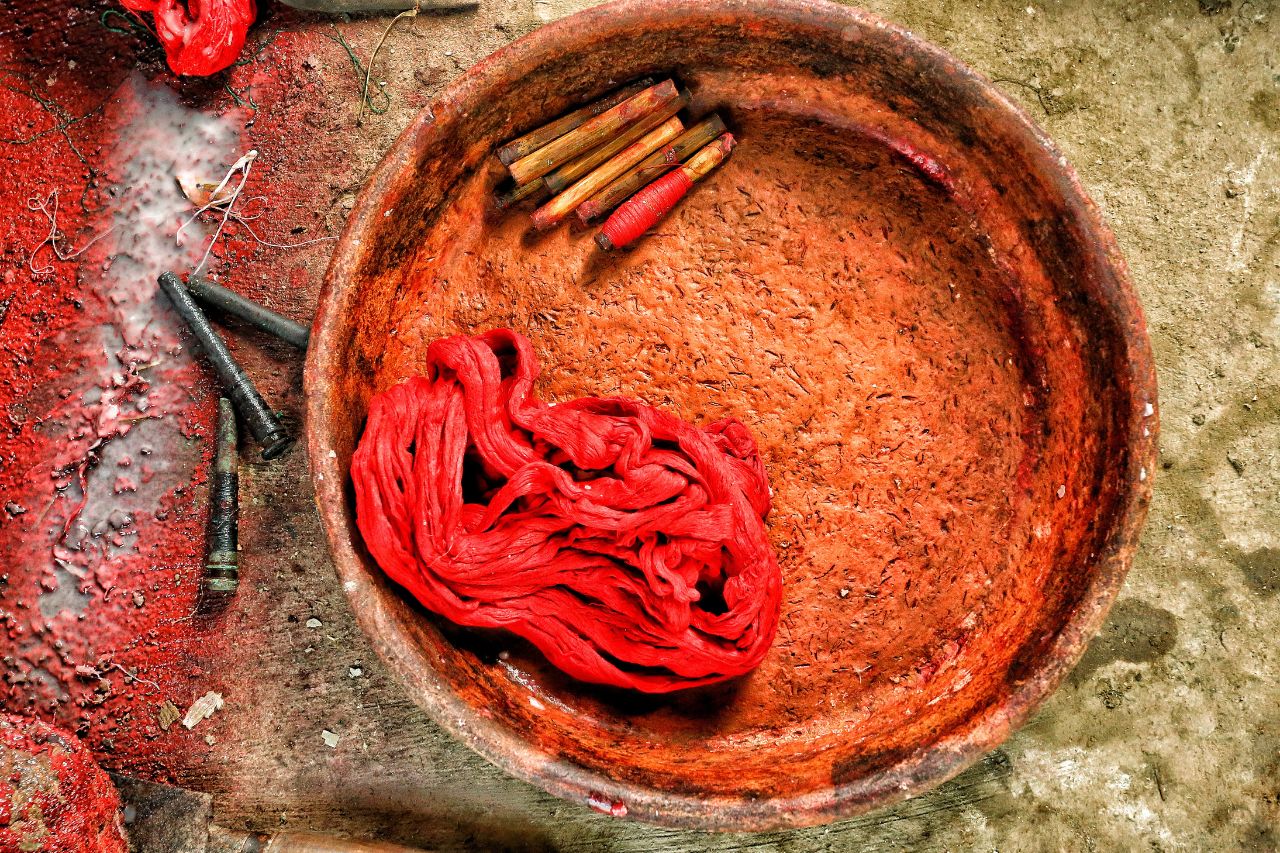
The journey begins long before the weaving starts: Artisans meticulously process raw cotton threads, soaking and starching them in clay bowls filled with organic binder mixtures, standardising their texture, and leaving them to dry under the open sky.
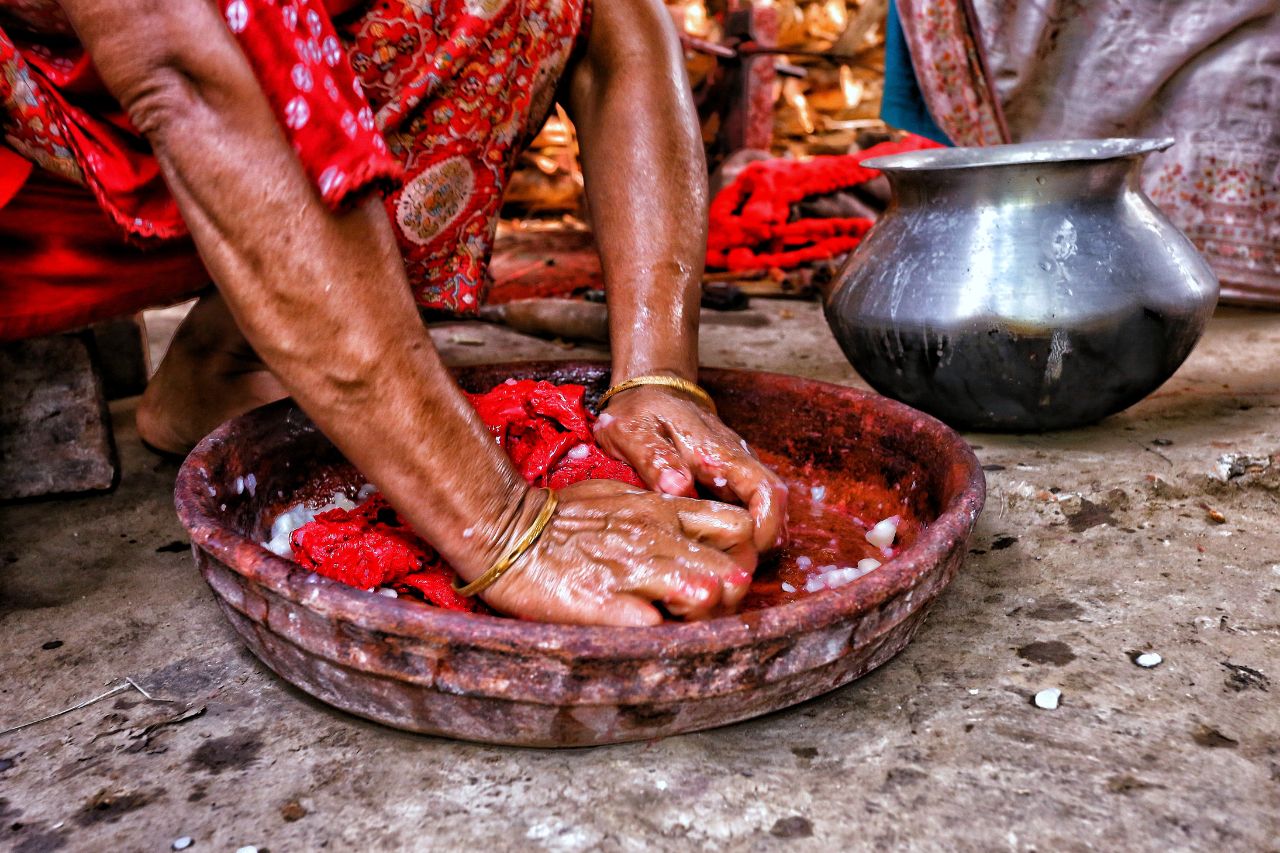
Bright, vivid crimson dyes are worked into the fibres by hand, requiring tireless manual labour, often carried out by local women whose devotion keeps the heritage alive.


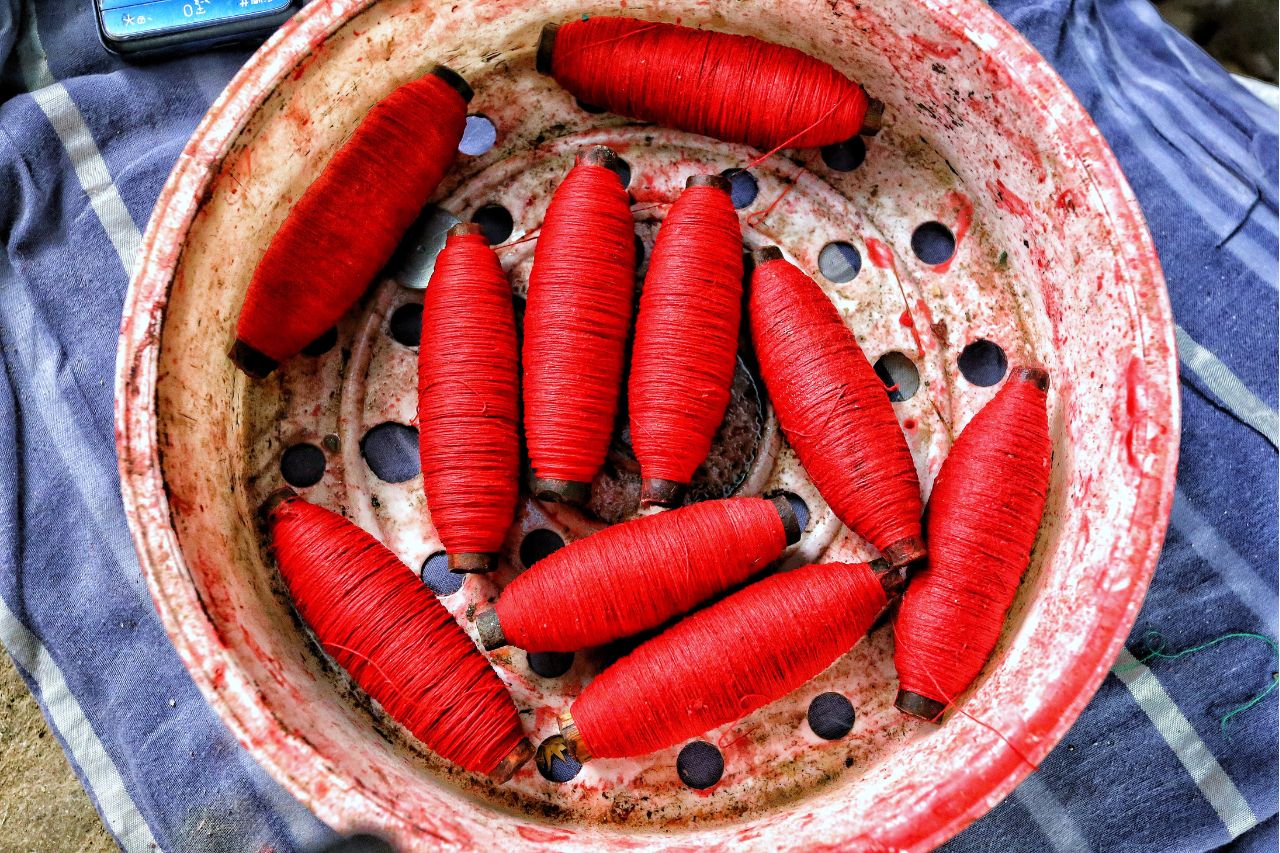
Once dried, the dyed threads are meticulously wound onto bobbins using traditional spinning wheels (chorkha) and carefully mounted onto complex wooden frames. Every shuttle thrown across the warp represents hours of unyielding physical effort and deep-rooted skill.
Despite this extraordinary craftsmanship, the reality on the ground today is stark. The handloom sector of Phultala is caught in a severe economic squeeze. In recent years, the price of raw cotton yarn, dyes, and essential processing materials has escalated sharply, significantly driving up production costs.
However, the wholesale market value for hand-woven gamchhas has remained stagnant. The proliferation of cheap, mass-produced power-loom alternatives has flooded local markets, undercutting the prices of authentic hand-woven textiles.
Artisans who spend an entire day huddled over wooden looms in humid, bamboo-structured workshops find themselves unable to recover even basic operational costs, let alone earn a sustainable livelihood.
As a result, market demand has plummeted, leaving weaver families with unsold stock and growing debt. The younger generation, witnessing their elders struggle for basic sustenance despite decades of dedication, is rapidly abandoning the family trade in search of day labour, factory work, or commercial trades.
Without targeted financial incentives, low-interest artisan loans, modernised cooperative marketing platforms, or policy intervention to safeguard traditional crafts, the historic looms of Phultala will soon fall completely silent, taking with them a priceless piece of Bangladesh’s cultural and artistic identity.