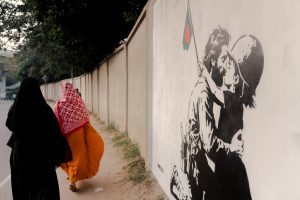
A new artwork from the celebrated Subodh series has surfaced in Dhaka, sparking fresh discussion around the evolving visual language of the anonymous street artist known as HOBEKI?. The latest graffiti has appeared on the Agargaon Air Force wall, a site with deep historical links to the Subodh figure.
Subodh was last seen in August 2024 at the Dhaka University Metro Station, while his first appearance in Agargaon dates back to 2017. The return of the character to this location has therefore been read by observers as a deliberate and symbolic choice.
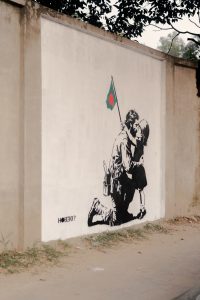
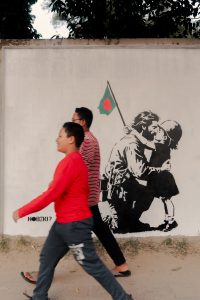
In the newly revealed piece, Subodh is portrayed not as a warrior of conflict, but as a soldier of art. Instead of a rifle, he carries paintbrushes and spray cans, reinforcing the idea of creativity as a form of resistance. He is shown kneeling before a young girl holding the Bangladesh flag, gently kissing her as his military hat rests lightly on her head.

The image places tenderness and humanity at its centre, challenging conventional ideas of power and duty. By replacing weapons with artistic tools, the work suggests that love and compassion are more essential to a nation’s future than violence or force. The quiet intimacy of the scene has resonated strongly with passers-by, many of whom have shared images of the graffiti across social media.




The appearance follows a series of recent interventions by HOBEKI?. The artist’s last confirmed works were unveiled on March 7, 2025 at CRB Chottor in Chittagong. These included The HOBEKI? Thinker and The Hand of Subodh, both painted on the Finlay Hill wall on the same day.
Over the years, Subodh has become one of the most recognisable figures in Bangladesh’s street art scene, often used by HOBEKI? to comment on politics, identity and social change. This latest portrayal marks a notable shift in tone, moving away from confrontation towards empathy and hope.
As with all works attributed to HOBEKI?, the artist’s identity remains unknown. Yet each new appearance of Subodh continues to draw public attention, turning everyday walls into spaces for reflection and debate within the city’s cultural landscape.