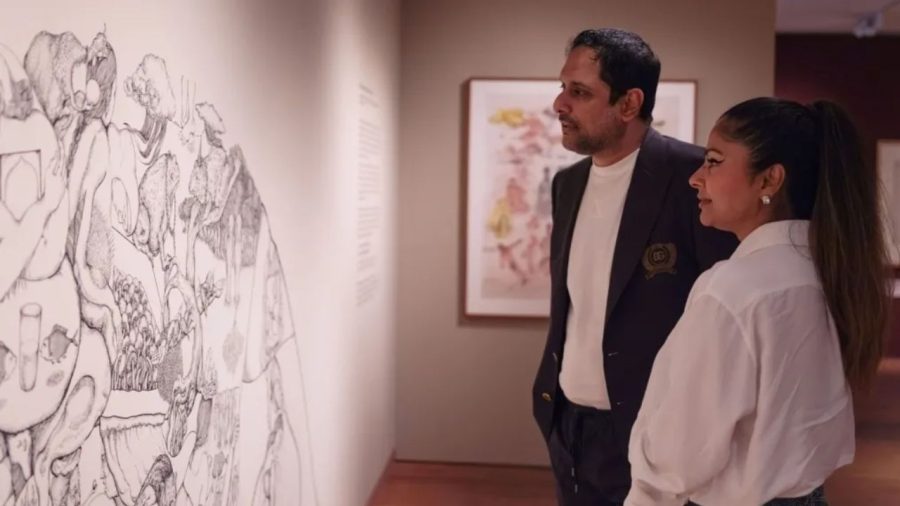



The Ashmolean Museum in Oxford has teamed up with the Samdani Art Foundation in a landmark partnership to spotlight Bangladeshi art.
Described by the University of Oxford institution as the first “sustained initiative” supporting Bangladeshi artists at any major museum across the globe, the project aims to highlight work from the nation.
As part of the scheme, a visiting artist will be invited to Oxford each year, alongside the curation and development of a dedicated collection of contemporary Bangladeshi art at the museum, reports BBC.

The Ashmolean Museum, which was the world’s first free public museum when it opened in 1683 and is considered the world’s oldest free-to-enter public museum, has welcomed Munem Wasif as the first visiting artist under the scheme. Wasif arrived in Oxford from Dhaka earlier this month.
Explaining his previous work, which has frequently “returned to the colonial history” of Bengal, a region shared by modern-day India and Bangladesh, Wasif said visiting the Ashmolean “gives me a chance to look at this history more closely, through the Museum’s collections and archives”.




“I’m interested in encountering objects and artworks firsthand, and seeing how they might connect with questions I have been exploring through photography, prints, and textiles,” he added.
Mallica Kumbera Landrus, curator of Indian, Himalayan and Southeast Asian art at the Ashmolean Museum, said she was “thrilled” about the partnership.
“The Museum has remarkable collections from across South Asia, and this partnership gives us an exciting opportunity to develop that story through contemporary Bangladeshi art and artists,” she noted.
Founded in 2011 by Rajeeb Samdani and Nadia Samdani, the Samdani Art Foundation works with artists, architects, curators, and writers to share Bangladeshi culture.
Nadia Samdani, co-founder and president of the foundation, described the partnership as a “natural extension” of the foundation’s vision “to create lasting cultural bridges between Bangladesh and the world”.
“We are proud to see this vision take shape at a world-leading institution, and deeply grateful to the Ashmolean for joining us in making it possible,” she added.