For years, sections of Bangladesh’s commercial film industry have often caricatured festival cinema as slow, depressing, inaccessible, or disconnected from ordinary audiences. The irony is that Rockstar may itself be one of the country’s most significant festival films of the year.
Directed by Azman Rusho, produced by Anjan Chowdhury Pintu under Sun Motion Pictures, and released during the country’s biggest Eid-ul-Azha holiday window, Rockstar was conceived, marketed, distributed, and consumed as a festival event.
The difference is that this festival happened to be Eid rather than Cannes, Busan, Venice, or Berlin. If all festival films are ultimately judged by what they leave behind after the celebrations end, then Rockstar forces us to ask an uncomfortable question: what exactly will remain after the applause fades?
At first glance, the film appears to have all the ingredients necessary for a major mainstream success. Agun (Shakib Khan), the son of celebrated classical musician Ustad Junaid (Tariq Anam Khan), rejects the shadow of his father’s legacy and pursues a career in rock music.
A chance performance transforms him into an overnight sensation. He falls in love with Mira (Sabila Nur), rises to fame, descends into addiction, loses control of his life, and eventually finds himself isolated from everything he once cherished.
Along the way, the film attempts to explore celebrity culture, artistic ambition, family expectations, commercial success, personal tragedy, and self-destruction. On paper, it is an ambitious narrative. In execution, however, Rockstar repeatedly feels like a film more interested in assembling familiar ingredients than transforming them into something memorable.
The disappointment is not rooted in a lack of talent. In fact, many of the film’s strengths are immediately visible. Cinematographer Abdul Mamun creates a visually polished world filled with energetic concert sequences, stylish lighting, and a contemporary aesthetic rarely seen in mainstream Bangladeshi cinema.

Azman Rusho demonstrates a clear visual confidence, particularly in the staging of performance scenes and the construction of Agun’s public persona. Shakib Khan deserves recognition for attempting a character far removed from the machine-gun-wielding heroes that have dominated much of his recent career.
Sabila Nur brings sincerity and emotional warmth to Mira, while Tangia Zaman Mithila, Sunidhi Nayak, Kazi Sabir, Dilara Zaman, Rosey Siddique, and Tariq Anam Khan all suggest a richer dramatic ensemble than the film ultimately allows them to become.

Yet the more Rockstar progresses, the clearer its central problem becomes. The film never fully discovers who Agun is beyond the events that happen to him.
This is where the conversation inevitably turns toward development. Not simply screenplay development, but the broader development of ideas. The screenplay by Nusrat Maati introduces compelling themes but rarely explores them deeply enough.
The dialogue by Ayan Asib Shadhin and Samiul Bhuiyan occasionally finds emotional clarity, yet often struggles to maintain a consistent tone. Some exchanges feel grounded and sincere, while others drift into stylized territory that weakens the emotional credibility of the characters.
Whether these issues originate in the screenplay, the dialogue drafts, production realities, commercial expectations, or the inevitable compromises of a large-scale star vehicle is impossible to know from the outside. What remains visible on screen is a recurring feeling that the film needed more time to become itself.
Agun’s rise to fame never feels fully earned. We are told that he becomes a phenomenon. We are shown crowds chanting his name. We are informed that audiences worship him. Yet we rarely experience the process through which he becomes extraordinary.
This creates a significant problem because the entire emotional architecture of the film depends on the audience believing in Agun as an artist. If his success feels abstract, then his collapse inevitably feels less devastating.
That problem becomes even more noticeable because Rockstar is fundamentally a musical drama. A film about a musician carries a unique responsibility: the audience must leave remembering the music.





Not simply remembering that songs existed, but remembering why those songs mattered. Bangladeshi cinema has accomplished this before.
Films such as Monpura created songs that entered public memory long before audiences entered the theatre. The music became inseparable from the emotional identity of the film.
Rockstar repeatedly tells us that Agun is a musical icon, yet very few of its songs achieve the cultural or emotional permanence required to convince us that we are witnessing the rise of a once-in-a-generation artist. For a film titled Rockstar, this is not a minor shortcoming. It is a structural one.
The treatment of addiction presents another challenge. Much of Agun’s journey revolves around substance abuse and personal self-destruction. While the film clearly intends these elements as cautionary, their repetition often overwhelms the narrative’s other themes.
One begins to wonder what Rockstar ultimately wants to say. Is it a story about artistic ambition? The cost of fame? The fragility of love? The dangers of addiction? The burden of legacy? The film touches all of these ideas, yet commits fully to none of them.
By the end, Agun feels less like a fully realized character than a vessel carrying multiple competing narratives.
What makes this particularly frustrating is that Rockstar arrives at an important moment in the evolution of Bangladeshi commercial cinema. Over the last several years, audiences have been repeatedly told that Shakib Khan is reinventing himself.
From Priyotoma to Toofan, from Borbaad to Taandob, from Prince to Rockstar, each project has been presented as a new chapter, a new version, a new experiment. In many ways, that claim is true. The genres have changed. The costumes have changed. The settings have changed. But Rockstar raises a more difficult question: has the storytelling changed at the same pace?
Too often, contemporary mainstream cinema appears trapped within a cycle of familiar dramatic formulas. The broken childhood. The accidental rise to fame. The tragic romance. The addiction spiral. The devastating loss. The symbolic redemption.
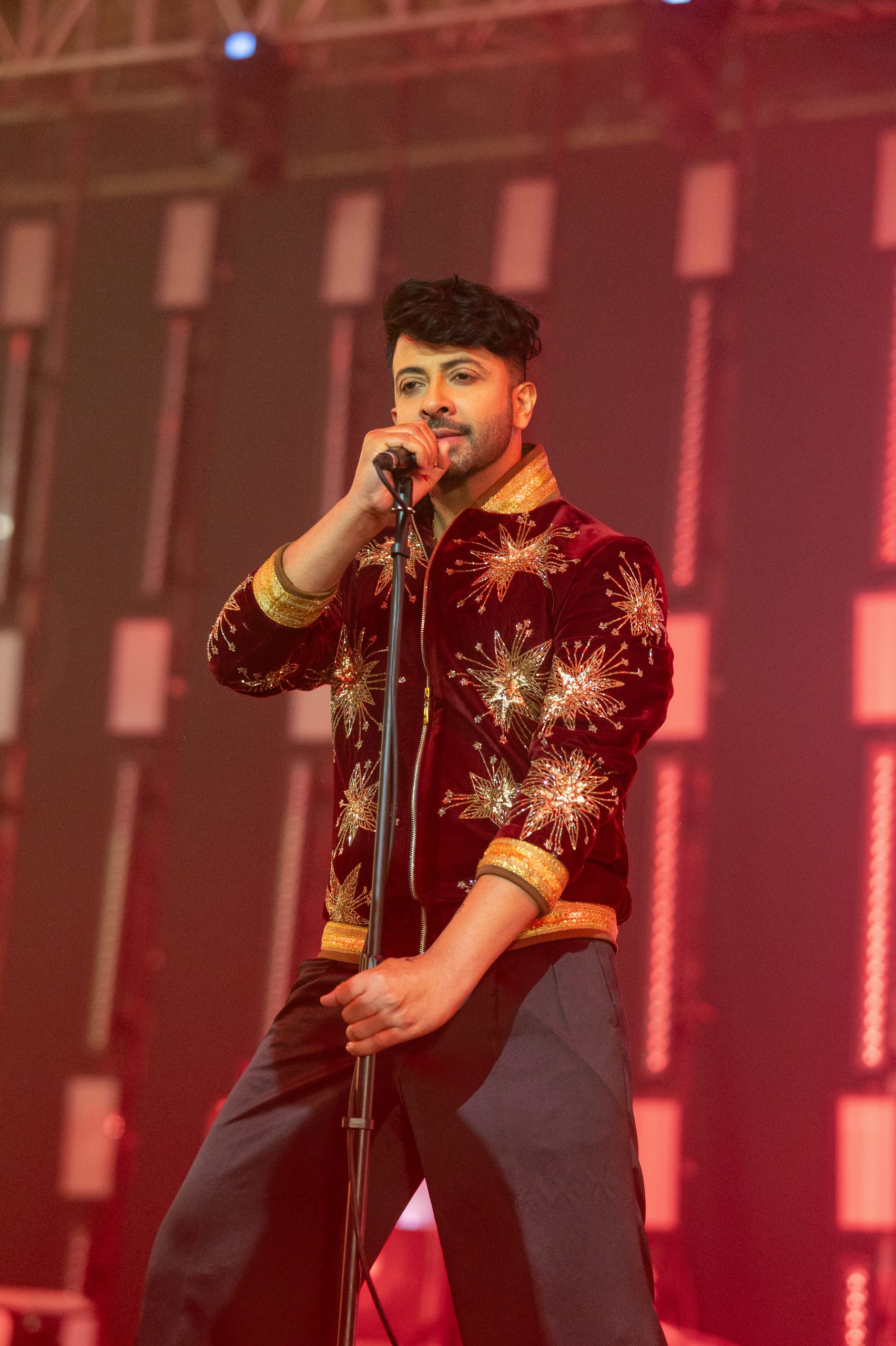
None of these elements are inherently flawed. Great films have been built from exactly the same materials. The challenge lies in transforming them into something original. Rockstar rarely achieves that transformation. Instead, it frequently feels like a collection of recognizable ideas assembled into an attractive package.
This is where the discussion extends beyond a single film. Watching Rockstar, one cannot escape the feeling that mainstream Bangladeshi cinema has become increasingly comfortable investing in packaging while underinvesting in discovery.
We celebrate stars, marketing campaigns, release strategies, international distribution footprints, and opening-week collections.
We discuss scale, visibility, and spectacle. Far less attention is given to developing characters, refining themes, strengthening songs, or allowing stories the time required to mature. The result is an industry that often produces films that are bigger than before, but not necessarily deeper.
None of this should be confused with the piracy crisis that affected Rockstar following its release. A film deserves criticism if criticism is warranted. A film also deserves protection. Piracy damages producers, technicians, exhibitors, distributors, and future filmmakers regardless of a film’s artistic quality. The two conversations should never be confused.
More than sixty years after Nayak (1966) Directed by Satyajit Ray, audiences still remember Arindam Mukherjee (Played By Uttam Kumar) not because he was famous, but because he felt human. That remains the challenge facing every generation of filmmakers.
Stars can attract audiences. Marketing can generate curiosity. Festivals can create momentum. But only characters create legacy.

Ironically, Rockstar itself provides the perfect metaphor for its own limitations. At one point of the film, Agun proudly declares that he has put down the machine gun and picked up the guitar.
The problem is that while Rockstar changes the weapon in its hero’s hand, it never fully changes the storytelling machinery around him and this reflects the broader creative bankruptcy of our mainstream film industry.
Film: Rockstar (2026)
Director & Story: Azman Rusho
Producer: Anjan Chowdhury Pintu
Screenplay: Nusrat Maati
Dialogue: Ayan Asib Shadhin & Samiul Bhuiyan
Cast: Shakib Khan (Agun), Sabila Nur (Mira), Tangia Zaman Mithila (Elena), Tariq Anam Khan (Ustad Junaid), Dilara Zaman (Dadi), Kazi Sabir (Aslam), Sunidhi Nayak, Rosey Siddique
Cinematography: Abdul Mamun
Music: Ahmed Hasan Sunny & Jahid Nirob
Release: May 28, 2026 (Bangladesh) / June 5, 2026 (International)
Writer: Abu Shahed Emon (Filmmaker)