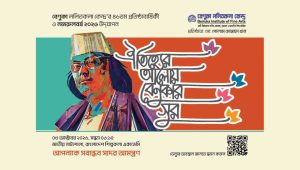
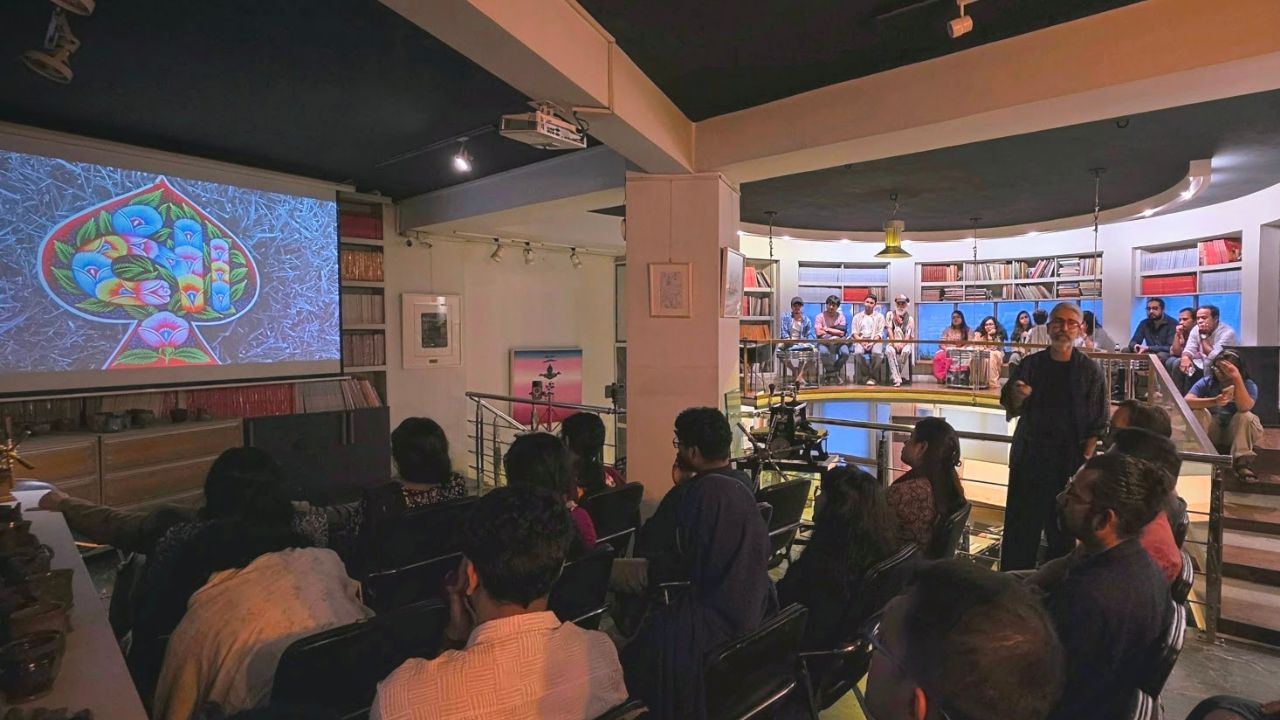
The 18th death anniversary of eminent playwright Selim Al Deen was observed on Wednesday. To mark the occasion, Bangladesh Shilpakala Academy (BSA) organised a special seminar this afternoon.
Arranged by the Academy’s Theatre and Film Department, the event began at 4:00 pm at the Seminar Hall of the National Theatre Hall.
The seminar was moderated by Deepak Kumar Goswami, Director of the Theatre and Film Department of Bangladesh Shilpakala Academy. The keynote paper was presented by Dr Reza Mohammad Arif, Associate Professor at the Department of Drama and Dramatics, Jahangirnagar University.
Notably, the session was chaired by Professor Lutfar Rahman of the same department at Jahangirnagar University. Besides, theatre personalities Zahid Reepon and Abu Sayeed Tulu took part in the discussion.
After the formal discussion, the floor was opened to the audience. Several theatre practitioners spoke about Selim Al Deen’s life and works while highlighting his lasting influence on Bangla theatre.

Around a hundred participants from different professions attended the seminar.
In his paper, titled ‘Aesthetic Roots of the Bengalis and the Philosophy of Dual-Non-Dualistic Art Theory’, Dr Reza Mohammad Arif elaborated on Selim Al Deen’s dramaturgy, philosophy, and artistic vision.




He explained that Selim Al Deen formulated the Dual-Non-Dualistic art theory, which was inspired by the Indian Bhakti philosophy, particularly the concept of Achintya Bhedabheda.
Furthermore, the paper stated that the theory rejects rigid Western artistic compartmentalisation. Instead, it seeks a free artistic form.
In this form, multiple genres can coexist and merge. The central objective, therefore, is to unite diverse artistic expressions into a single source.
Selim Al Deen himself opined before that this theory reflects the indigenous aesthetic tradition of the Bengalis.
Over centuries, Bengali art evolved organically. Through this theory, those roots were rediscovered. Importantly, the theory also provides clear guidelines on form, structure, philosophical intent, and performance style in Bangla theatre.
The paper further noted that Selim Al Deen’s plays are expansive in scope. They contain numerous events and characters.
Moreover, his works blend dialogue with narration in an intense manner. Structurally, his plays often resemble novels; linguistically, they combine prose and poetry, with prose itself becoming lyrical.
Additionally, his dramaturgy integrates narrative, sub-narrative, dialogue, description, song, prose, and verse.
He once described his plays as novels, poems, dramas, and epics simultaneously. Therefore, since multiple forms are expressed simultaneously, he named this artistic approach Dual-Non-Dualism.
Selim Al Deen passed away on January 14, 2008. He was a legendary dramatist and researcher of Bangladesh, and his contribution to the post-independence theatre movement remains pivotal, the speakers at the seminar stated.