For Hafez, an auto-rickshaw driver from Chandpur, the approach of Eid-ul-Fitr doesn’t bring that expected joy.
Instead, it underlines a widening financial divide between his life in Dhaka and his family back home. Despite working long hours in the capital, he says even the cost of a bus ticket has become out of reach.
“The heart wants to go home, to spend Eid with the children,” he said. “But how? There is no money left. Even managing the fare has become a luxury.”
His situation reflects a broader trend. The World Bank estimates Bangladesh’s poverty rate has risen for four consecutive years, with projections suggesting it could exceed 21 percent by the end of 2025.

That would leave around 36 million people living in poverty, reversing years of progress and placing additional strain on low-income urban workers.
The pressure is not limited to those below the poverty line. Millions who hover just above it remain highly vulnerable.
Around 62 million people were classified as “near-poor” in 2022, according to the World Bank. Economists warn that sustained inflation is pushing many of them back into poverty, eroding already fragile household finances.




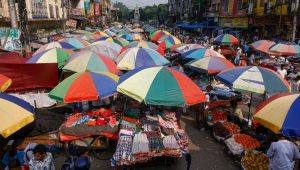
In Dhaka, the impact is visible among informal workers. Shahed, a street vendor from Barishal, says he has not been home for Eid in years. Living in a shared room to cut costs, he sends most of his income to his family.
“If I am not here, the income stops,” he says. “What I earn barely covers the basics. There is no surplus for a journey home.”
The daily economics are tight. Earnings are quickly absorbed by rent, food and transport costs, leaving little room for savings. For many, the result is not only financial hardship but also growing social distance from their families, as visits home become increasingly rare.
Official data suggests the strain is intensifying. The Bangladesh Bureau of Statistics reported a poverty rate of 18.7 percent in its 2022 Household Income and Expenditure Survey. However, analysts say high inflation since then has likely pushed more households into hardship, making earlier figures less reflective of current realities.
Rising transport costs during festive periods have compounded the problem. What was once a routine journey home for Eid has become unaffordable for many low-income workers, effectively excluding them from one of the country’s most important social and religious celebrations.
Economists argue that addressing the crisis will require structural reforms. Professor Shahadat Hossain Siddiqui says support must be directed towards the most vulnerable groups, particularly landless farmers and sharecroppers, who remain deeply embedded in poverty.
He also highlights the need for improvements in education quality and more stable employment opportunities.
Without such measures, the gap between income and living costs is expected to persist.
As the capital prepares for Eid celebrations, many migrant workers will remain behind, unable to return home. For them, poverty is not an abstract figure but the distance that separates them from their families at one of the most important times of the year.