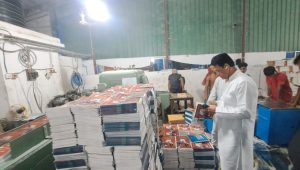



While residents of Mirpur Section 10 have enjoyed a brief respite on their newly cleared footpaths following recent council drives, pedestrians in New Market and central Dhaka face an escalating crisis.
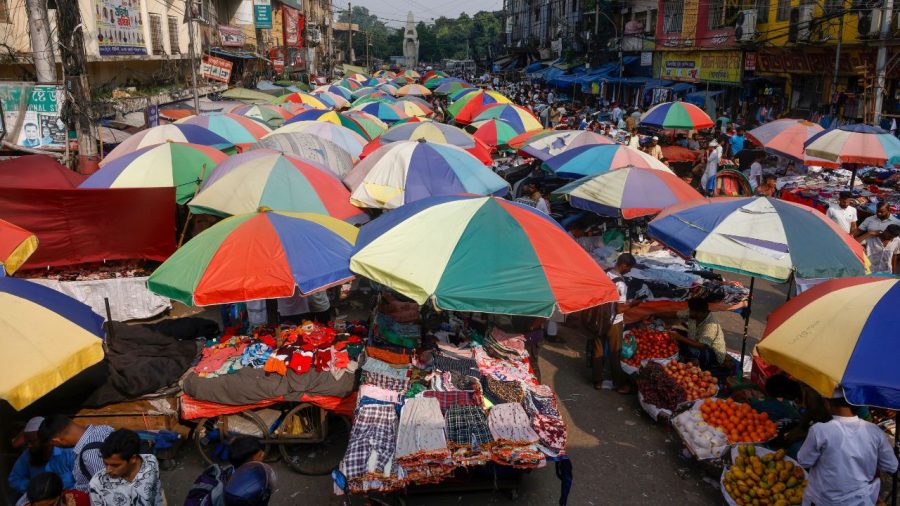
Illegal stalls have not merely reclaimed the pavements; they have spilled onto the main tarmac, swallowing up lanes of traffic.
The same chaotic scene plays out across the capital, from alternative sectors of Mirpur to Gulistan, Motijheel, Mohammadpur, Dhanmondi, Paltan, and Old Dhaka.
The stark contrast between enforcement hotspots and surrounding zones highlights a deeply fragmented campaign by city authorities.
“In the past, even if stalls blocked the footpaths, the carriageway remained clear,” said Md Shahin, a bus driver on the Fulbaria-Savar route.

“Now, hawkers occupy major sections of the road itself. Pedestrians are forced to walk alongside moving traffic, drastically increasing the risk of serious accidents.”
High-profile raids fail to stem the tide
During Sunday site visits across the New Market–Science Lab and Fulbaria-Gulistan-Zero Point corridors, vendors were seen operating unabashedly on the main carriageways.
The defiance comes just a week after Dhaka South City Corporation (DSCC) Administrator Abdus Salam personally led a high-visibility blitz through Fulbaria and Zero Point.
Enforcement, however, remains toothless.




Experience shows that while hawkers disperse as code-enforcement teams approach, they return within 60 to 90 minutes. Stalls made of tarpaulins, wooden pallets, and makeshift carts selling apparel, footwear, and fruit are rapidly redeployed on both pavements and main roads.
Outside New Market on Sunday, rows of temporary stalls lined the asphalt, drawing dense crowds of shoppers and choking traffic. Pavement conditions were equally dire: two lines of stalls present in the morning swelled to four by late afternoon.
“Business is being conducted right on the street, occupying half the road,” said regular commuter Sayeed Hasan. “The pavements are impassable, and stepping onto the road is dangerous. The heavy overcrowding also fuels pickpocketing and the harassment of women.”
Even local shopkeepers operating out of permanent premises condemned the tarmac spillover.
Tahin Sardar, a trader in New Market, said, “We set up our stalls leaving space for pedestrians on the pavement. Spilling onto the main road is wrong, it causes gridlock.”
Sardar added that larger retail store owners in the area often surreptitiously sponsor the roadside traders outside their shops.
The endless eviction cycle
The futility of current enforcement was laid bare on Sunday afternoon when DSCC Administrator Md Abdus Salam inspected the Fulbaria-Gulistan strip.
As police and official vehicles pulled up, hawkers hastily hauled their merchandise onto central reservation barriers and side alleys.
Within minutes of the official convoy departing, traders dragged their wares back onto the tarmac, resuming business as usual.
“The City Corporation declared this a hawker-free zone, but they provided no alternative sites for us,” said Md Rashed, a children’s clothes vendor.
“We have to sit here to feed our families. When the police vehicles arrive, we shift; once they leave, we set up again.” Fellow traders Amin Haq and Zohar Ali agreed, noting that while drives have intensified, livelihood pressures leave them no choice.
Addressing the ongoing impasse, DSCC Chief Executive Officer Md Khaibar Rahman said, “Arrangements have been made for the permanent relocation of hawkers. However, a firm timeline for implementing this solution remains undecided, and success will require the cooperation of residents, pedestrians, and traders alike.”