The inaction of India to respond to Dhaka’s formal request to begin negotiations on Ganges water sharing renewal has raised concerns over the future of one of the most sensitive issues in bilateral relations. There are only weeks left before the 1996 Ganges Water Sharing Treaty expires.
Bangladesh sent a formal letter to India in June seeking the commencement of negotiations, but New Delhi has yet to respond to the request, according to officials familiar with the matter.
The delay is drawing attention as the 30-year treaty is scheduled to expire in December. Bangladesh has already formed a 10-member technical committee headed by Prime Minister’s Adviser on Economic and Planning Affairs Rashed Al Mahmud Titumir to prepare for the renewal process.
The issue has acquired added significance amid Dhaka’s stated effort to reset relations with New Delhi following a period of strained ties.
Former ambassador Mahbub Hassan Saleh described the renewal of the Ganges treaty as an important test of the two countries’ stated intention to establish a more constructive relationship.
“The Ganges treaty will be a test case for normalising relations between Bangladesh and India,” Saleh told TIMES.
He said time was running short and that the lack of a response from New Delhi to Dhaka’s request for negotiations was not conducive to rebuilding confidence between the two neighbours.
“The time is running out. India is not responding to Bangladesh’s request, and this type of negative attitude will not help Dhaka to take New Delhi into confidence,” he said.

Saleh said India needs to move from general expressions of goodwill to practical engagement on issues that will start a people-centric and forward looking relationship between the two countries.
“Delhi needs to come forward and translate its words into actions,” he said.
A former Bangladesh High Commissioner who served in Delhi seeking anonymity said the absence of a renewed treaty or another agreed arrangement after December could create uncertainty over the sharing of Ganges water.
“In the absence of a treaty, India can act on its own,” he said, stressing that the expiry of the agreement could therefore have implications beyond the technical management of water.
He said the lack of progress on such a fundamental bilateral issue could hurt mutual confidence at a time when Dhaka and Delhi are seeking to improve their relationship.




“If India does not respond to Bangladesh’s request, it will inevitably hurt the bilateral relationship,” he said.
According to him, the issue is particularly important because India has repeatedly spoken about maintaining a good-neighbourly relationship with Bangladesh.
“On the one hand, they are talking about a good-neighbourly relationship, but on the other hand, we are not seeing the kind of gesture that would demonstrate that commitment,” he said.
He said timely engagement on the treaty would provide an opportunity for both sides to demonstrate that their stated interest in improving relations is backed by concrete diplomatic action.
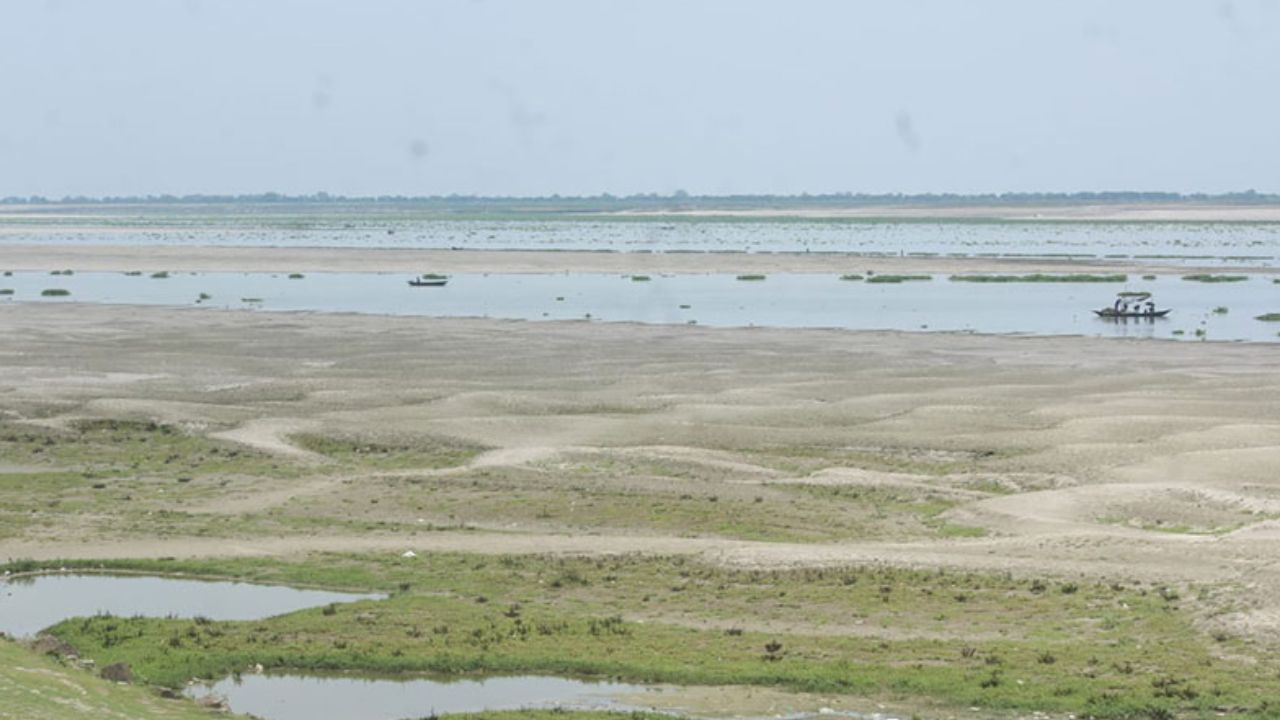
The 1996 treaty governs the sharing of the Ganges water at Farakka during the dry season and contains a formula for distributing available flows between the two countries. It was signed on 12 December 1996, for a period of 30 years and is due to expire this December.
The treaty has become even more important because water availability, climate patterns and the broader hydrological conditions of the Ganges basin have changed significantly since the agreement was signed three decades ago.
Indian and Bangladeshi experts have also discussed the need to take a broader, basin-wide approach to managing shared rivers. The Indian Council of World Affairs has similarly noted that climate change and changing hydrological conditions are among the factors shaping the renewal debate.
India has said discussions on the Ganges treaty will take place through existing bilateral mechanisms, particularly the Joint Rivers Commission (JRC), which deals with the 54 rivers shared by the two countries.
Indian foreign ministry spokesperson Randhir Jaiswal said in August that Bangladesh and India would discuss the issue through the existing bilateral framework.
The two countries’ Joint Rivers Commission has also remained engaged on technical aspects of the issue. Technical experts from the two sides visited Farakka and held discussions in May, while the JRC remains the established institutional mechanism for addressing shared-river issues.
However, Dhaka’s formal request in June to begin the renewal negotiations has yet to receive a formal response from New Delhi, according to Bangladeshi officials. The request was reported to have been sent on 8 June. Saleh said, “If response to a formal request from Dhaka on such an important issue is not received from New Delhi even in four months then the latter’s intention would naturally be questioned.”
The delay comes against the backdrop of broader tensions between Bangladesh and India following the ouster of former prime minister Sheikh Hasina in August 2024. Hasina has remained in India, while Dhaka has repeatedly sought her extradition.
The two countries have also faced disagreements over border management, trade, visa restrictions and other bilateral issues.
At the same time, the Bangladesh government has publicly expressed its desire to reset relations with India and establish a relationship based on mutual respect and engagement.
Against this backdrop, the Ganges treaty could become an early and highly visible test of whether Dhaka and Delhi can translate their stated interest in improving relations into substantive cooperation.
The stakes are not limited to diplomacy. The treaty directly affects the dry-season flow of the Ganges into Bangladesh, with implications for agriculture, fisheries, navigation, ecosystems and livelihoods in the country’s southwest.
The existing treaty provides for a formula based on water availability at Farakka and guarantees Bangladesh 35,000 cusecs during alternate 10-day periods between 11 March and 10 May.
For Dhaka, therefore, the immediate priority is to ensure that the expiry of the 1996 agreement does not create a legal or diplomatic vacuum.
For Delhi, an early response to Bangladesh’s request could help create space for substantive negotiations while demonstrating that the two countries are prepared to address their most difficult bilateral issues through dialogue.
With December approaching, officials and former diplomats in Dhaka say the window for meaningful negotiations is narrowing. The manner in which the two sides handle the treaty renewal could have implications well beyond the distribution of Ganges water; and become a significant indicator of the direction of Bangladesh-India relations.