
As time unfolds, it will be revealed whether there was a hidden conspiracy between the world powers of Putin and Trump, aimed at dethroning Maduro to seize control of rare-earth resources and dominate the geopolitical landscape of both the Western and Eastern hemispheres. The intrigue surrounding this potential alliance could dramatically reshape the understanding of international power dynamics.
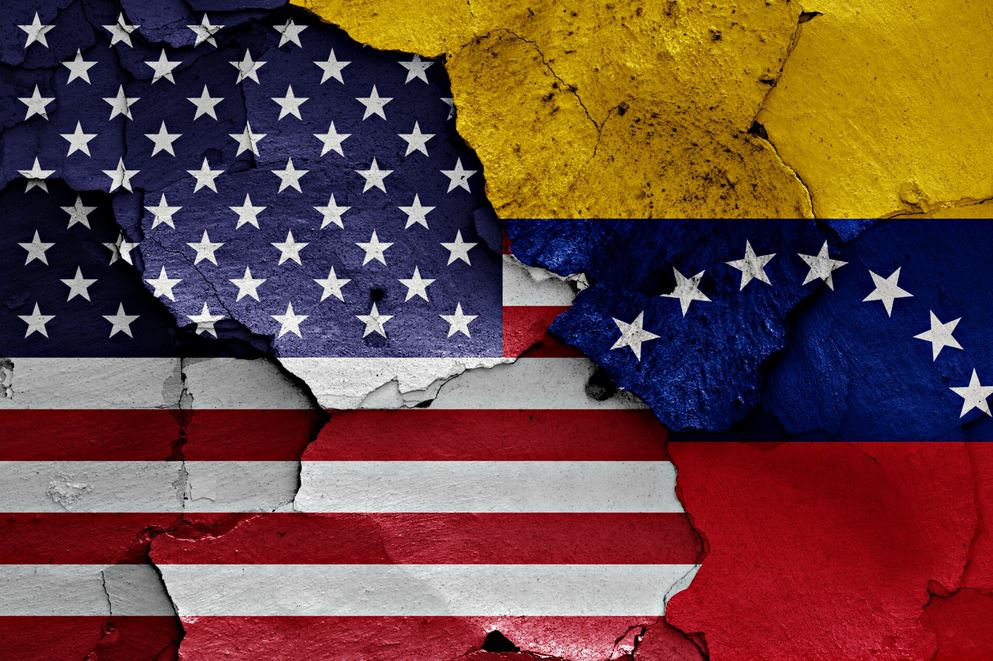
The recent U.S. military actions against Venezuela raise significant questions regarding their legal justification, as they appear to be primarily motivated by interests in oil, gold, and rare earth minerals. While much attention is often given to Venezuela’s vast oil reserves, it is essential to note that the country also possesses substantial gold reserves, totalling 161 metric tons. This amount translates to approximately 5.18 million troy ounces, valued at around $22 billion at $4,300 per ounce. This positions Venezuela as the Latin American nation with the largest gold holdings. Furthermore, Venezuela is recognised for having the world’s largest proven crude oil reserves, estimated at about 303 billion barrels, according to the U.S. Energy Information Administration. This figure represents roughly 17% of total global oil reserves, underlining the strategic significance of Venezuela’s natural resources on the world stage.
America’s resource control policy turns to invasion: The perspective that the United States engages militarily with oil-rich nations such as Iraq, Syria, Libya, and Iran primarily to secure their oil resources is a prevalent and complex viewpoint. Critics argue that control over these critical resources is a key motivator for U.S. interventions, particularly in the case of Iraq, where oil revenues were instrumental in funding post-war reconstruction efforts. Conversely, the U.S. government often cites humanitarian concerns such as the need to eliminate Weapons of Mass Destruction (WMDs) or to promote regional stability, as the official justifications for its military actions, illuminating the contrasting narratives surrounding American foreign policy objectives.
The National Observer notes that these actions not only highlight strategic interests but also reflect a broader pattern of prioritising resource control in international relations, raising questions about the implications for global stability and development.

Oil wealth of the top countries: Oil wealth accounting primarily examines proven reserves, which are the quantities of oil confirmed to be extractable, along with production levels. Countries such as Venezuela, Saudi Arabia, Iran, and Canada possess significant proven reserves, highlighting their potential for oil wealth. In terms of daily oil production, the United States, Saudi Arabia, and Russia are the leading producers.
Notably, nations like Saudi Arabia exhibit a high per capita value of oil wealth, even though global rankings can differ considerably. The global landscape of oil reserves and production highlights significant disparities among the top countries in both categories.
Venezuela leads the world with approximately 303 billion barrels of proven oil reserves, followed closely by Saudi Arabia with around 267 billion barrels. Iran, Canada (including its oil sands), and Iraq follow suit, holding 209, 163, and 145 billion barrels, respectively. Other notable contributors to proven reserves include the UAE at 113 billion barrels, Kuwait with 101.5 billion barrels, and Russia at 80 billion barrels, though the latter figure can vary by source.


The United States rounds out this list with about 45 billion barrels, while Libya and Nigeria collectively have around 48.4 billion barrels. In terms of oil production, the United States dominates the market, producing approximately 21.9 million barrels per day, accounting for 22% of the global output. Saudi Arabia comes next with a production level of 11.1 million barrels per day, while Russia follows closely behind at 10.75 million barrels per day, each holding an 11% share of global production.
In a Fox interview, Trump emphasized that the United States plans to play a significant role in the Venezuelan oil industry, highlighting that Venezuela holds the largest oil reserves globally. He mentioned a military operation that involved the CIA and US Delta Force soldiers, although the number of Venezuelan casualties remains unclear. This US intervention has faced widespread criticism internationally.
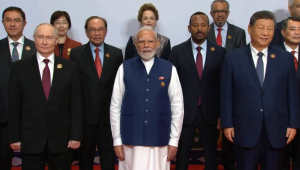
The world’s leaders condemned the US attack: On January 3rd, 2026, Firstpost reported that Venezuelan President Nicolás Maduro had received support from allies in the anti-U.S. camp, including Iran, China, and Russia, all of whom condemned the recent attack on Venezuela. Russia described the situation as deeply concerning, labelling the justifications for such actions as untenable and criticized the ideological hostility that has overtaken pragmatic considerations. They referred to the attack as an act of armed aggression and questioned what kind of bully targets a smaller neighbour. Similarly, China condemned the United States, characterizing the attack as hegemonic and a violation of Venezuela’s sovereignty.
Notably, a special envoy from China had recently met with Maduro in Caracas, marking him as the last foreign dignitary to do so. Iran also denounced the attack, calling it a blatant infringement on Venezuela’s sovereignty. In contrast, American allies, particularly in Europe, have responded with what appears to be a hypocritical stance.
The European Union has consistently asserted that Maduro lacks legitimacy and has resisted a peaceful transition of power, while simultaneously claiming that international law and the UN Charter principles must be upheld. They have called for restraint in the situation, which many argue is inadequate, especially considering that a sitting president was captured in the night.
Lessons to learn: The United States has experienced military involvement in various conflicts, such as Vietnam, Iraq, and Afghanistan, but there are concerns that it has not fully learned from these experiences. Critics often argue that American foreign policy resembles British colonial practices, with an emphasis on resource acquisition. Venezuela stands out as a significant producer and exporter of essential minerals, including bauxite, coal, gold, iron ore, and oil. Observers are noting the extent to which President Trump may influence oil and mineral extraction in other nations and whether his substantial investments in military initiatives and regime change will yield substantial returns or prove unproductive.
Such reckless invasions around the world do not demonstrate that America has the strongest military; instead, immoral attacks on sovereign countries reveal America’s weakness in both economic and foreign policy.
The writer is a freelance analyst