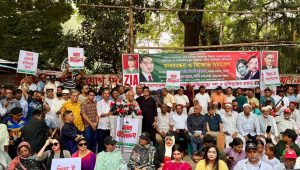
A factional divide within the ruling BNP in Sylhet came into sharp focus during President Mirza Fakhrul Islam Alamgir’s visit on Wednesday, after a key section of the party boycotted a civic reception held in his honour.
The snub exposed deep-seated tensions over organisational coordination, political leverage, and access to influential government appointments, even as the party remains outwardly united.
The reception, hosted by Sylhet City Corporation, was attended by top city BNP leaders alongside central and district-level activists. However, those who stayed away alleged they were bypassed during planning, accusing City Corporation Administrator and district BNP President Abdul Qayyum Chowdhury of acting unilaterally.
In a joint statement, Sylhet City BNP President Nasim Hossain and General Secretary Emdad Hossain Chowdhury revealed that prior meetings with the expatriates’ welfare minister and Sylhet deputy commissioner had agreed on forming an inclusive civic committee.

That committee was never established, leaving the city corporation to run the event independently. The aggrieved leaders reportedly met the president at the Circuit House to explain their decision not to attend. Qayyum did not respond to TIMES’ repeated requests for comment.
Party insiders view the row as the latest exposure of longstanding factionalism. In recent weeks, rival groups have taken divergent stances at civic and political events.
Earlier on 25 August, Expatriates’ Welfare Minister Ariful Haque Chowdhury and Sylhet WASA Chairman Miftah Siddique skipped the inauguration of the Sylhet Development Authority. When Commerce Minister Khandaker Abdul Muktadir opened the metropolitan BNP office on 1 September, several senior figures, including Sylhet Development Authority Chairman Rezaul Hasan Koyes Lodi and Administrator Qayyum, were omitted from the guest list.


Factional rivalry in Sylhet BNP dates back to the 1990s, evolving through leadership blocs centered around Khandaker Abdul Malik, M Saifur Rahman, and later the victim of enforced disappeared leader Ilias Ali. Now, the party is largely split between supporters of two local ministers–Commerce Minister Muktadir and Expatriates’ Welfare Minister Ariful, both advisers to the party chairperson Tarique Rahman.
Tensions mounted after Muktadir secured the nomination for the prestigious Sylhet-1 constituency, leaving Ariful to contest Sylhet-4.
Though both were elected and appointed to the cabinet of Prime Minister Tarique Rahman, Muktadir’s allies have swept key administrative posts, party sources said, adding high-profile loyalists, including Qayyum, Koyes Lodi, District Council Administrator Abul Kaher Chowdhury Shamim, WASA Chairman Miftah Siddique, and Jalalabad Gas Director Badruzzaman Selim, now hold significant institutional sway.
This concentration of authority has fuelled resentment among Ariful’s camp, who feel sidelined.
Underlying the rift is a fierce contest for local political supremacy, particularly the BNP nomination for the Sylhet mayoral race. Intriguingly, leaders associated with Muktadir’s network were prominent among those boycotting the reception, highlighting sub-factional dynamics within the minister’s own camp.
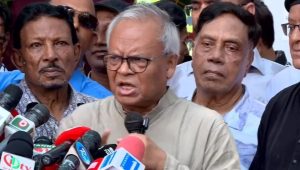
City unit BNP President Nasim Hossain downplayed suggestions of division, insisting the local unit remains “more organised and united than ever.”
“Compared with any previous time, city BNP is now more organised and united. Leaders and activists at all levels are invited to party programmes, and they regularly participate,” he claimed speaking to TIMES.
Meanwhile, BNP Central Organising Secretary GK Gaus acknowledged that expectations have surged following the party’s return to state power under Prime Minister Tarique Rahman.
He assured activists that those who made sacrifices during their years in opposition would be duly recognised.