Bangladesh’s cities are expanding faster than the infrastructure, services and institutions needed to support them, prompting urban planners, development organisations and policymakers to call for urgent action on housing, climate resilience and urban governance.
The warning came at the conclusion of the 9th Urban Dialogue 2026 in Dhaka, where participants adopted a 16-point declaration urging the government to accelerate implementation of key urban and climate policies to address mounting pressures created by rapid urbanisation.
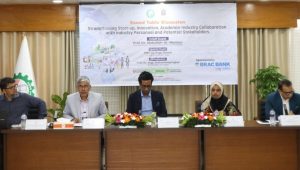
Organised by the Urban INGO Forum Bangladesh under the theme “Policies to Action: Transforming Cities for People”, the dialogue brought together government officials, academics, development agencies, urban activists and representatives from informal settlements to discuss the future of Bangladesh’s cities.
Participants called for immediate operationalisation of the National Urban Policy 2025, the Spatial Planning Act 2026 and the National Adaptation Plan (2023-2050), arguing that policy commitments must now translate into measurable improvements in urban living conditions.
Urban growth tests resilience
Speaking at the opening session, Ministry of Disaster Management and Relief Secretary Md Saidur Rahman Khan said Bangladesh’s achievements in disaster management must be matched by stronger urban preparedness as cities continue to expand.

He said rapid urbanisation has created new vulnerabilities that require closer coordination among government agencies and greater investment in disaster readiness.
According to Khan, the government has launched an initiative to develop nearly 100,000 urban volunteers to help respond to earthquake risks, with around 50,000 already enlisted. Authorities are also strengthening coordination among the Fire Service, Meteorological Department and other agencies while identifying assembly points, improving rescue capabilities and expanding public awareness programmes.
He said long-term resilience would require integrating disaster awareness into education, strengthening local capacities and making cities safer through canal restoration, tree plantation and adaptive urban planning.




The concerns were echoed by Institute for Planning and Development Executive Director Adil Muhammad Khan, who said urbanisation is currently outpacing municipal capacity.
Delivering the keynote address, he warned that infrastructure deficits and socio-economic disparities remain major obstacles to sustainable urban development as Bangladesh prepares for graduation from least developed country status.
Focus on housing and livelihoods
The declaration adopted at the dialogue called for greater recognition of informal settlements as integral parts of cities and urged authorities to ensure access to water, electricity and sanitation services regardless of land tenure status.
Participants argued that millions of low-income urban residents remain excluded from essential services despite contributing significantly to city economies.
The declaration also called for establishment of a National Heat Action Plan to address growing health risks associated with rising urban temperatures, particularly for vulnerable communities.
Discussions on urban livelihoods focused on integrating informal-sector workers into formal regulatory systems to improve working conditions and income security.
Participants also urged municipalities to formally recognise waste collectors and sanitation workers, ensuring fair wages, occupational safety and access to health protection.
Community representatives attending the dialogue shared experiences of heat stress, waterlogging and inadequate access to basic services, highlighting the widening gap between urban growth and service provision.
Declaration seeks implementation, not new promises
A recurring theme throughout the discussions was the need to move beyond policy formulation and focus on execution.
Participants said Bangladesh already possesses many of the frameworks needed to address urban challenges but implementation remains uneven.
The declaration advocates neighbourhood-based childcare centres, stronger climate adaptation measures and greater investment in green and blue infrastructure to reduce urban heat and improve resilience against flooding and other climate shocks.
The closing session was attended by Department of Disaster Management Director General Razwanur Rahman.