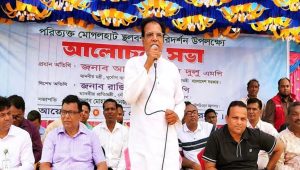
Arguments for and against a proposed 17 to 21 per cent hike in wholesale electricity prices were presented at a public hearing on Wednesday, with opponents stressing that the burden of increased production costs should not be shifted onto the public.
The hearing, organised by the Bangladesh Energy Regulatory Commission (BERC) at the Krishibid Institution Bangladesh in the capital’s Farmgate, saw conflicting views between state agencies, private organisations, and consumer representatives.
Proposals and financial pressures
The Bangladesh Power Development Board (BPDB) informed the hearing that it currently sells electricity at the wholesale level for Tk 7.04 per unit. It has proposed an increase of Tk 1.20 to Tk 1.50 per unit.
Meanwhile, the state-owned Power Grid Bangladesh (PGCB) has applied to raise the transmission charge from 30 paisa to 49 paisa – an adjustment of nearly 60 per cent per unit.
Justifying their proposals, the agencies cited rising production costs, fuel import expenses, and the government’s mounting subsidy burden. According to BPDB, the average production cost per unit is Tk13.19, leading to a projected sector deficit of Tk62,000 to Tk65,000 crore in the current financial year.

The PGCB added that a charge hike is necessary to manage national grid expansion, modernisation, maintenance, and the repayment of domestic and foreign loans and interest.
Vigorous opposition Political parties, business organisations, industrial entrepreneurs, and consumer rights activists countered these claims, alleging that the public is once again being made to pay for long-term flawed planning and wastage in the power sector.
Syed Mizanur Rahman, Organising Secretary of the Consumers Association of Bangladesh (CAB), argued that the government provides subsidies using public funds.

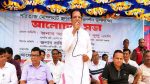
“Everyone is worried about the government’s accounts, but no one is thinking about how the people will survive,” he said, adding that pressure is being placed on consumers instead of taking effective action against irregularities and waste.
Ruhin Hossain Prince, leader of the Communist Party of Bangladesh (CPB), questioned the acceptability of the current process, noting that hearings almost inevitably result in price hikes. He remarked that BERC laws appear designed to prioritise hike proposals over price reductions.
Impact on industry and consumers
Representing the Bangladesh Knitwear Manufacturers and Exporters Association (BKMEA), Jamal Uddin Mia warned that the export sector is already facing a difficult period.
He stated that further price hikes would increase production costs, making it difficult to maintain competition in the international market. Mohiuddin, representing a mobile phone subscribers’ organisation, noted that citizens had expected the new government to reduce prices rather than discuss increases.
What’s the official stance?
BPDB Chairman Engineer Rezaul Karim explained that the proposed hike would not cover the entire deficit but would reduce the pressure on government subsidies.
He attributed the rapid rise in production costs to increased fuel prices in the international market and the devaluation of the Taka against the Dollar.
He further noted that a significant portion of power generation now relies on imported fuel and imports from India, leaving the sector vulnerable to global market fluctuations.
The BERC technical evaluation committee stated that the government currently provides a subsidy of approximately Tk5.47 per unit. A price hike of 77 per cent would be required to eliminate the need for subsidies entirely.
BERC Chairman Jalal Ahmed emphasised the need for policy changes and a greater focus on renewable energy, such as solar power, to eventually lower production costs.
Another public hearing regarding retail-level price hikes is scheduled for Thursday, where six distribution companies have submitted applications for increases ranging from 15 to 29 per cent for different consumer categories.