

Finance Minister Amir Khasru Mahmud Chowdhury has submitted the proposed budget for the 2026–27 fiscal year in the National Parliament. He has identified 10 priority areas, including development, education, healthcare, social protection, investment, energy, information technology and environmental management. The budget seems business-friendly to some extent, as some reforms proposed enhancing the business environment. Under the budget proposals, Tk400 crore has been set aside for startup capital, women’s development, women’s entrepreneurship, and young entrepreneur development under the ICT sector.
The government is taking up action plan for the ‘One Village, One Product’ initiative. Under the initiative, a range of products linked to the creative economy are being identified, including handloom products, pottery, weaving crafts, shital pati, shataranji, wooden toys, handmade jewellery, and terracotta items. An allocation of Tk300 crore has been earmarked for the creative economy to develop the country’s arts and culture-based industries. Tk2,000 crore has also been proposed as direct financial support for small and medium industries, alongside Tk17,000 crore in working capital loans to expand economic activity.
The government aims to double the rate of goods clearance under the System-Based Self-Assessment process for Authorised Economic Operator (AEO) enterprises. This will ease doing business and reduce the cost of doing business. The laboratory test of imported goods at the customs point is a major bottleneck in the import of various materials. To verify the quality and conformity of imported goods, customs authorities will be permitted to use not only government laboratories but also Bangladesh Accreditation Board-accredited private laboratories recognised under ISO standards. The government also proposed extending the customs duty exemption on chemicals imported by export-oriented factories for operating effluent treatment plants (ETPs) until June 30, 2027.
The FM also outlined a set of taxpayer-friendly reforms accompanying the budget, including simplifying corporate tax compliance, enabling online income tax return filing and payment, reducing regulatory burden on businesses, expanding allowable business expenditures, and scrapping provisions that disallow costs when withholding tax is not deducted. He added that the process of selecting tax cases for audit and withholding tax verification would be made fully transparent and automated. Unfortunately, the budget did not lower the corporate tax rate.

The FM proposed cutting withholding tax on 60 essential commodities to a uniform 0.5% in the 2026–27 budget, a move in line with an election pledge to bring relief after years of sharp price rises. The measure covers staple foods and agricultural goods, including rice, wheat, potatoes, cattle, poultry, fish, onions, garlic, ginger, salt, sugar, edible oil and seeds. It would replace existing rates of 5%, 2%, and 1% currently applied across different categories.
The government has given special attention to the jewellery industry and proposed implementing a series of measures to modernise the country’s jewellery industry and diversify export products by easing access to duty-free raw materials for export-oriented manufacturers. A new notification would be issued under the bonded warehouse system, allowing duty-free import of raw materials for jewellery production and the subsequent export of finished jewellery in a transparent, orderly and compliant manner.




To further expand export-oriented industries and diversify the country’s export basket, FM proposed allowing 10 new sectors to import raw materials against bank guarantees without requiring a bond license. The mandatory value addition of 30% will not exist from this year for exporting products manufactured from duty-free imported raw materials brought in against bank guarantees without a bond license.
The government also plans to complete company registration within 48 hours, issue work permits for foreign experts within seven days, and provide investor visas within 10 days. Applications may be deemed approved in certain cases if the relevant agency fails to respond within a prescribed timeframe.
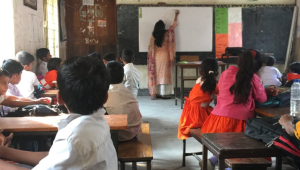
The total health budget is brought to Tk69,409 crore, equivalent to 1.01% of GDP – marking the first time that it has crossed this threshold. The budget also proposes several tax benefits for imported medicine raw materials, medical equipment and healthcare-related products, which would help reduce out-of-pocket expenditure, the main source to fund healthcare in Bangladesh. The tax concessions have the potential to reduce the cost of medicines, diagnostic tests and healthcare services for patients. Human resources and the health sector are preconditions for economic development and promote business. While presenting the national budget, the government announced a proposed allocation for the education sector of 2% of GDP in the upcoming fiscal year, with a total allocation of Tk 1,366.06 billion. In the fiscal year 2025–26, the allocation for the education sector was Tk 872.06 billion, equivalent to 1.39% of GDP. Although the proposed allocation increases to 2% of GDP, Bangladesh remains well below UNESCO’s 4-6% benchmark and lags several regional peers.
Additionally, the government has proposed a broad reform agenda that includes the gradual introduction of technical education from Grade 6, mandatory third-language instruction alongside Bangla and English, expansion of free undergraduate education for female students, and the ‘One Teacher, One Tab’ digital learning programme. The reforms in the education sector would also include AI-enabled learning initiatives, multimedia classrooms, expanded free Wi-Fi access, nationwide mid-day meals, and greater emphasis on sports, culture and co-curricular activities.
Despite the government’s emphasis on building a skills-based economy, Technical and Vocational Education and Training (TVET) has been allocated Tk12,678 crore, equivalent to 9.2% of the total education budget. Experts say the relatively modest allocation raises questions about whether funding levels match ambitions to expand technical education and meet labour market demands. An increase of this size is a positive development and reflects a commitment to increasing investment in the education and health sectors. Further improving educational and health service quality requires investment, not only in infrastructure, but also in other areas. We also need curriculum reform, textbooks, teacher development, sports, culture, technology, and robust planning and monitoring systems.
Despite repeated calls from the business community to lower corporate taxes, the government has kept corporate tax rates unchanged in the proposed budget for fiscal year 2026-27. Overall, the proposed budget reflects a positive sign of the deregulation agenda of the Government, which we welcome and appreciate very much. This is a generally positive signal to both local and foreign investors. The proposed reforms are subject to various rules and regulations issued by the NBR to implement this change in policies. The business community will carefully observe the subsequent rules and regulations.
The writer is the CEO, Bangla Chemical & Legal Economist. E-mail: [email protected]