The mass uprising that once reignited hope in Bangladesh’s political history has now reached a quiet, dispiriting end. I call this moment Inte-KAL: the twilight of an interim defined less by transition than by betrayal of its founding promise. To understand this disillusionment, one must return to July 2024.
That month, Bangladesh’s streets overflowed with people. After more than fifteen years of suffocating authoritarian rule, the state itself appeared to tremble. Within three days, the Awami League government collapsed. A single question echoed across the country: would politics finally return to Bangladesh?
On 8 August 2024, amid this surge of expectation, an interim government was formed under Nobel Laureate Professor Muhammad Yunus. Public faith in this administration was extraordinary. It was not seen merely as a stopgap, but as a vehicle of democratic renewal – tasked with rebuilding the foundations of justice, elections, and institutional reform. Phrases such as ‘a new political settlement’ and ‘a new Bangladesh’ carried real weight; they expressed collective aspiration rather than rhetorical flourish.
But time passed and reality diverged sharply from hope.
Over the following 19 months, Bangladesh experienced a severe deterioration in law and order. Political violence, mob attacks, and religious extremism surged simultaneously. While the government repeatedly promised reform, critics argue that virtually none of the substantive changes associated with reform materialised. Instead, indecision, bureaucratic inertia, and prolonged delays became the defining traits of the interim administration. Gradually, a troubling doubt took hold: would this government even relinquish power?

That doubt was rooted in recent history. Under the Awami League’s decade-and-a-half-long rule, Bangladesh had effectively become a depoliticised state – defined by the absence of opposition, unrepresentative decision-making, and governance without public consent. The July uprising was a direct response to this structural crisis. Citizens believed that after such sacrifice, politics would move from emptiness toward democratic substance.
Yet the language of hope faded with alarming speed. Responsibility for this failure does not lie with a single actor alone. It rests with the uprising-born interim government and nearly all political stakeholders who failed to rise to the moment.
The heaviest share of this responsibility lies with the government led by Professor Yunus. A segment of the uprising’s participants went on to form the National Citizen Party (NCP), initially seen as a promising alternative to entrenched political habits. That promise quickly eroded. The party’s rhetoric of ‘equality and human dignity’ hardened into empty slogans, while its silence on religious extremism, mob violence, and civil liberties became emblematic of political and moral failure.



In moments of democratic transition, silence is never neutral.
At the same time, liberal and progressive forces – long opposed to religious extremism – found themselves increasingly marginalised. Their arguments were dismissed as ‘elitist,’ ‘unrealistic,’ or ‘disconnected from the masses.’ As a result, aspirations for tolerance and social cohesion failed to translate into state policy, remaining confined to the realm of personal ethics rather than institutional commitment.
Ultimately, the blood and sacrifice of the uprising were absorbed into a bureaucratic governance structure driven by documents, rules, and gazettes. This administrative formalism permeated every major decision. Yet the public had not risen merely for procedural competence. They had demanded moral leadership. The gravest manifestation of this failure emerged through religious violence. Under the guise of ‘religious purification,’ more than a hundred shrines were vandalised or burned, dissenters were attacked, and men and women were subjected to intimidation and abuse. These acts not only damaged Bangladesh’s international image but also recast the July uprising itself as a precursor to rising fundamentalism. As the state lost both legal and moral authority, violence spread across every layer of social life.
In this context, the interim government’s silence, evasions, and its willingness to frame mob violence as ‘public anger’ deepened the crisis. The most severely affected were leftists, progressives, liberal-minded citizens, and followers of Sufi traditions within Islam. The irony is stark: many among these groups had previously supported the Awami League not out of ideological loyalty, but out of fear; seeing it as a bulwark against precisely this kind of fundamentalist violence. The crisis intensified further through the NCP’s silence and its political accommodation with historically controversial forces such as Jamaat-e-Islami.
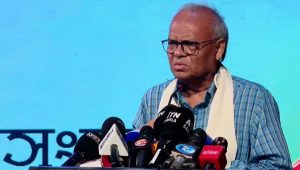
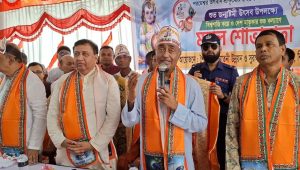
Professor Robayet Ferdous of the University of Dhaka stated at a press conference that “the achievement of the 18-month interim government is that Hindus, Buddhists, and Christians in Bangladesh have been permanently turned into second-class citizens.” The arson attacks on at least 19 Sanatan (Hindu) homes in Raozan and Mirsharai in Chattogram illustrate this reality.
According to Transparency International Bangladesh (TIB), between August 2024 and December 2025, 600 incidents of political violence occurred, leaving 158 dead and 7,082 injured. More than 550 of these incidents involved the Bangladesh Nationalist Party (BNP). TIB Executive Director Iftekharuzzaman has warned that even after a year and a half, the foundations of justice, reform, and credible elections remain fragile. Cultural life has also suffered.
On 18 April 2025, economist and activist Professor Anu Muhammad told a seminar organised by the Theatre Artists Association of Dhaka that cultural practice was being suffocated by ‘an environment of fear and control.’ He accused the interim government of betraying the uprising by simultaneously enabling religious fascism and corporate fascism. Earlier, on 28 September 2024, he had warned: “If we escape one form of fascism only to fall into another that will not do.” At the same event, former caretaker government adviser Hossain Zillur Rahman acknowledged that a government formed with revolutionary aspirations had instead deepened its dependence on conventional bureaucracy.
On 23 January 2026, political scientist Professor Rounaq Jahan observed that post-uprising Bangladesh has shifted from an atmosphere of fear to one marked by fear combined with intolerance, with the mob emerging as a defining political actor. Human Rights Support Society (HRSS), in a report published on 4 February, documented alarming increases in political violence, attacks on journalists, extrajudicial killings, and violence against women and children between September 2024 and January 2026. Finally, on 1 February 2026, in an interview with Al Jazeera, Mahfuz Anam, Editor and Publisher of The Daily Star, warned that an all-encompassing fear has descended upon journalism in Bangladesh, where even slight deviations from the dominant narrative invite physical attack.
This, then, is the journey of Bangladesh’s interim period: a historic uprising that began with hope, and an interim government that quietly, steadily eroded it. History may one day remember Inte-KAL not as a bridge to democratic renewal, but as the squandering of a rare and consequential opportunity.
The writer is an Associate Professor, Communication and Journalism, University of Chittagong
The views expressed in this article are solely those of the author