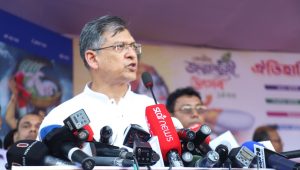
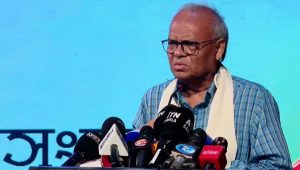
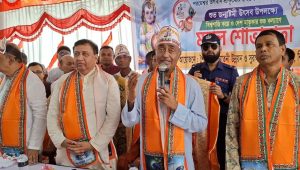
Fifty-four years after independence, questions continue to surround the political progress and moral standing of Bangladesh Jamaat-e-Islami. From politicians to ordinary citizens, debates persist about whether the Islamist party has truly evolved or remains trapped in the shadows of its controversial, dark past.
Analysts and historians say Jamaat has yet to issue a clear and unconditional statement on its role during the country’s Liberation War and other historical episodes that have shaped national memory. Instead of acknowledging mistakes, the party is often seen as attempting to sidestep responsibility — a tendency that, many believe, has kept it from moving forward.
At the same time, there is widespread uncertainty about what Jamaat’s governing policies would look like if it were ever to come to power. “Most people still have no idea what kind of state policy Jamaat would pursue,” said one historian. “That lack of clarity continues to hold the party back.”
Even so, analysts agree that Jamaat’s popularity has increased modestly since the mass uprising that ended on 5 August last year. The party and its student wing, Islami Chhatrashibir, played visible roles during the protests that toppled the previous government — and some believe that helped improve their public image.
Attempt to rebrand
Despite this, a significant portion of Bangladesh’s population still views Jamaat with suspicion, a perception reflected in its historically low vote share. Yet observers acknowledge some of the party’s internal strengths: democratic leadership elections, organisational discipline from top to grassroots, and a relatively clean record on corruption compared to other major parties.
Since the recent political upheaval, Jamaat has taken several steps to present itself as a more modern and inclusive organisation. The most notable is the launch of an open “non-Muslim wing” — the first of its kind in the party’s history — along with a pledge to nominate non-Muslim candidates in future elections.
The party has also intensified student outreach. Its student organisations — Islami Chhatrashibir and the female-led Islami Chhatrisangstha — achieved surprise victories in student union polls at four public universities, results that Jamaat hopes signal a new generation of support.

“Patriotism” has become a new buzzword in the party’s campaign messaging. Jamaat leaders say they are trying to reshape their image as a patriotic political force, not a religious hardline group.
Lingering distrust and gender concerns
Despite these efforts, mistrust remains deep-seated. According to Bangladesh’s 2022 census, women make up more than 51% of the population — and many female voters remain sceptical of Jamaat’s commitment to gender equality.
“A lot of women believe Jamaat would confine them indoors if Sharia law were imposed,” said a political analyst. “The perception may not be fully accurate, but the party has done little to dispel it.”
Party officials counter that the fears are based on “imagined assumptions.” They insist that Islamic law, as they interpret it, would guarantee women’s active participation in all areas of life.
Research and historical views
Several academic studies have traced Jamaat’s political evolution. Historian Mohiuddin Ahmad, in his book Jamaat-e-Islami: Uththan, Biporjoy, Punorutthan (Rise, Fall and Revival), wrote that Jamaat remains one of Bangladesh’s most disciplined political organisations but continues to be viewed negatively because of its position during 1971.



He noted that during the Liberation War, the party stood “against the people’s aspirations,” siding with Pakistan’s military, which carried out widespread atrocities. “The collaborators included sections of the civil administration and several political parties — including Muslim League, Nezame Islam, PDP, and Jamaat-e-Islami,” he wrote.
Ahmad observed that after independence, religion-based politics was banned until the political reversal following Sheikh Mujibur Rahman’s assassination in 1975. “From then on, Jamaat re-emerged as a political force,” he said, adding that the party could still be considered the “third largest” after the Awami League and BNP.
Indian scholar Dr Moeedul Islam, in his Cambridge-published book Limits of Islamism: Jamaat-e-Islami in Contemporary India and Bangladesh, argued that while Jamaat is not irrelevant in Bangladesh, it has failed to achieve the mass appeal it seeks. He noted that “anti-capitalism and anti-Americanism,” often seen as hallmarks of Islamist politics, are now “rare in Bangladesh’s Jamaati discourse.”
Analysts’ views
Historian Mohiuddin Ahmad told TIMES of Bangladesh: “It’s difficult to say how far Jamaat has progressed, but its support base is larger than many assume. Leaders are elected democratically — something we don’t often see in other parties. Still, before seeking power, Jamaat must clarify what kind of state policy it wants to pursue.”
Professor Dilara Chowdhury, a retired political scientist from Jahangirnagar University, agreed that Jamaat’s organisational discipline and low record of corruption were commendable. But she criticised its “failure to confront its past.”
“Even setting aside the 1971 issue, Jamaat has never apologised for its hisorical role. Instead, it has tried to sidestep it,” she said. “There’s also widespread negativity about its position on Sharia and women’s rights. Still, the party’s public support has definitely increased.”
Dr Abdul Latif Masum, former vice-chancellor of Patuakhali Science and Technology University, said Jamaat’s growing support did not yet make it “a true people’s party.”
“The party practises internal democracy and has some positive traits, but it must learn from its past mistakes,” he added.
Recalling the 1996 election, he said Jamaat erred by aligning with the movement that ultimately brought the Awami League to power. “The party should have been clearer in its political messaging and avoided repeating such strategic missteps,” he said.
Jamaat’s response
In a recent event in New York, Jamaat Ameer Shafiqur Rahman stated that the party “unconditionally apologises for any mistakes committed since 1947, including during the Liberation War.”
Dr Syed Abdullah Mohammad Taher, Jamaat’s nayeb-e-amir, told TIMES: “There is nothing in Jamaat’s record that harms the people’s interests. We are a fully democratic party. There are no allegations of corruption and extortion against us. Since critics can’t find new issues, they keep dragging up the past.”
On Sharia and women’s rights, Dr Taher said: “People criticise without understanding. Sharia does not confine women; it ensures their active participation in society.”
AHM Hamidur Rahman Azad, assistant secretary-general, said: “In 1996 we didn’t rehabilitate the Awami League — we fought for the caretaker government system. It was BNP’s missteps that brought the Awami League back to power. We’ve already clarified our position on historical matters repeatedly.”
Controversial role in its creation and historical context
On 26 August 1941, Abul A’la Maududi founded Jamaat-e-Islami Hind in Lahore. Subsequently, Jamaat opposed the creation of Pakistan. After the establishment of Pakistan, Jamaat-e-Islami was divided into two branches — one in India and the other in Pakistan. The party did not support the Muslim League, which was the largest party in the 1946 elections.
Later, in 1966, Jamaat opposed the Six-Point Programme proposed by the Awami League as well as the Eleven-Point Programme introduced by Maulana Abdul Hamid Khan Bhashani. During the 1969 mass uprising, Jamaat opposed the movement and took a stand against Bengali nationalism.
In 1971, the party opposed Bangladesh’s War of Independence. At that time, many of its leaders collaborated with the Pakistani army by forming the Peace Committee, Razakar, and Al-Badr forces. According to historians, Jamaat leaders, along with the Pakistani army, bear responsibility for the deaths of three million people during the war. After the country gained independence, the East Pakistan branch of Jamaat transformed into Bangladesh Jamaat-e-Islami. Following the Liberation War, Jamaat remained banned. Some of its leaders, including Ghulam Azam, went into exile in Pakistan.
After the brutal killing of Sheikh Mujibur Rahman on 15 August 1975, the government of Ziaur Rahman issued an ordinance in 1976 allowing all political parties to resume activities, enabling Jamaat to return to politics. Following Ghulam Azam’s return to the country, the party was renamed Jamaat-e-Islami Bangladesh in May 1979. Since independence, Jamaat participated in parliamentary elections from 1979 to 2008 and maintained varying levels of representation, although its vote share remained low.
In 1996, the party joined the movement with the Awami League demanding a caretaker government. After the Awami League came to power in that election, it turned against Jamaat. In 2001, Jamaat formed an electoral alliance with the BNP and together they won and formed the government.
After overcoming the 1/11 political crisis, the Awami League returned to power through the 2008 election and began prosecuting Jamaat leaders for war crimes. In 2013, Jamaat’s registration was cancelled. Through the one-sided elections of 2014, 2018 and 2024, the Awami League retained power and provided no political space for Jamaat. Five of Jamaat’s top leaders were executed for war crimes, while three others died in prison while serving their sentences.
Most recently, on 1 August 2024, the government banned Jamaat-e-Islami and its student wing Islami Chhatra Shibir on charges of involvement in the July uprising. Twenty-six days after the fall of the Awami League, the interim government revoked that order.