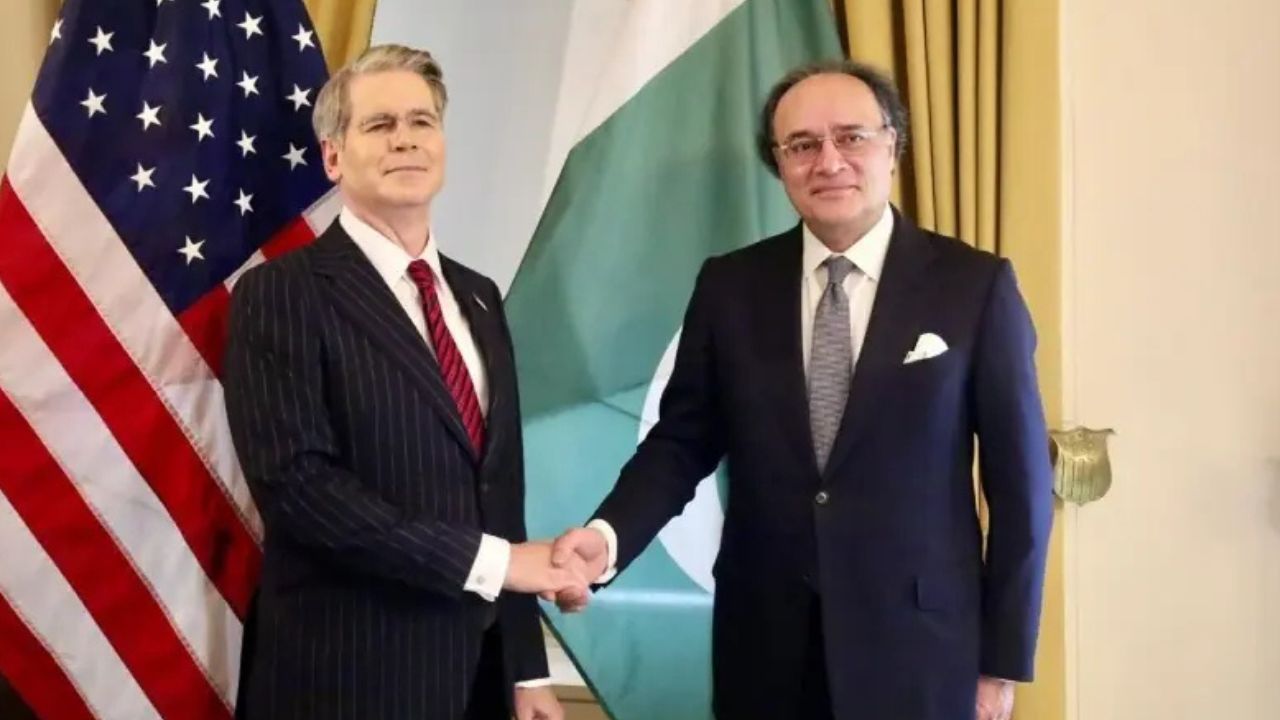

Pakistan has formally requested a $10 billion Exchange Stabilisation Support Facility from the United States, a rare form of bilateral financial assistance that could significantly strengthen its external finances if approved.
Finance Minister Muhammad Aurangzeb presented the proposal during talks with US Treasury Secretary Scott Bessent in Washington on Tuesday, Gulf News reports.
Pakistan’s embassy confirmed the meeting but did not disclose details, while the US Treasury declined to comment.
Reuters reported that Islamabad is seeking a facility with a maturity of up to five years, providing access to US dollar financing through the Treasury’s Exchange Stabilisation Fund.
Officials say the arrangement would help Pakistan boost foreign exchange reserves, stabilise the rupee, ease external debt repayment pressures and improve investor confidence. It would also reduce reliance on multilateral lenders such as the International Monetary Fund (IMF).

Credit Ratings and Market Access
In a statement, Pakistan’s Finance Ministry said Aurangzeb sought greater US support to improve access to international capital markets, strengthen reserves and enhance sovereign credit ratings. The statement did not explicitly mention the $10 billion request.
Pakistan is currently implementing reforms under a $7 billion IMF programme, following a severe balance‑of‑payments crisis that nearly led to default in 2023.
While the programme has stabilised the economy, the country remains heavily dependent on external financing from multilateral institutions and allies including China and Saudi Arabia.




An exchange stabilisation facility would provide an additional cushion against currency volatility and financing pressures.
Economic Ties with Washington
The request comes as Islamabad seeks to deepen economic ties with Washington. Recent cooperation has expanded into investment discussions in mining, real estate and digital finance. US‑backed financing has been announced for the Reko Diq copper and gold project, and both sides are exploring broader partnerships.
Analysts note that if approved, the facility would be one of the largest bilateral support arrangements ever extended by the US to Pakistan, sending a strong signal of confidence to international investors. A $10 billion package would bolster State Bank reserves, strengthen the rupee, reduce borrowing costs and improve Pakistan’s credit profile.
Why It Matters
Such facilities are rare. The US Treasury has approved very few in recent decades — Argentina received one in 2025, while Uruguay was the previous recipient in 2002.
If Washington agrees, it would mark a major strengthening of US‑Pakistan economic relations and signal greater US confidence in Islamabad’s reforms.
What Is an Exchange Stabilisation Support Facility?
It is a mechanism through which the US Treasury provides dollar loans, credit lines or currency swap arrangements to help countries maintain adequate reserves and prevent instability in their currency.
The proposed facility is expected to strengthen Pakistan’s foreign exchange reserves, stabilise the rupee, and bolster confidence in the country’s financial position.
It would provide crucial support as Islamabad continues to implement fiscal and monetary reforms under its ongoing IMF programme.
Why Pakistan Wants It
Despite reforms, Pakistan continues to face several economic challenges. Its foreign exchange reserves remain relatively low, leaving the country vulnerable to external financing pressures.
Large external debt repayments are due over the coming years, adding strain to the economy. The rupee also remains exposed to external shocks, making the currency highly vulnerable to volatility.