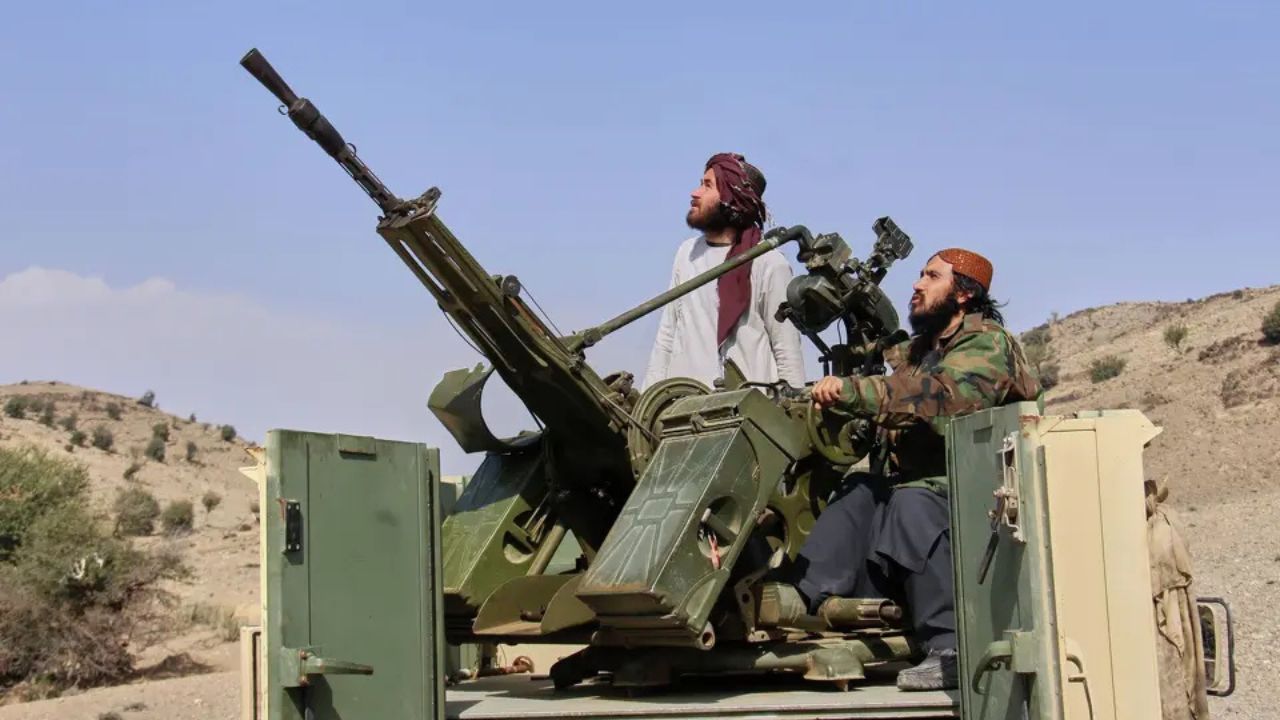



In one of the most serious military confrontations in South Asia in decades, Pakistan and Afghanistan have entered open warfare, marked by cross-border strikes and intensifying clashes that signal a dramatic deterioration in relations between the two neighbours.
The conflict erupted sharply on Friday morning when the Pakistan Air Force conducted a series of air strikes on multiple targets deep inside Afghan territory, including installations in the capital region and key provinces in the east and south, according to international media.
Islamabad says the operations were directed at militant bases and defensive positions held by Afghan forces, and that they inflicted significant losses on enemy personnel. Kabul has confirmed the strikes but disputes the reported figures, and has denounced the attacks as violations of Afghan sovereignty.
Officials in Islamabad say the offensive was triggered by a marked increase in cross-border attacks on Pakistani security posts in recent months. The defence establishment describes its actions as a necessary response to what it calls a sustained campaign by armed groups operating from Afghan soil.
A senior military spokesperson said Pakistan’s “patience has been exhausted,” and that the government feels compelled to respond decisively to threats against its territory and people.
In response to the air raids, Afghan defence sources announced that their forces had launched retaliatory operations along the disputed frontier — known as the Durand Line — and asserted that they had captured several Pakistani outposts in fierce ground fighting.

Kabul officials claim that scores of Pakistani soldiers were killed and that Afghan units have made tactical gains, though these assertions cannot be independently verified and differ sharply from figures released by Islamabad.
A conflict built on long-standing grievances
Analysts say the current crisis did not emerge suddenly but has been building for years.
Relations between Islamabad and Kabul have long been strained by disagreements over border management, mutual accusations of supporting militant groups, and competing geopolitical interests. The Durand Line, a legacy of colonial-era boundary demarcation, has never been formally accepted by successive Afghan governments and remains a flashpoint in bilateral relations.



The situation worsened after the return to power of the Taliban administration in Afghanistan in 2021. Pakistan has repeatedly accused the Afghan authorities of allowing militant factions — including groups hostile to the Pakistani state — to operate with relative freedom within its borders. Kabul, in turn, has denied any formal support for these groups, and insists it does not control all armed elements within its territory.
In recent months, border posts on both sides have been subjected to artillery exchanges and sporadic raids, leading to casualties among military personnel and civilians.
Efforts to ease tensions through diplomatic engagement have repeatedly stalled, and a fragile ceasefire agreed late last year under external mediation collapsed as violence escalated.
Human impact and regional reactions
The consequences of the conflict for civilians are becoming increasingly apparent.
Explosions in populated areas of Kabul and other Afghan cities have been reported, raising concerns about casualties and displacement. International humanitarian agencies warn that continued fighting could force more families to flee their homes, adding to already high levels of internal displacement and refugee flows in the region.
The crisis has also heightened fears among neighbouring countries and global powers.
Nations across Asia, Middle East and beyond have called for restraint and an immediate cessation of hostilities. Diplomatic statements from capitals in Europe, Gulf and China urge both sides to step back from the brink and return to negotiations, warning that the conflict could destabilise the wider region if left unchecked.
Human rights experts have highlighted the risks posed by air strikes in densely populated areas, noting that international humanitarian law requires all parties to take precautions to avoid civilian harm. Analysts also point out that the increased militarisation of the conflict could limit the scope for peaceful resolution and entrench cycles of retaliation.
No clear roadmap to peace
At present, there are no signs that the fighting will de-escalate in the near term.
Both Pakistan and Afghanistan have reaffirmed their commitment to their respective military strategies, and there appears to be little willingness on either side to back down. Diplomats say that deep mistrust and competing security priorities will make negotiations difficult unless mediated by trusted external parties, and even then, progress is likely to be slow.
Observers note that the current conflict reflects broader challenges in South Asia, where historical animosities, unresolved border disputes and the activities of armed non-state actors have repeatedly undermined stability.
The spectre of a protracted confrontation between neighbouring Muslim-majority states also carries implications for global security, given Pakistan’s strategic alliances and nuclear capabilities.
For ordinary people living along the frontier and in major urban centres, the immediate concerns are survival and safety. Families in affected areas report shortages of essential supplies and disruption to daily life as air raid sirens and artillery fire punctuate what were once relatively peaceful routines. Aid groups warn that without urgent humanitarian access, vulnerable populations will face mounting hardship.
As the conflict enters what many analysts describe as a dangerous new phase, the world watches closely, mindful that the impact of the war will extend far beyond the rugged borderlands where it began.