


Braving the searing heat of Chaitra, the Faculty of Fine Arts at the University of Dhaka has become a vibrant hub of colour and creativity, as artists and students put the final touches on preparations to welcome the Bengali New Year.
Across the campus, paintbrushes moved steadily over masks, birds and intricate motifs, transforming simple materials into striking works of art ahead of Pahela Baishakh, marking the arrival of the year 1433.
The country is ready for the celebration, casting off the fatigue of the past year and embracing new hopes, with the university’s Fine Arts faculty at the heart of the preparations.
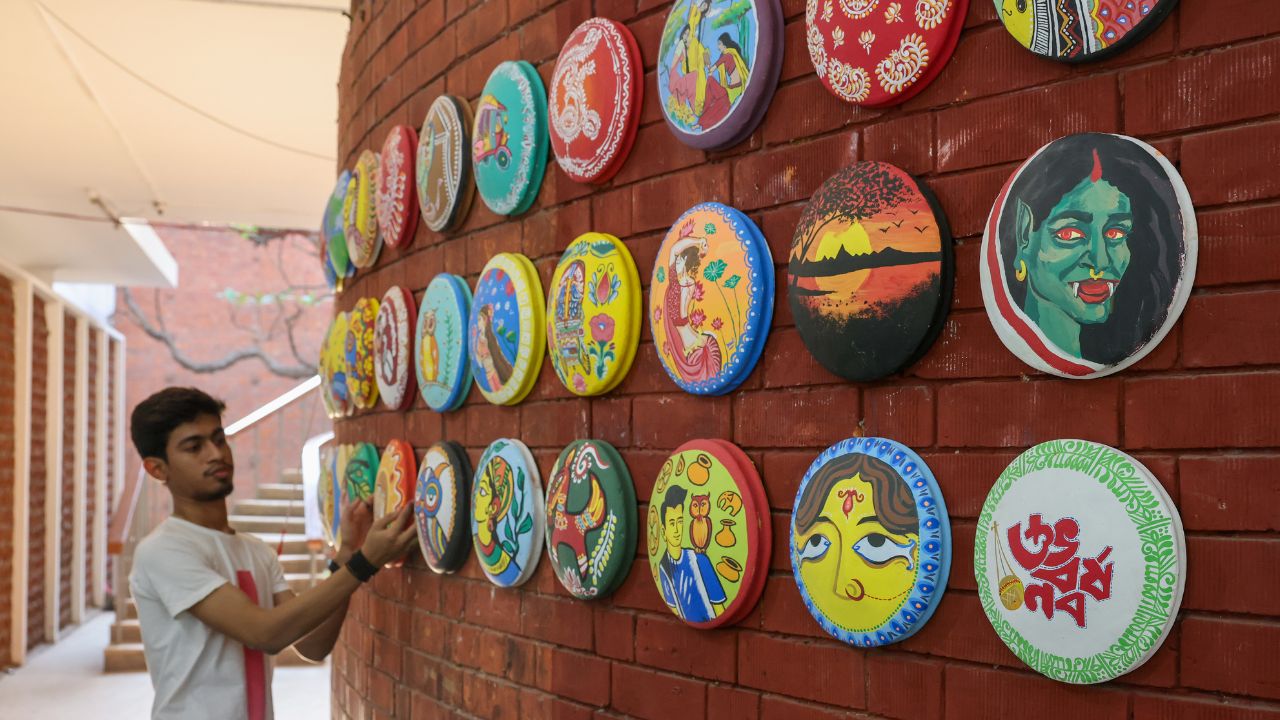
A visit to the faculty on Monday afternoon showed walls covered with murals inspired by rural folk traditions, while in front of the Zainul Gallery, artists were busy painting alpana on earthen plates, crafting masks and recreating scenes from village life.
Many of the artworks were being sold to raise funds for the annual procession, a key feature of the New Year celebrations.
The colourful parade, long regarded as the main attraction of Pahela Baishakh, has been named the “Baishakhi Shobhajatra” this year, with the theme “Unity of the New Year, resurgence of democracy”.
“Our aim is to create a cultural convergence that is as inclusive and vibrant as possible,” said Dhaka University Fine Arts Faculty Dean and New Year Celebration Committee Member Secretary Md Azharul Islam Sheikh.

He added that efforts were under way to make the event more inclusive and colourful, with support from the faculty, the university and other cultural stakeholders.
As part of the celebrations, traditional jatra performances titled “Bagdatta” and “Devi Sultana” will be staged on Wednesday and Thursday, featuring current and former students of the university alongside performers from Prottoy Bangladesh.
Five motifs for the procession
This year, five large motifs will define the new year procession: a red-crested rooster, a wooden elephant, a dove of peace, a dotara, and a horse.
Organisers say each carries symbolic meaning, with the rooster representing new beginnings and awakening, the dotara evoking cultural roots, the elephant symbolising strength and tradition, the horse recalling rural life, and the dove conveying a message of harmony.
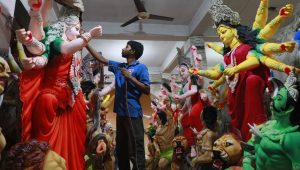
Alongside these, a range of traditional scroll paintings are being created, depicting elements of Bangladesh’s cultural heritage, including figures such as Gazi, Bonbibi and Behula.
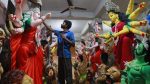


As preparations near completion, the faculty grounds are drawing large crowds of students and visitors eager to watch the work unfold.
Mahfuzul Hossain Piyal, a student at the University of Dhaka, said he found this year’s preparations more impressive than previous ones.
“There is a unique joy in watching the artists at work, especially the making of masks and portraits,” he said.
Restrictions in place for procession
The Dhaka University administration has announced a series of measures to manage crowds and ensure security during the Pahela Baishakh procession.
In a statement, it said the procession will begin at 9am on Tuesday from in front of the Faculty of Fine Arts, with preparations starting from 8am.
The route will start from the faculty’s Gate 3 (north), proceed towards Shahbagh Police Station where it will make a U-turn, and then pass by the Raju Memorial Sculpture and the Teacher-Student Centre (TSC) on the right, before moving through Doel Chattar and in front of Bangla Academy, ending back at the Faculty of Fine Arts.
Participants will only be allowed to enter the campus through Nilkhet and Palashi intersections, while other entry points and adjacent roads will remain closed during the procession.
To maintain order and visual coherence, the administration has urged participants not to join midway and instead take part from the designated starting or ending points.
For security reasons, attendees have been asked to carry valid identification.
The authorities have also banned entry to the campus with masks and bags on Pahela Baishakh, although masks prepared by the Faculty of Fine Arts may be carried and displayed by hand.
The use of English-language placards, flying balloons or festoons, and the use of fireworks have been prohibited, while participants have been requested to refrain from playing or selling vuvuzelas.
Several gates of Suhrawardy Udyan will remain closed during the procession, including the gate behind the Raju Memorial Sculpture near the TSC, the Charukola gate adjacent to Chhobir Haat, and the gate near Ramna Kali Temple in front of Bangla Academy.
All events on campus must conclude by 5pm on the day, and entry will only be permitted until that time, after which only exit will be allowed.
From 7pm on Monday, only vehicles with university stickers will be allowed to enter the campus.
Residents on campus will be able to use only the gates near Nilkhet and Palashi.
To support visitors, help desks, a control room, and temporary medical camps will be set up in front of the TSC.
Authorities said adequate CCTV cameras and archways will also be installed across the campus to strengthen security arrangements.