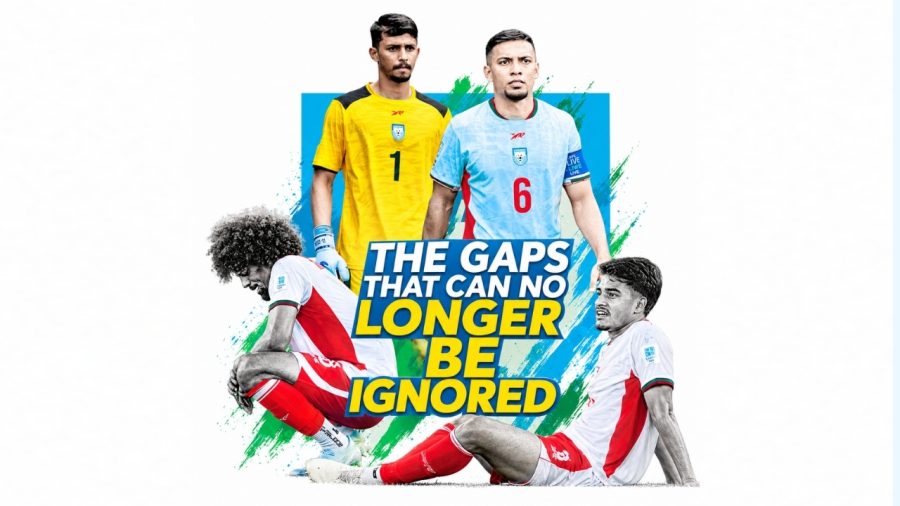



For supporters who started dreaming of Asian Cup and World Cup qualification, Bangladesh’s first FIFA ASEAN Cup campaign produced a brutal reality check. Three defeats against Malaysia, Singapore and Indonesia, 13 goals conceded and only two scored exposed a gap that goes beyond one bad night in Jakarta.
The defeat also raises a more uncomfortable question: have Bangladesh been preparing aptly for the level they want to reach? The gap did not suddenly appear in Jakarta; the tournament simply made it impossible to ignore. The result did not create these questions. It removed the room to avoid them any longer.
The first problem sits in the friendly calendar. From October 2022 to October 2026, Bangladesh played 14 official friendlies. The programme included opponents such as Cambodia, Seychelles, Afghanistan, Bhutan, Maldives and Nepal, while Vietnam and San Marino offered less familiar tests. The issue is not the results alone. Bangladesh rarely used friendlies to measure the team against opponents operating at a clearly higher level.
Former national team veteran and coach Shafiqul Islam Manik told TIMES that a new coach needed stronger tests before taking Bangladesh into the ASEAN Cup. “As a new coach, Thomas Dooley should have played two or three strong matches before this tournament. He needed to test the team against stronger oppositions,” Manik said.

Preparation created the second gap. Bangladesh’s 2025-26 league ended on May 23, and the national camp started August 27. That left a long stretch without domestic competitive football before the tournament.
Former national captain Mamunul Islam said the break damaged Bangladesh’s readiness. “For two and a half months, the players did not have systematic training. Then, after that gap, they went into a tournament like this with only two or three weeks of preparation,” Mamunul told TIMES. “You then have to choose between fitness work and preparing the team system. Our preparation was not good.”
The third gap concerns the level of competition around the players. Malaysia included newly naturalised players Brad Tapp, Manuel Hidalgo and Bergson da Silva. Indonesia went further, with a squad containing several footballers based in Europe, including Kevin Diks, Calvin Verdonk, Justin Hubner, Ivar Jenner and Nathan Tjoe-A-On. Bangladesh had overseas-based players too, but the depth of high-level club exposure remained different.
Biplob Bhattacharjee, Bangladesh’s former goalkeeper and captain, said the difference goes beyond international caps. “Our problem is development,” Biplob told TIMES. “We need to develop players who can handle pressure and compete internationally. We cannot keep playing against Bhutan and Sri Lanka and expect to match ASEAN teams.”




That raises another question about the tournament itself. Bangladesh entered the ASEAN Cup with the SAFF Championship in Dhaka only weeks away, and Dooley had already positioned the regional tournament as preparation for SAFF. Manik believes that caused the downfall. “It is also possible that we treated these matches as preparation for SAFF, and did not give this tournament enough importance,” he said.
Bangladesh also fielded a young squad, with several players entering this level without extensive international experience. Biplob said the players need time to absorb Dooley’s philosophy and game model. He also pointed to the team’s failure to regain the ball quickly after losing possession. “Good teams recover the ball within five to eight seconds. We were not fulfilling our responsibilities in those moments,” he said.
The 9-2 scoreline inevitably put goalkeeper Mehedi Hasan Srabon under scrutiny. Srabon, however, made important saves against Singapore and Indonesia, while Bangladesh conceded repeatedly because the defence and midfield failed to protect their own goal.
Biplob rejected the idea of a goalkeeper-only explanation. “Goalkeeping cannot take the blame alone. In modern football, the goalkeeper must communicate with the defensive line and midfield, but the whole team must defend properly. Every department failed from A to Z, and that is why we suffered this disaster,” he said.
Now comes the question dominating the reactions at home: should Dooley keep his job? Calls for a coaching change have intensified after the 9-2 defeat, but Bangladesh’s former players and coaches do not see four months as enough evidence to make that decision.
Mamunul also pointed to another way to strengthen the squad while domestic development improves. He suggested Bangladesh should identify more players abroad who can represent the national team and add quality to the squad.
Manik said Dooley deserves more time. “It is too early to say that Thomas Dooley has reached the point where the coaching staff should change. The federation brought him in after seeing and assessing him, to give him time,” he said.
Mamunul made the same argument from a preparation standpoint. “He has had four months. In four months, are you going to win the World Cup? Of course not. A coach needs time to prepare a team,” he said.
Manik’s prescription goes beyond the next tournament. He said Bangladesh must use stronger opponents, improve preparation and play more teams from higher levels. The aim, he argued, should be to move beyond the SAFF level, gain South-East Asian exposure and prepare the national team to compete at that level consistently.