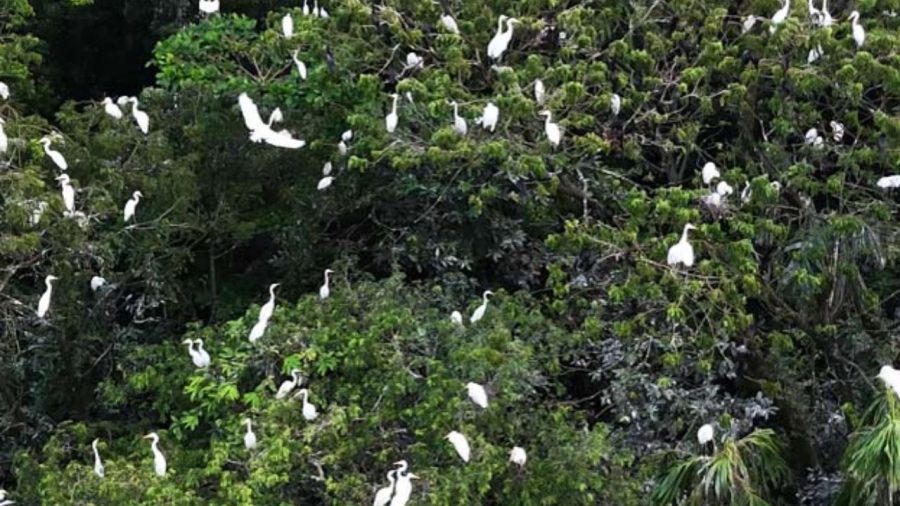



In Tafalbari village, on the edge of the Sundarbans in Bagerhat’s Sarankhola upazila, two homes have become an unlikely sanctuary for hundreds of birds.
In the gardens of two neighbouring houses owned by local teachers Dipak Das and Kamrul Islam, herons, cranes and cormorants build nests side by side in the branches of the same trees. Bats and other bird species share the same canopy. Yet, despite the crowded surroundings, the birds appear to coexist peacefully.
For nearly a decade, the trees around the two homes have provided a safe place for birds to nest, raise their young and return to year after year.
The two properties are filled with trees and plants of different species and sizes. Over time, the gardens have turned into a habitat where birds remain for much of the year. Their presence becomes especially striking during the breeding season, when fresh nests appear alongside older ones.
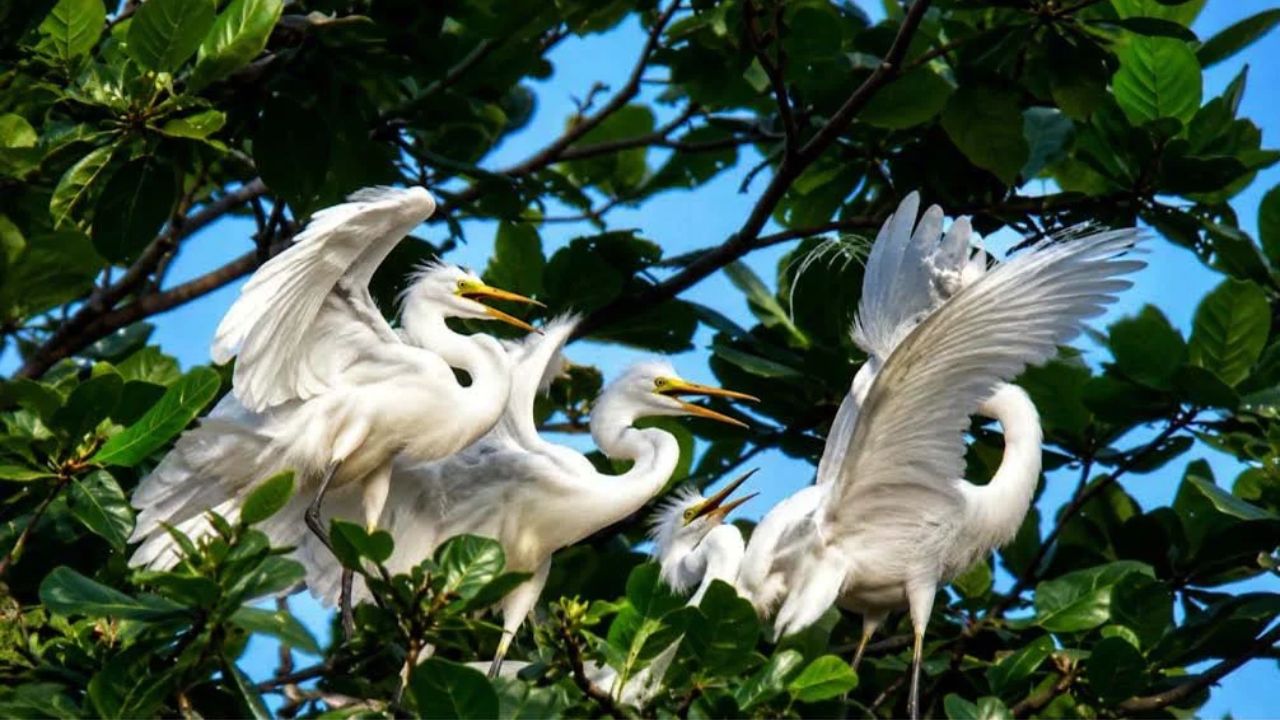
From morning to evening, the sound of birds fills the gardens. The calls of different species mingle with the chirping of chicks, transforming the otherwise ordinary homesteads into a lively gathering place.
This year, the arrival of a Madantak has added to the attraction. The bird does not build a permanent nest in the gardens but occasionally comes from the nearby Sundarbans and perches on the highest branches. Its presence has drawn the attention of visitors and nature lovers.

Before dawn, the birds leave the trees in search of food. By evening, they return, often carrying food for their chicks. Though they spend most of the day away, they consistently return to the same trees before nightfall.
For the homeowners, living alongside so many birds has become part of everyday life.
Dipak Das and Kamrul Islam said they have never disturbed the birds, despite the damage they sometimes cause to fruit and leaves and the mess created around the trees.
“The birds have been building nests and living in our houses for about 10 years. We never disturb them. Even though they ruin the fruits and make the environment dirty, we still try to keep them safe,” they said.




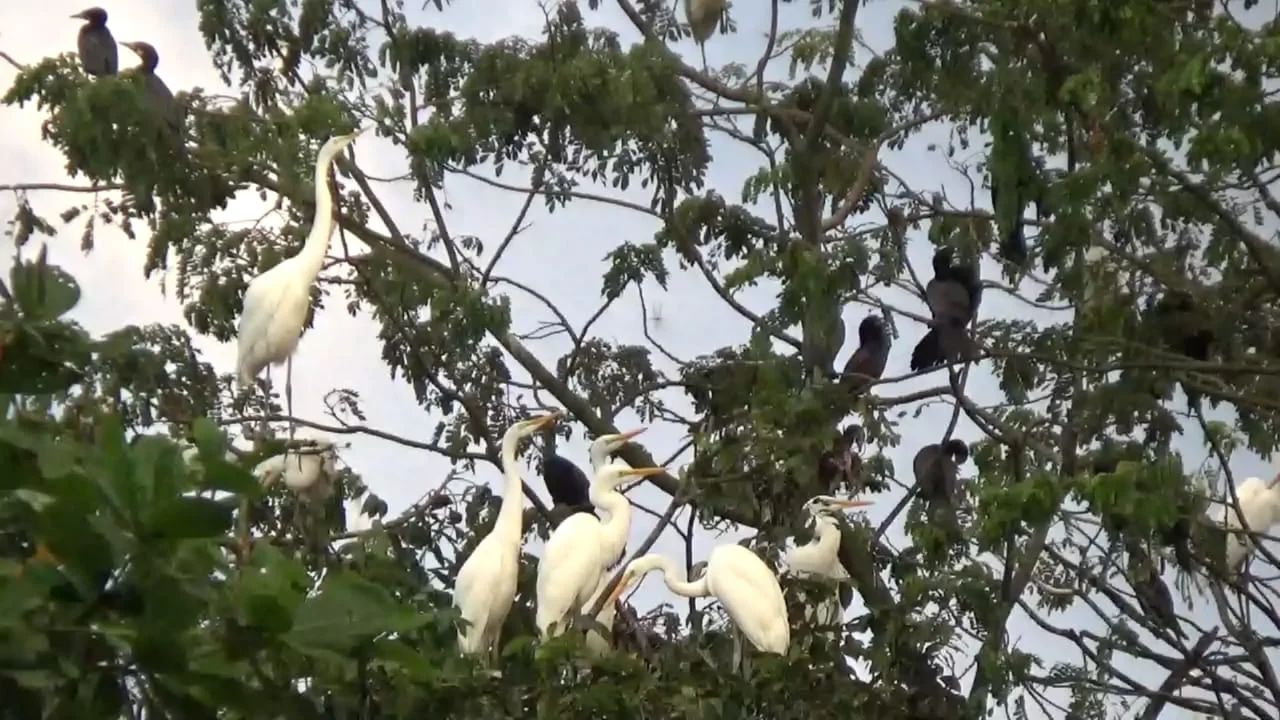
The owners said they could have sold many of the trees on their properties, but decided against doing so because cutting them down could drive the birds away.
“If the trees are cut, the birds will be frightened and may not return. So, we do not sell the trees. As a result, they return here every year, thinking of it as a safe habitat. We like the chirping of the birds; they feel like our own,” they said.
The number of birds increases during the breeding season, they said, bringing students and nature lovers from different areas to the two homes. The Madantak’s arrival has attracted even more visitors.
For local students, the gardens have become something of a natural classroom.
Students from Tafalbari School and College, including Tarin, Rudra and Adiba of Shaheed Titumir Academy, regularly visit the houses to observe the birds.
“Here, many kinds of birds can be seen together in the same tree. We have read the names of various species in books, and now we can see many of them directly. We like it very much,” they said.
Local residents Matiur Rahman and Taijul Islam Jewel said birds had been returning to the area for years. While some remain throughout the year, others arrive seasonally.
“Many people come to see them. The house owners are very patient. Even tolerating the annoyance, they have arranged for the birds to stay safe. We all should protect the birds,” they said.
The growing congregation of birds has prompted local conservationists to consider broader measures to protect the habitat.
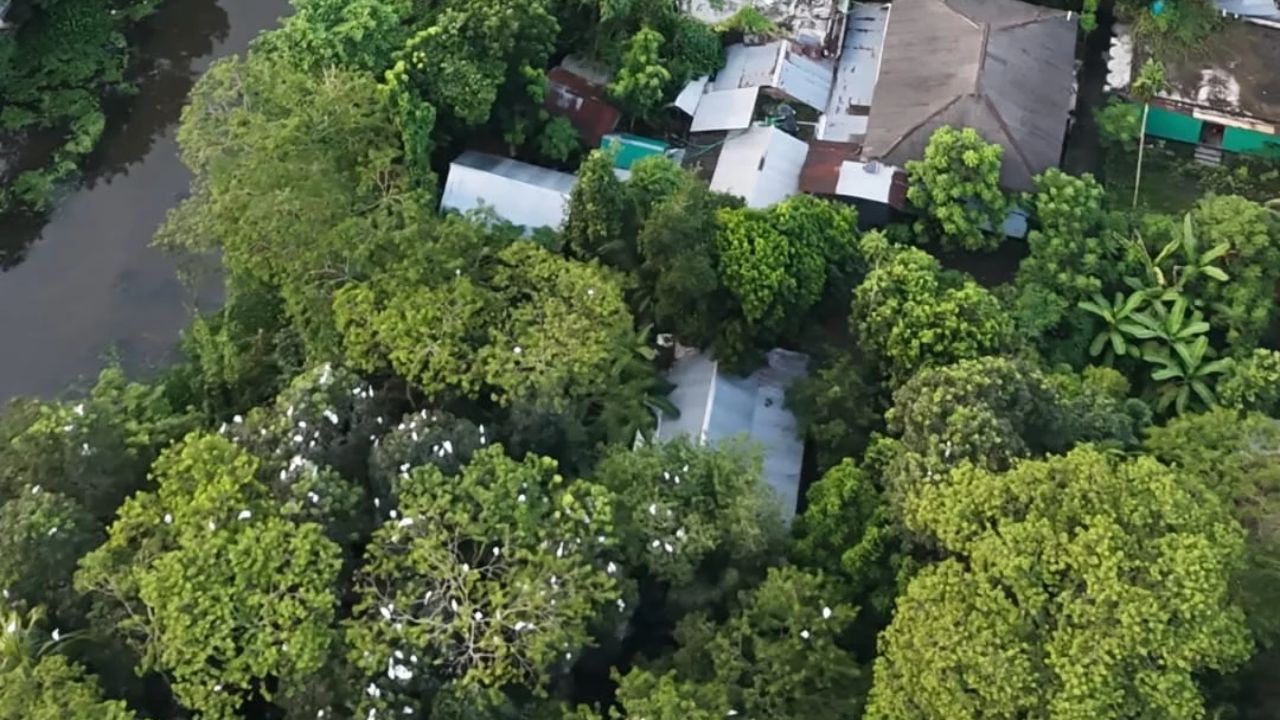
Sheikh Nazmul Islam, president of the Sarankhola Wildlife Conservation Committee, said the area would be declared a bird village.
“A committee will be formed to protect the birds. Initiatives have been taken to build alternative nests in the trees so that they can stay safe. Work on this will begin soon,” he said.
Md Alam Howladar, Sarankhola field facilitator of WildTeam, said the area’s proximity to the Sundarbans had contributed to its rich biodiversity.
“Even with a vast forest nearby, the fact that birds live in people’s homes is a positive example. As these two houses in Tafalbari have grown into a safe habitat for birds, people are able to get a real idea about various species. All kinds of initiatives will be taken to protect the birds,” he said.
Md Salauddin Ahmed, secretary of Southkhali Union Parishad, said protecting birds should not be limited to the two houses.
“Not just these two houses in Tafalbari, but everyone must come forward so that birds can remain safe everywhere. Birds are an important part of our nature. The Union Parishad will provide all kinds of cooperation and take initiatives to protect them,” he said.
On the edge of the Sundarbans, where people and wildlife live in close proximity, the two homes of Tafalbari offer a simple lesson in coexistence. Sometimes, protecting wildlife does not begin with setting aside a distant forest. It begins with leaving a few trees standing – and allowing their branches to become a home.