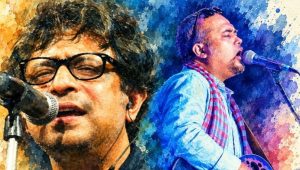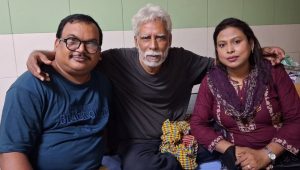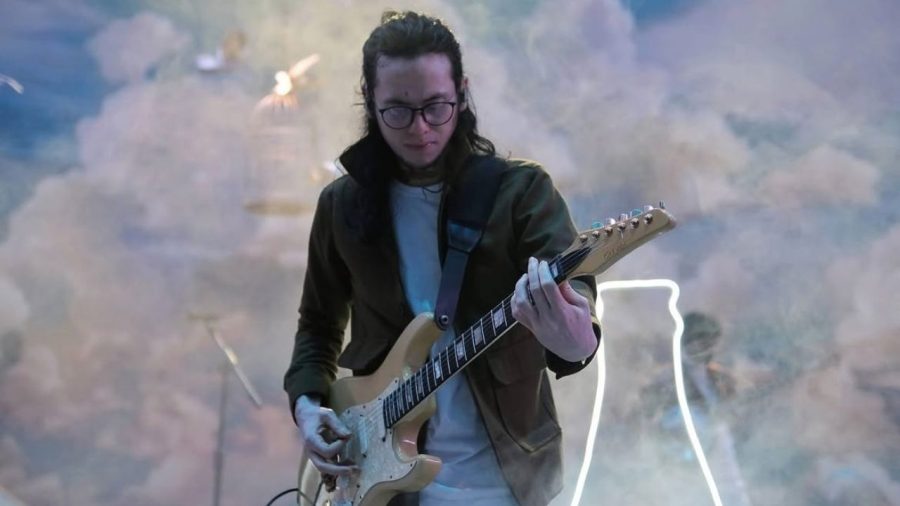

Rasheed Sharif Shoaib, a musician, guitarist, and sound engineer, has been in the hospital for the past week. He is dealing with dengue, high blood sugar, and other health problems, and he does not know when he will be able to go home. In a social media health update, Shoaib also pointed to a long-standing issue in Bangladesh’s entertainment industry: professionals often complete their work but must wait years to receive payment.
Shoaib has been working in music and sound in Dhaka’s Niketan area since 2011. He has worked on TV and online ads, television shows, films, and other projects. As he took on more jobs, the amount of money he was owed but not paid kept increasing.
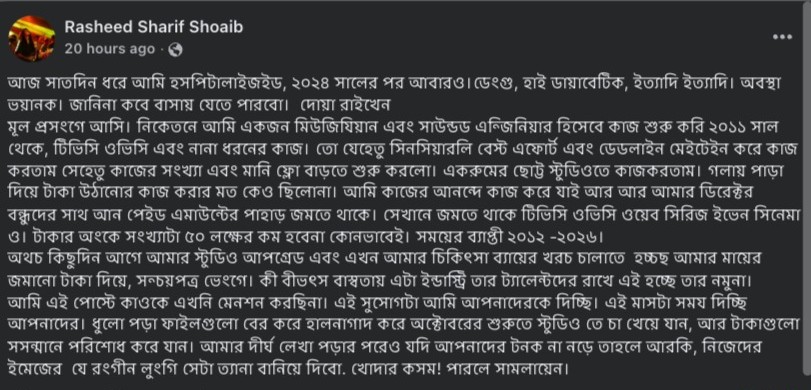
Shoaib says he still has not been paid for projects dating back to 2012, and the total now amounts to at least Tk50 lakh. After nearly 14 years, these unpaid dues have built up considerably.
Now, when Shoaib needs money the most, he does not have it. He said he recently used his mother’s savings to improve his workstation, and now he is using those same savings to pay his hospital bills. His mother has even had to cash in her savings certificates.
In his post, Shoaib questioned why a professional should end up in this situation after working for so many years. He said this shows the harsh reality many talented people in the entertainment industry face.
So far, Shoaib has not named anyone. He has given those who owe him money until the end of September to pay. He asked them to check their records, update the amounts owed, and come to his studio in early October to settle the dues. He also said he might disclose their names if they do not pay.

Shoaib has been well known in the music industry for many years and is a member of the group Meghdol, where he handles vocals, composition, and guitar. He also has extensive experience in film music and background scores. He composed the background score for the film Hawa, worked on the music for Swapnajaal, and recently contributed to the film Roid.
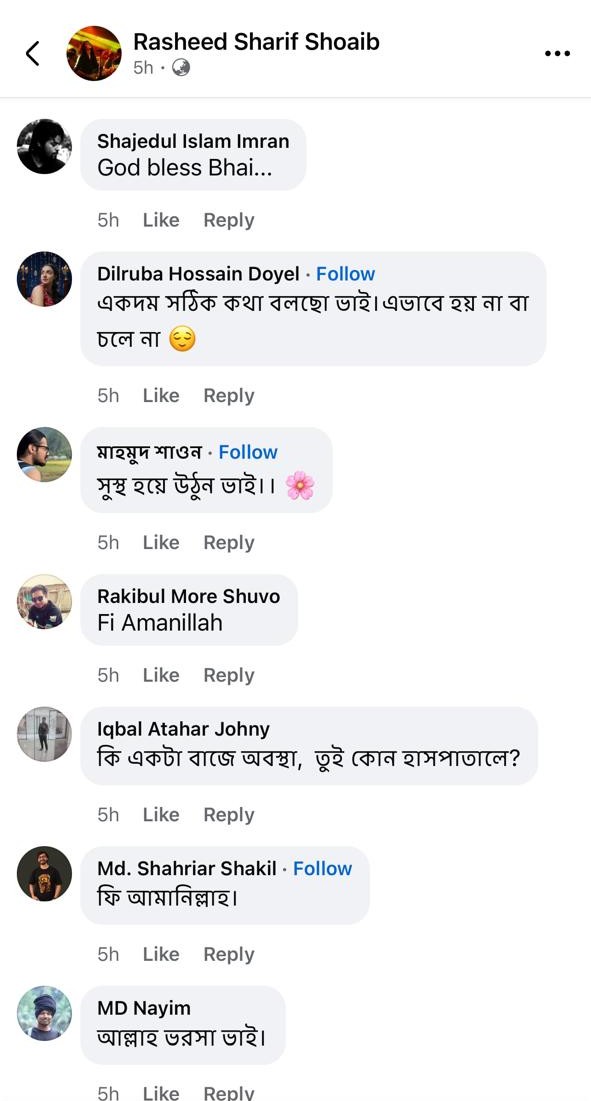
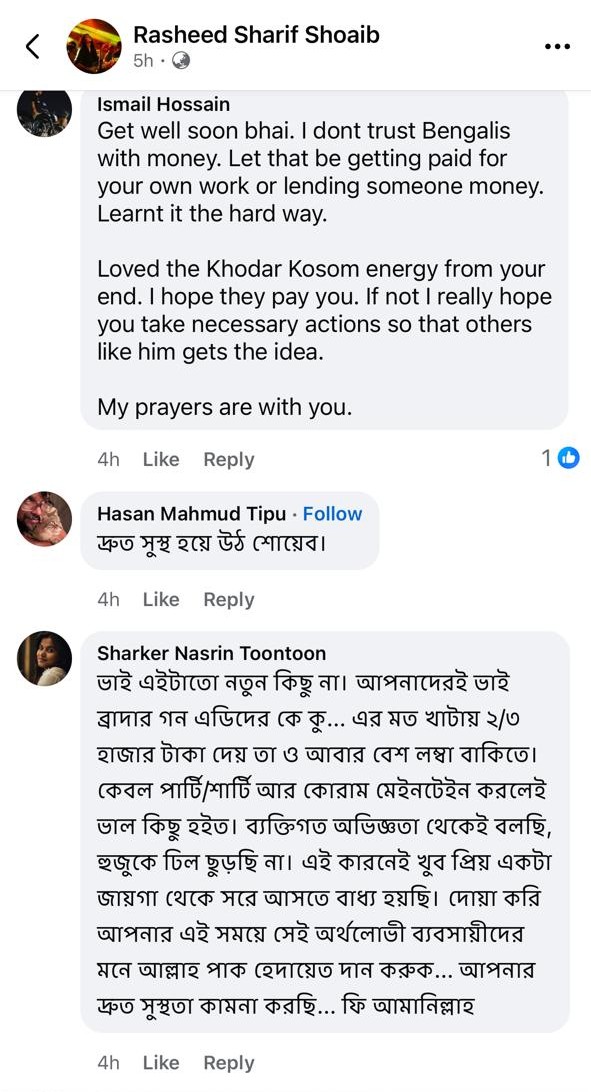
When Shoaib spoke about his illness and his unpaid fees, the conversation quickly shifted to other people’s stories. Many in the entertainment industry then began sharing similar experiences in the comments on his post and on their own social media pages.
Actress Dilruba Hossain Doyel agreed with Shoaib, saying things could not go on like this. Many people wished him a quick recovery. Others wrote that making artists and crew members chase payments for work already done is one of the industry’s biggest failures.

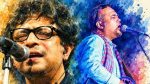

Iqbal Ahsanul Kabir Jewel, a film editor and filmmaker, wondered why a creative professional with 14 years of experience should have to write a post like this on social media. Instead of replying only to Shoaib’s post, he encouraged others in the industry to examine their own practices as well.
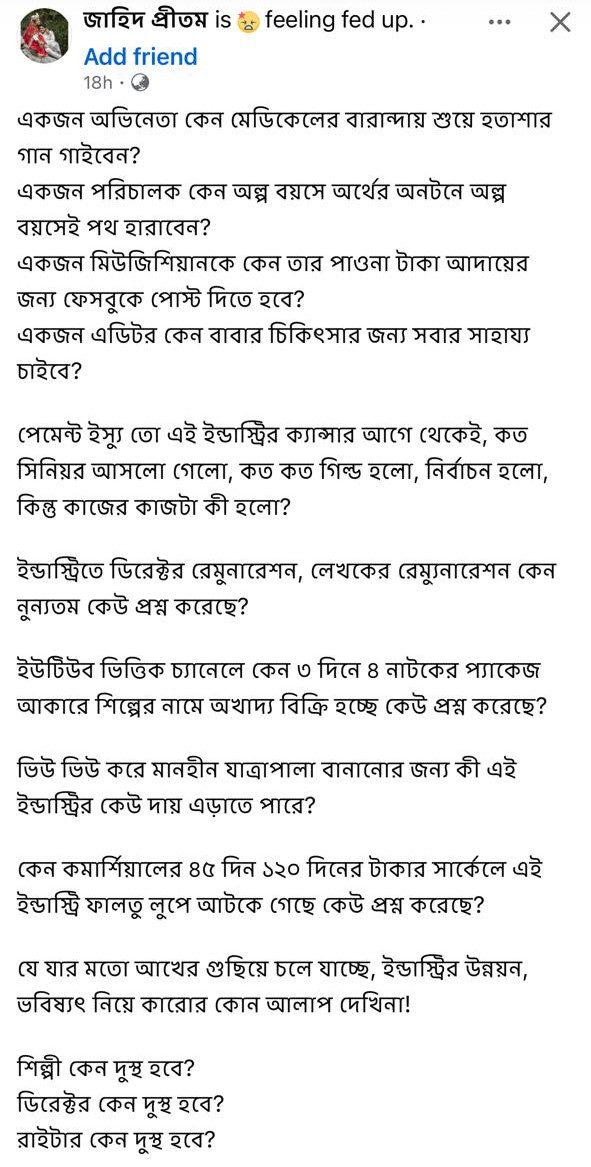
Filmmaker Zahid Pritom also looked into the issue. He asked why an actor should feel helpless when getting medical treatment, why a director should lose focus because of money problems, why a musician should have to make public appeals for funds, and why an editor should have to ask for help to pay for a family member’s treatment.
Pritom stated that unpaid fees have always existed in Bangladesh’s entertainment industry, and he also questioned whether directors and writers receive fair payment, whether crew members are still owed money, and why people are paid long after a project has finished.
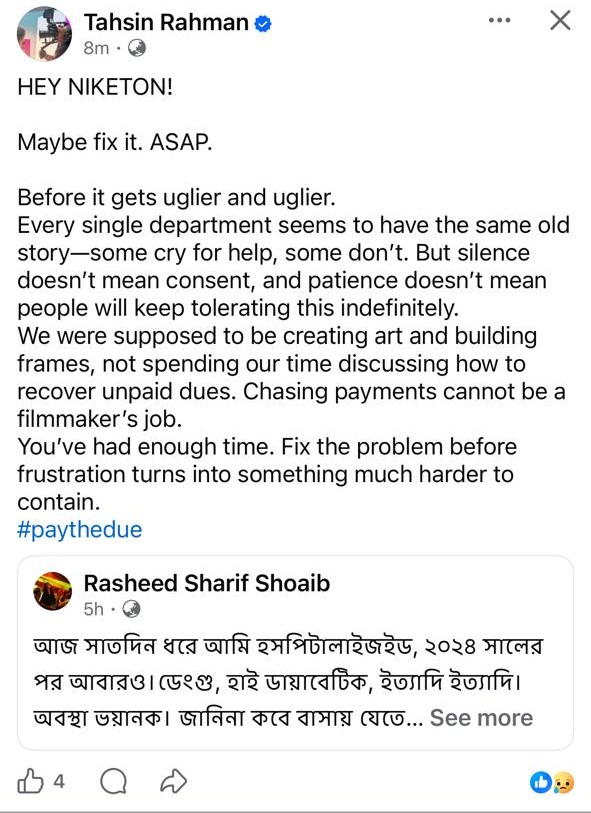
Tahsin Rahman, a cinematographer, had likewise become frustrated with the matter and urged people involved in productions based in Niketan to address the concern immediately. His main argument was that a filmmaker should take the time and put in the effort to make films, not pursue people to collect money that had already been earned from their work.
Many others shared the same frustration. A post-production worker at Niketan said people often have to wait months, even for small payments. They might get part of the money at the start of a project, but it can take a long time to get the rest. He said such experiences have led some people to leave the job.
The strong reaction to Shoaib’s post shows that many people do not see his experience as unique. Instead, many artists, filmmakers, and technical workers see similarities between his story and their own struggles with unpaid fees.
This is not a new problem. In 2022, Prothom-alo described similar experiences among artists and crew in Bangladesh’s television and film industries. Some people had to wait years to be paid after finishing their work, while others could not reach those responsible for payment. Many were also afraid to speak out about unpaid fees because they worried about losing future work.
The situation did not improve much in the following years. By 2024, an actor said that payment for a project had still not been made, even two years after the work began.
In 2025, Dolly Zahur, who is a veteran actress, stated that as much as Tk 34 lakh in fees had not been paid during her time working in films. The situation grew especially difficult when her husband was diagnosed with cancer; she said that even though she urgently needed money for his treatment, she was still unable to collect the payments that were already due to her.
At the same time, actors, directors, and editors also shared similar stories about unpaid fees. Some said they had asked for money many times when they were in personal difficulty, but still did not get what they were owed. Others said the problem had been around for so long that many people no longer wanted to talk about it in public.
Shoaib’s situation brings up a bigger question: Why should a musician, director, writer, editor, cinematographer, sound engineer, or any other professional have to wait months or even years to be paid after finishing a job?
An artist’s or crew member’s income is not charity; it is payment for work done. Shoaib’s case shows that even a well-established professional can end up in a tough financial spot if money is not available when needed.
A musician with a long career is now in the hospital, and although he has earned money from his work, he has had to rely on his mother’s savings to pay for treatment. This part of his story has touched many of his colleagues the most.
It is still unclear when Shoaib will be able to leave the hospital or how much of the nearly Tk 50 lakh he says he is owed will ever be paid. However, the debate after his post has made one thing clear: the problem of unpaid fees at Niketan is not just Shoaib’s issue. His story has once again highlighted the frustration that artists and crew members have felt for years.