
Whenever Honufa Begum sees a Hilsa fish on a plate, her mind is instantly transported back to the unforgiving waters of the Bay of Bengal.
In 2011, her eldest son, Forkan, disappeared into the deep sea when his fishing trawler capsized. Seven years later, in 2018, her second son, Billal, met the exact same tragic fate. Neither body was ever recovered.
“I have nothing left to lose,” she says from her home in Majher Char. “I could not even touch my sons’ bodies to say goodbye. Now, every time I see Hilsa, I remember my boys.”
Honufa’s grief reflects a vast human tragedy unfolding along the coastal belt of Barguna, where silver Hilsa – the nation’s most prized delicacy – is being harvested at a devastating human cost.
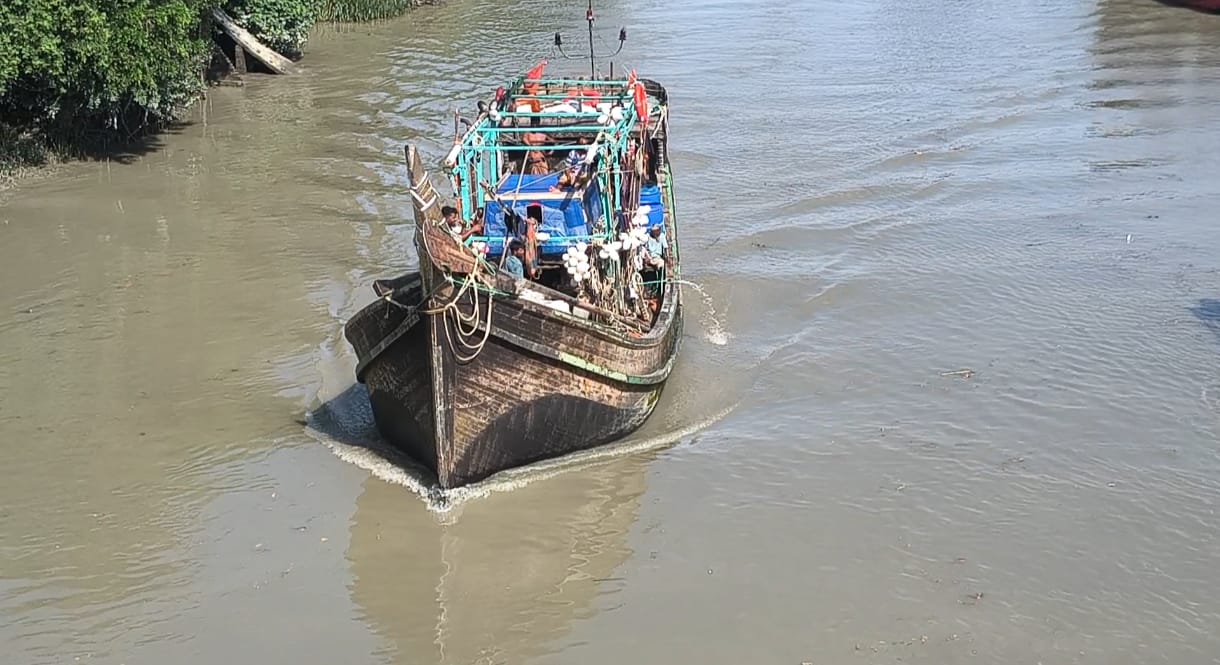
Driven by climate change, heavy river pollution, reduced freshwater flow, rising water temperatures, and the buildup of treacherous, submerged sandbars (char and dubochar), Hilsa schools have abandoned their traditional river migration routes over recent decades.
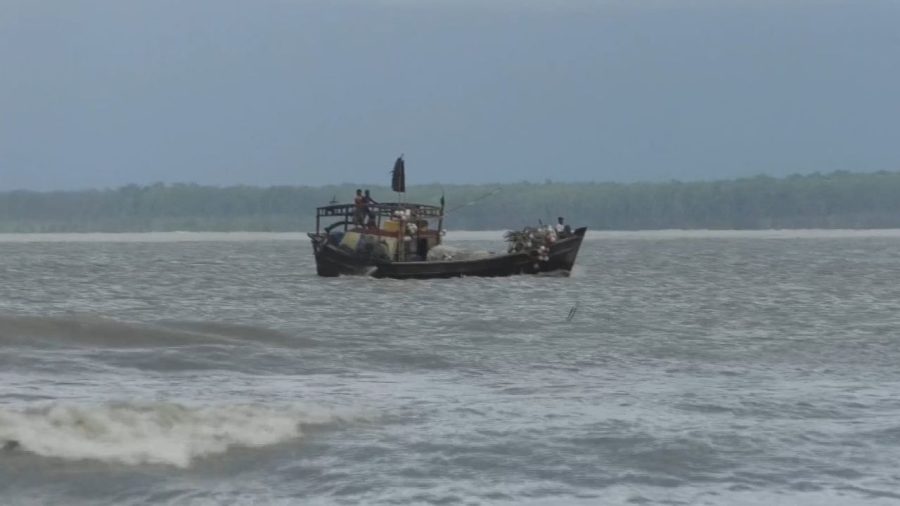
The once-fertile estuaries of the Payra, Bishkhali, and Baleshwar rivers now yield empty nets. To secure a catch, fishermen are forced to venture into the volatile south-eastern reaches of the Bay of Bengal, where violent storms and massive waves routinely claim their lives.
Human toll of recent tragedies
The waters of the south-eastern Bay have turned into a graveyard in recent months. On the night of 19 September, a trawler jointly owned by Al-Amin and Golam Rabbi set sail from Taltali with 13 crew members.

When the sea turned tempestuous on 21 September, the crew turned back towards shore, but on Tuesday morning, monstrous waves flipped the vessel near Kuakata.
While 11 men were rescued floating in the water by a passing trawler, two fishermen – Md Rakib of Bor Bhaizora and Md Nabi Hossain of Pawapara – remained trapped inside the cabin as the boat sank.
“They could not get out,” lamented Al-Amin, the owner and skipper.
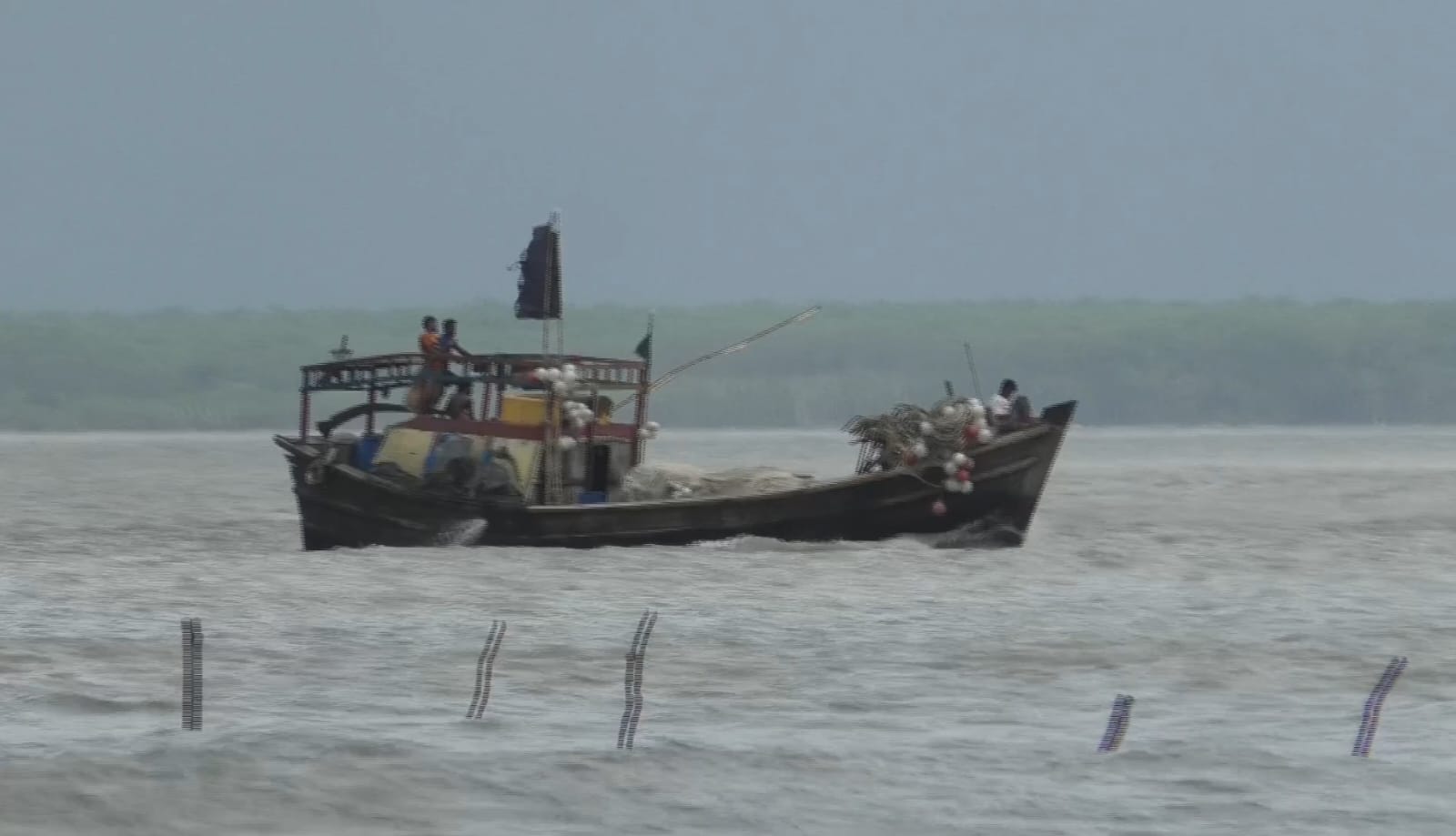
Al-Amin explained that fishermen previously operated in the south-western Bay of Bengal, but shoals and sandbars cleared out the fish stocks there, leaving them with no choice but to risk the south-eastern deep sea where accidents are most frequent.
This tragedy followed a deadly capsize on 24 August, when adverse weather sank the Patharghata trawler “FB Borokat” with 13 crew members approximately 50 kilometres south-east of Kuakata. Eight men were saved, but five vanished into the sea.




Though the body of Saiful Meer was later retrieved, four fishermen – Md Billal, Md Kawsar, Md Nur Alam, and Md Ibrahim – remain unlocated after more than a month.
Earlier in the season, at 3am on 7 July, the trawler “FB Mohima,” owned by Tapan Jomadder of Taltali, sank with 13 crew roughly 60 kilometres south of the Taltali coast.
Nearby vessels rescued 11 floating fishermen, but Kalam Paikar and Shahid were swept away. Four days later, on 11 July, Kuakata fishermen recovered Kalam Paikar’s body from the south-eastern Bay.
Broken families and bureaucratic red tape
According to the Bangladesh Fishermen Trawler Owners’ Association, four trawlers have capsized in the south-eastern Bay of Bengal in this month alone. In the two most recent incidents, one body was recovered while five fishermen remain missing.
For the families left behind, the loss of a breadwinner brings immediate semi-starvation and despair. Sahadat Meer, 65, the grieving father of Saiful Meer, shared that his son was the family’s sole earner.
“We are living in starvation,” he said. “I heard the government will provide Tk50,000 in aid, but how long can that small amount sustain a family?”
Worse still, state support is tied to bureaucratic hurdles. Sohel, son of the missing fisherman Kawsar, pointed out a cruel systemic rule: government financial aid is granted only if a body is recovered, leaving the families of missing fishermen with zero official support.
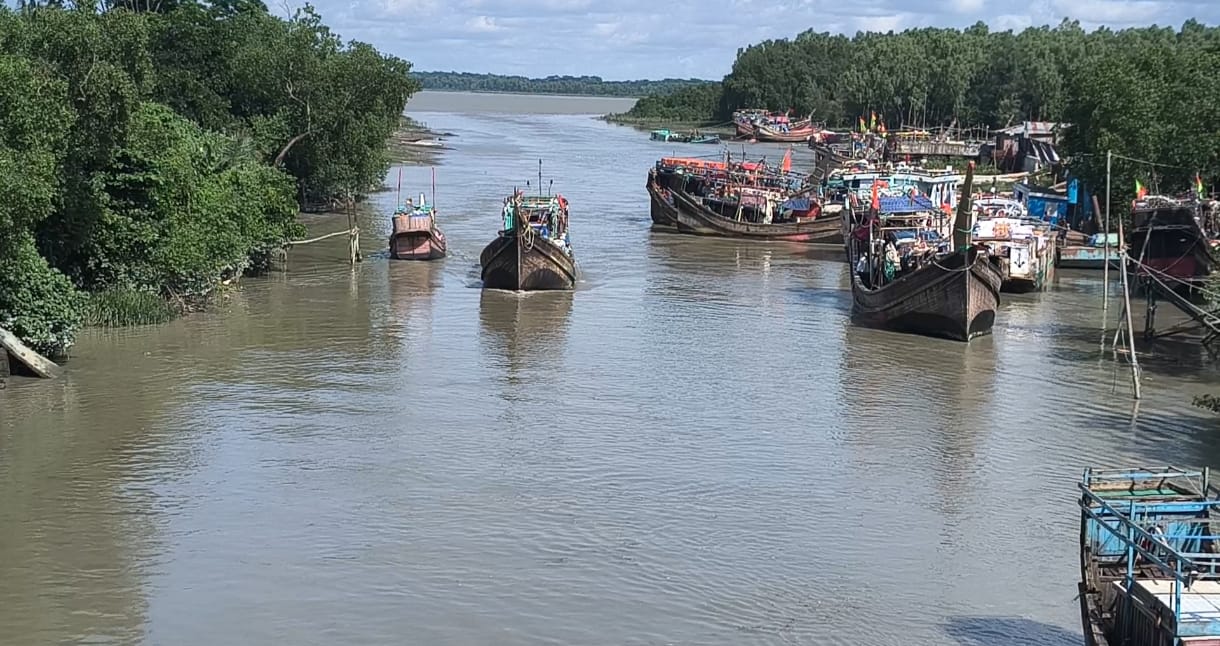
“We knew the south-eastern sea was rough, but father went because Hilsa is seasonal,” Sohel said. “If we had his body, we could find some peace. But after a month, we know we will never see him again – and without a body, there is no government aid.”
Statistics from Patharghata – Barguna’s highest Hilsa-producing upazila – show that 188 fishermen went missing at sea during natural disasters between 1993 and 2024.
Official records document 91 missing in the 2007 cyclone, 5 in 1993, 2 in 1994, 5 in 2001, 14 in 2006, 7 in 2014, 13 in 2018, and 15 in 2023. Yet, the Trawler Owners’ Association estimates that actual unofficial figures are double the state count.
Over the past 33 years, official association logs record that more than 192 fishermen disappeared in Bay of Bengal storms without their bodies ever being recovered, while at least 450 floating corpses were retrieved.
Financial ruin and systemic neglect
The crisis crushes trawler owners alongside crew members. Hari Das, owner of “FB Swadhin,” noted that lower profit margins on other fish species force owners to target high-priced Hilsa. Preparing and launching a single trawler requires an investment of Tk 1.5 crore to Tk 2 crore.
When a vessel sinks, owners are bankrupted and left incapable of supporting the victims’ families. Hari Das shared that he has still not recovered financially from losing one of his two trawlers during Cyclone Sidr in 2007.
Golam Mostafa Chowdhury, President of the Bangladesh Fishermen Trawler Owners’ Association, expressed deep bitterness over the lack of state rescue infrastructure. “I cannot understand whether people eat Hilsa or Hilsa eats people,” he pointed out.
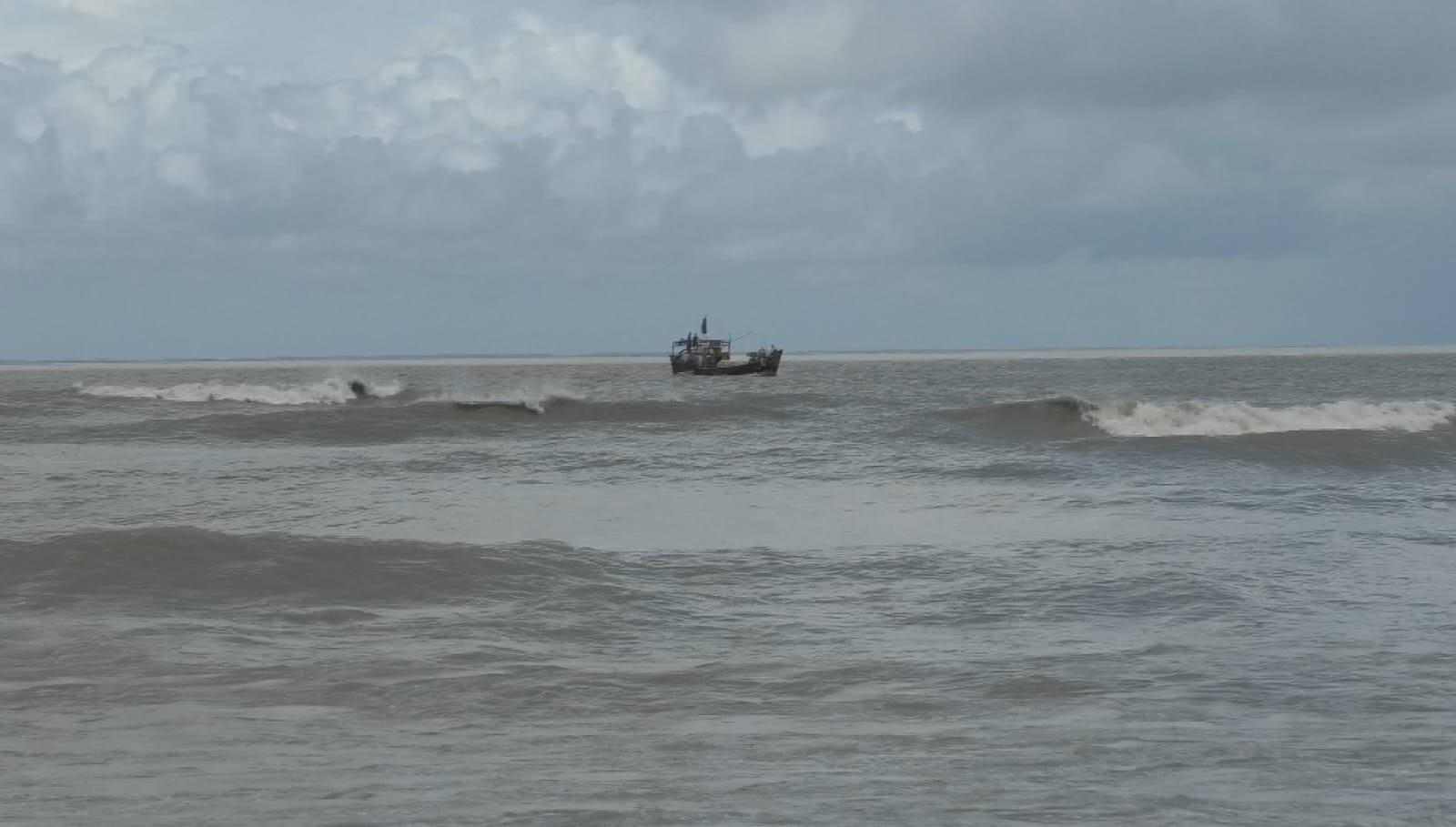
He condemned government rescue responses as virtually non-existent, noting that repeated demands to deploy Fire Service divers for sea rescues have yielded only unfulfilled promises.
In response to the crisis, Barguna District Fisheries Officer Mohammad Zia Uddin said adverse climate conditions, submerged sandbars, and sudden untracked sea storms cause most capsizes, adding that multi-faceted plans are being drawn up to improve fisheries management and fishermen’s fortunes.
Meanwhile, Mahmudul Hossain Oliullah, Member of Parliament for Barguna-1, pledged to formally notify the relevant ministry in writing. He promised steps to build a weather office in Barguna, intensify government rescue operations for missing fishermen, and mandate life-saving equipment on all fishing trawlers.